Abscesses and Boils in Stouffville: When Warm Compresses Are Enough
Boils and skin abscesses often heal with warm compresses, but some need draining. Safe home care, red flags, and when to see a Stouffville clinic.
A pimple, a boil, a carbuncle and a skin abscess are really points on the same spectrum. Each one is a collection of pus walled off under the skin, usually caused by bacteria that normally live harmlessly on our skin and in our noses. What separates them is size and depth. A pimple sits in a single pore. A boil (also called a furuncle) forms around a hair follicle and goes deeper. A carbuncle is a cluster of boils joined together. An abscess is a larger pocket that can form almost anywhere, sometimes after a small cut, an ingrown hair or an insect bite.
They are common, painful and, frankly, a little embarrassing to talk about, which is why people often wait longer than they should or try to deal with them in ways that make things worse. This guide covers what causes them, how to care for a small boil at home, why squeezing is a bad idea, what happens if one needs to be drained at a clinic, and the warning signs that mean a skin infection needs urgent attention.
What causes boils and abscesses?
The most common culprit is Staphylococcus aureus, often just called staph. Many healthy people carry it on their skin or in their nose without any problems. When the skin barrier is broken, even slightly, bacteria can get into a hair follicle or small wound and trigger an infection. The body’s immune response sends white blood cells to fight it, and the mixture of bacteria, immune cells and broken-down tissue becomes pus. The surrounding tissue walls it off, creating the tender, swollen lump.
Some strains of staph are resistant to common antibiotics. These are known as MRSA (methicillin-resistant Staphylococcus aureus). MRSA skin infections can occur in otherwise healthy people in the community, and they are one reason why a clinician may want to take a swab of pus from a drained abscess.
Common locations
Boils and abscesses tend to appear where there is friction, sweat and hair:
- Armpits
- Groin and inner thighs
- Buttocks
- Back of the neck
- Face, especially the beard area
- Areas where a small cut, scrape or bug bite has occurred
Factors that raise the risk
- Close contact with someone who has a staph skin infection, such as within a household or on a sports team
- Shared towels, razors or athletic equipment
- Shaving, waxing or other hair removal
- Tight clothing that rubs on sweaty skin, which is common in a humid Stouffville summer or with workplace gear
- Diabetes, which affects healing and immune function
- A weakened immune system
- Skin conditions such as eczema that break down the skin barrier
- Being overweight, which increases skin folds and friction
Is it a boil, an abscess or something else?
A typical boil or abscess starts as a firm, red, tender lump. Over a few days it often grows and becomes softer in the centre as pus collects, sometimes forming a yellow or white point near the surface. The skin around it may be warm and pink.
Several other conditions can look similar and are worth mentioning:
| Condition | Typical features |
|---|---|
| Cellulitis | A spreading area of red, warm, tender skin without a distinct pus-filled lump; needs antibiotics rather than drainage |
| Epidermoid (sebaceous) cyst | A slow-growing, smooth, painless lump under the skin, sometimes with a small central dot; it can become infected and then behave like an abscess |
| Hidradenitis suppurativa | Recurring painful lumps and tunnels in the armpits, groin or under the breasts, often starting after puberty; needs ongoing management |
| Pilonidal cyst | A painful lump near the top of the crease between the buttocks |
| Dental abscess | Swelling of the gum, jaw or face with tooth pain; see a dentist |
| Ingrown hair | A small bump around a trapped hair, common after shaving |
If boils keep coming back in the same areas, it is worth having a clinician consider whether something like hidradenitis suppurativa is going on, because treatment is quite different.
Home care for a small boil
Many small boils, roughly the size of a pea or a little bigger, come to a head and drain on their own within one to two weeks. Home care can help that happen comfortably and safely.
Warm compresses
Heat brings blood flow to the area and helps the pus collect and drain naturally.
- Wash your hands.
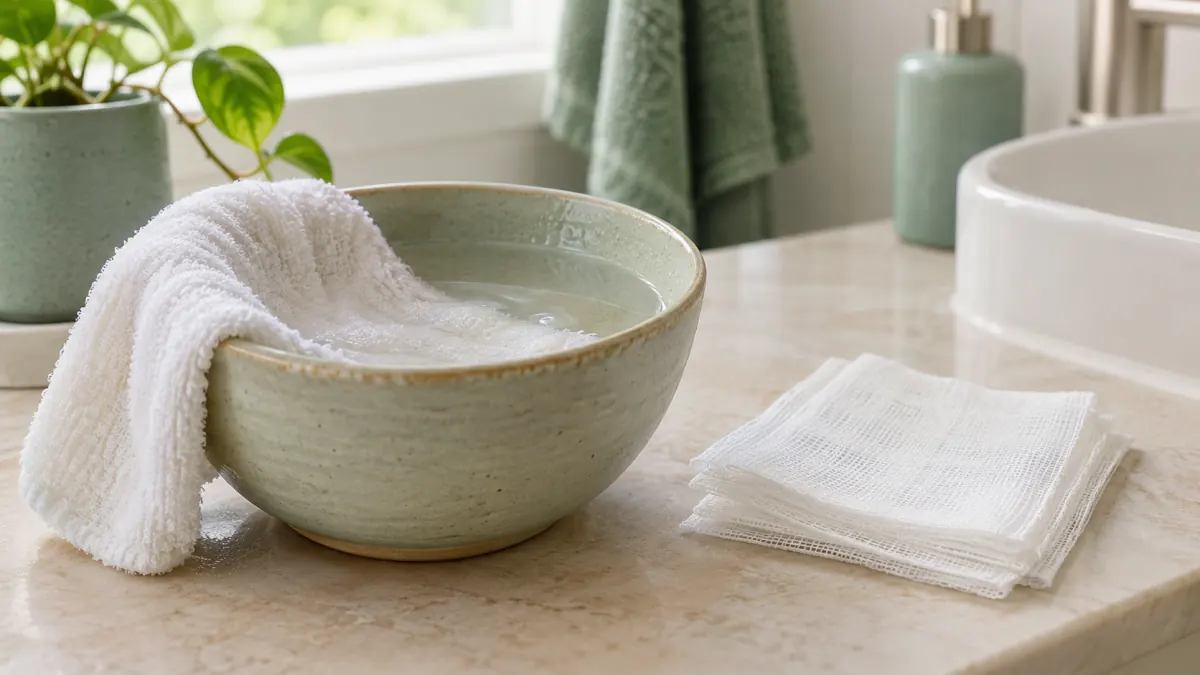
- Soak a clean washcloth in warm (not hot) water and wring it out.
- Hold it against the boil for about 10 to 15 minutes.
- Repeat three or four times a day.
- Use a fresh cloth each time, or wash cloths in hot water after use.
If it drains on its own
Gently clean the area with soap and water, and cover it with a clean, dry gauze dressing. Change the dressing whenever it becomes soaked. Keep up the warm compresses until drainage stops. Wash your hands carefully afterward, and put used dressings in a sealed bag in the garbage.
Pain relief
Over-the-counter pain relievers such as acetaminophen or ibuprofen can help, if they are safe for you. A pharmacist can advise.
What not to do
- Do not squeeze, pick or pop it. Pressure can push bacteria deeper into the skin or into the bloodstream, and it can turn a small boil into a much larger infection.
- Do not cut it open yourself with a needle or blade. Lancing at home risks incomplete drainage, deeper infection and scarring.
- Do not share towels, razors, washcloths or bedding while it is healing.
- Avoid shaving over or around the area until it has fully healed.
When to see a doctor
Book a visit at a Stouffville clinic or with your family doctor if:
- The lump is larger than about 1 cm across, or growing quickly
- It has not improved, or has not come to a head, after about a week of warm compresses
- It is very painful
- You have more than one boil, or a cluster (carbuncle)
- Boils keep returning
- You have diabetes, a weakened immune system, or heart valve problems
- It is on the face, particularly around the nose, upper lip or eyes
- It is in the groin, near the anus, or on the breast while breastfeeding
Our abscess assessment service is designed for exactly these situations.
Go to the emergency department if
For people in Stouffville, the nearest emergency departments are at Markham Stouffville Hospital and Uxbridge Hospital. Go if:
- You have a fever, chills or feel generally very unwell
- Redness spreads quickly around the lump, or red streaks run from it
- Pain seems far worse than what the skin looks like, especially with rapidly spreading swelling or skin that turns dusky or purple
- There is swelling around the eye, or changes in vision
- Facial or neck swelling makes it hard to swallow or breathe (call 911)
These can be signs of a spreading or deep infection that needs urgent treatment.
What happens at a clinic visit
A clinician will examine the lump, ask how long it has been there, and check for fever and spreading redness. If the abscess is ready to be drained, a procedure called incision and drainage is often the most effective treatment.
Incision and drainage, step by step
- The skin is cleaned with an antiseptic.
- Local anaesthetic is injected to numb the area. This stings briefly.
- A small cut is made to let the pus out, and the pocket is gently cleaned.
- Depending on the size, the cavity may be loosely packed with gauze or left open, and a dressing is applied.
- A swab may be sent to the lab, particularly for recurrent or larger abscesses, to check for MRSA.
Most people feel noticeable relief soon after, because the pressure is released. Drainage is one of the minor procedures that can often be performed in a clinic setting, although very large or deep abscesses, or those in sensitive areas, may need to be handled in hospital or by a surgeon.
Are antibiotics needed?
Not always. For many uncomplicated abscesses, drainage alone is the main treatment. Antibiotics may be added when the abscess is large, there is significant surrounding cellulitis, you have a fever, you have diabetes or another condition that affects immunity, the location is sensitive, or the infection does not improve with drainage alone. If you are prescribed antibiotics, take the full course as directed.
Aftercare
You may be asked to return for packing removal or dressing changes, usually within a couple of days. At home, keep the dressing clean and dry, watch for signs of spreading infection, and shower as directed. The wound usually heals from the inside out over one to two weeks. Our minor wound care team can help if healing seems slow.
Preventing the next one
Recurring boils are frustrating. These habits help reduce the chances:
- Wash hands often, especially after touching a healing boil
- Keep cuts and scrapes clean and covered until healed
- Do not share towels, razors, sports gear or makeup
- Wash towels, sheets and workout clothes in hot water when someone in the household has a boil
- Shower promptly after sports, a hot shift on a Stouffville job site or other physical work, and change out of sweaty clothes
- Wear loose, breathable clothing in hot weather
- Shave in the direction of hair growth with a clean blade, or consider trimming instead
- Keep blood sugar well controlled if you have diabetes
If boils keep recurring despite these steps, see a clinician. They may check for diabetes, look for an underlying skin condition, or discuss a plan to reduce staph carriage on the skin and in the nose, which sometimes helps households where boils keep passing back and forth.
Is a boil contagious?
Will draining an abscess leave a scar?
Getting a boil or abscess checked in Stouffville
If a painful lump is not settling with warm compresses, there is no need to tough it out. Book a visit at HealthSmart Medical Clinic, 208-5892 Main Street in Stouffville, or come by as a walk-in patient during clinic hours, which may change, so check before you come. Let the front desk know you have a skin infection so they can plan for a hands-on assessment. Questions can go to 905-642-6300.
The information here is general and is not meant to replace a personal assessment by a healthcare provider.