Blood Work and Lab Testing in Stouffville: From Requisition to Results
Stouffville patients often ask how blood tests work in Ontario. Here is what happens from the doctor's requisition to fasting, the lab visit, and your results.
Picture this: you leave your appointment with a folded sheet of paper covered in tick boxes, and your doctor says, “Get this done sometime in the next week or two.” In the parking lot you start wondering. Do I need to fast? Can I go this afternoon? Where do I go? Will someone call me if something is wrong? If that sounds familiar, you are in good company. Lab testing is one of the most routine parts of health care in Ontario, yet the process is rarely explained from start to finish.
This guide follows a blood test through each stage, from the moment it is ordered to the moment a result lands in your chart, with practical tips for Stouffville patients along the way.
Why your doctor orders blood work
Blood tests give a window into what is happening inside the body that no physical exam can provide. Common reasons include:
- Screening for conditions that cause no early symptoms, such as diabetes, high cholesterol, or kidney disease
- Diagnosis when you have symptoms like fatigue, weight change, or unexplained bruising
- Monitoring a chronic condition such as diabetes, thyroid disease, or kidney function
- Medication safety, because some drugs need regular checks of the liver, kidneys, or blood counts
- Pregnancy and preventive care, including prenatal panels and certain routine checks at an annual physical
Not every visit needs blood work, and more testing is not automatically better. A good test answers a specific question. If you are not sure why a test was ordered, it is perfectly reasonable to ask. We would much rather Stouffville patients understand the purpose of every tube than feel rushed through it.
Stage one: the requisition
In Ontario, most community lab tests require a requisition from a doctor or nurse practitioner. This is the form that tells the lab exactly which tests to run and where to send the results. The standard Ontario laboratory requisition has a long list of tick boxes, plus space for additional tests written in by hand.
A few things to check before you leave the clinic or open the electronic copy:
- Your name, date of birth, and health card number are correct. A mismatch can delay processing.
- You know whether any tests need fasting. Ask if it is not written on the form.
- You know of any timing instructions. Some tests must be drawn at a specific time of day, or a set number of hours after a medication dose.
- You understand who will follow up. Ask how and when you will hear about results.
Some clinics send requisitions electronically, while others hand you a paper copy. Either way, keep track of it; the lab cannot run tests without it. Our blood work requisitions page explains how this works at HealthSmart.
Is it covered?
Most blood tests ordered by your doctor for a medical reason are covered by OHIP when you have a valid Ontario health card. A handful of tests are only covered in specific clinical situations, and some requested purely for personal interest may not be covered by OHIP. If a test falls into that category, the lab should tell you before drawing it. When in doubt, ask the clinic or the lab beforehand.
Stage two: getting ready
Preparation depends on what is being tested. Here is a quick reference:
| Situation | What to do |
|---|---|
| Fasting glucose or fasting lipids | No food or drinks other than water for the time on your requisition (often 8–12 hours) |
| Most other routine tests | No fasting needed unless told otherwise |
| Medication level checks | Follow timing instructions closely; note when you took your last dose |
| Thyroid tests on thyroid medication | Ask whether to take your dose before or after the draw |
| Urine sample requested | Follow the lab’s instructions for collection, often a “midstream” sample |
Many routine cholesterol panels no longer require fasting, so do not assume. Follow whatever is written on your requisition or what your clinician told you.
Tips for an easier draw
- Drink water. Being well hydrated makes veins easier to find. Water is fine even when fasting.
- Take your usual medications unless you were specifically told otherwise. If you have diabetes and are fasting, ask your doctor how to adjust insulin or other glucose-lowering medicines, and bring a snack for afterward.
- Wear a short or loose sleeve.
- Bring your health card and requisition.
- Mention if you faint easily. Staff can have you lie down. Tell them, too, if you take blood thinners, so they hold pressure longer.
Stage three: the lab visit
Blood is drawn at community laboratory collection centres, and Stouffville residents can typically choose from sites in town or in nearby Markham and Uxbridge, whichever fits best around work, school runs, or a morning GO train. Some locations take appointments online, while others are walk-in. Early morning tends to be busiest because of fasting patients, so if you do not need to fast, a mid-morning or early afternoon visit can be quieter. Check the lab’s own website for current locations, hours, and booking options before you go.
Here is what usually happens:
- You check in with your health card and requisition.
- A technician confirms your identity and the tests ordered.
- They tie a tourniquet around your upper arm, clean the skin, and insert a small needle, usually in the crease of the elbow.
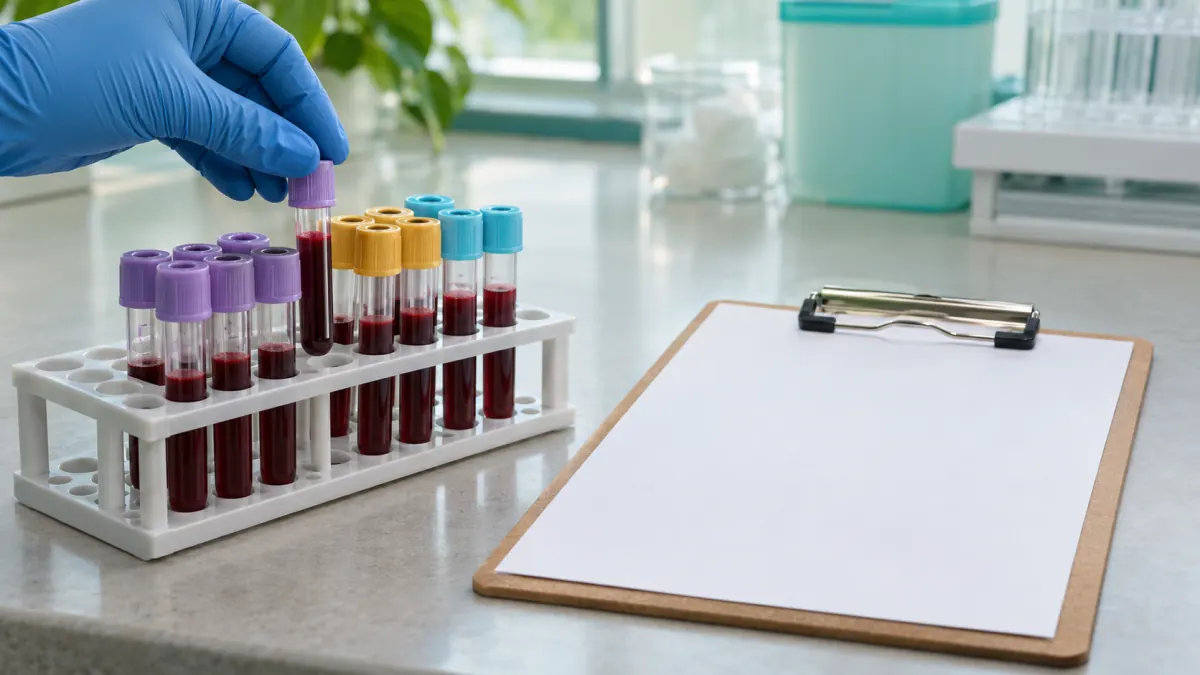
- Blood flows into one or more coloured-top tubes. Each colour contains a different additive suited to particular tests, which is why you may see several tubes filled.
- The needle comes out, gauze goes on, and you hold pressure for a minute or two.
The whole draw usually takes only a few minutes. Keep the bandage on for a short while and avoid heavy lifting with that arm for the rest of the day to reduce bruising.
If needles make you anxious
You are not alone, and lab staff are very used to helping nervous patients. Tell them up front. Lying down, looking away, slow breathing, and chatting about something else all help. Numbing creams are available at pharmacies and can be applied ahead of time; ask a pharmacist about timing. For children, a parent’s lap and a small distraction go a long way.
Stage four: processing
Once drawn, samples are labelled, sometimes spun in a centrifuge to separate the plasma or serum from the cells, and sent to a central laboratory. Routine tests such as a complete blood count, electrolytes, kidney function, and glucose are often completed within a day or two. More specialized tests may take a week or longer, and a few are sent out to specialty labs.
If the lab finds a result that is dangerously abnormal, it has procedures to contact the ordering clinician urgently, including outside regular hours. This is one reason it matters that your contact information on file is current.
Stage five: results
How results reach your doctor
Results are sent electronically to the clinician named on the requisition and often to any others listed for a copy. Your doctor or a member of the care team reviews them, decides whether anything needs action, and files them in your chart.
How results reach you
Practices vary. Many clinics contact patients when a result needs follow-up, and some book a visit to review everything together. Do not assume that no call always means a normal result. It is best to ask at the time of ordering exactly how you will be informed. In Ontario, many community labs also offer secure online access to your own results, which can be convenient, but remember that a number flagged as “high” or “low” on its own may not be meaningful without context.
Making sense of reference ranges
Each result is printed with a reference range, which reflects values seen in most healthy people. Being slightly outside that range does not necessarily mean something is wrong, and being inside it does not rule out every problem. Results are interpreted alongside your history, symptoms, medications, and earlier tests. A small shift in kidney function might be important for one person and irrelevant for another. That is exactly why reviewing results with your clinician, not a search engine, is the safer path.
Common tests and what they look at
- Complete blood count (CBC): red cells, white cells, and platelets; helps detect anemia, infection, and some blood disorders
- Electrolytes and creatinine: salt balance and kidney function
- Fasting glucose or hemoglobin A1C: blood sugar now and over the past few months, used for diabetes management and screening
- Lipid panel: cholesterol and triglycerides for cardiovascular risk
- TSH: a first screen for thyroid function
- Liver enzymes: liver health and medication effects
- Ferritin: iron stores
- Urinalysis: infection, protein, or blood in the urine
Repeat tests and ongoing monitoring
If you live with a chronic condition, regular lab work becomes part of life. Someone with diabetes may need an A1C every three to six months and periodic kidney checks. A person on certain blood pressure or thyroid medications needs scheduled tests to confirm doses are right. Keeping these on track is far easier when one clinic sees the whole picture. Our approach to chronic disease follow-up care includes planning recurring tests so nothing slips through.
When a test is repeated, try to keep conditions similar each time: same fasting status, similar time of day, and the same timing relative to medication doses. That makes trends easier to read. If you split your time between Stouffville and a cottage or a winter getaway, plan recurring tests around your travel dates rather than squeezing them in the day before you leave.
Can I get blood work done without seeing a doctor first?
I lost my requisition. What now?
Is it normal to bruise after a blood test?
When a result should not wait
Most lab findings are handled through routine follow-up. Seek urgent care, or call 911 for emergencies, if you develop symptoms such as chest pain, severe shortness of breath, fainting, confusion, black or bloody stools, or uncontrolled bleeding, whether or not you have pending tests. Lab work never replaces emergency care. For Stouffville residents, the closest emergency departments are at Markham Stouffville Hospital and Uxbridge Hospital, and Health811 (dial 811) can help if you are unsure how urgent something is.
Arranging testing through HealthSmart
If you are due for routine blood work, need monitoring for a chronic condition, or have symptoms that might warrant testing, our clinicians can review what makes sense for you. Request an appointment to get started, or contact us with questions about an existing requisition. Our Stouffville clinic is at 208-5892 Main Street.
Please treat this article as general information; your own clinician can advise you about your specific tests and results.