Broken Bones and Fractures in Stouffville: Is It Broken or Just Bruised?
Swelling, bruising and pain after a fall can mean a sprain or a break. How Stouffville families can judge urgency, what X-rays show and how fractures heal.
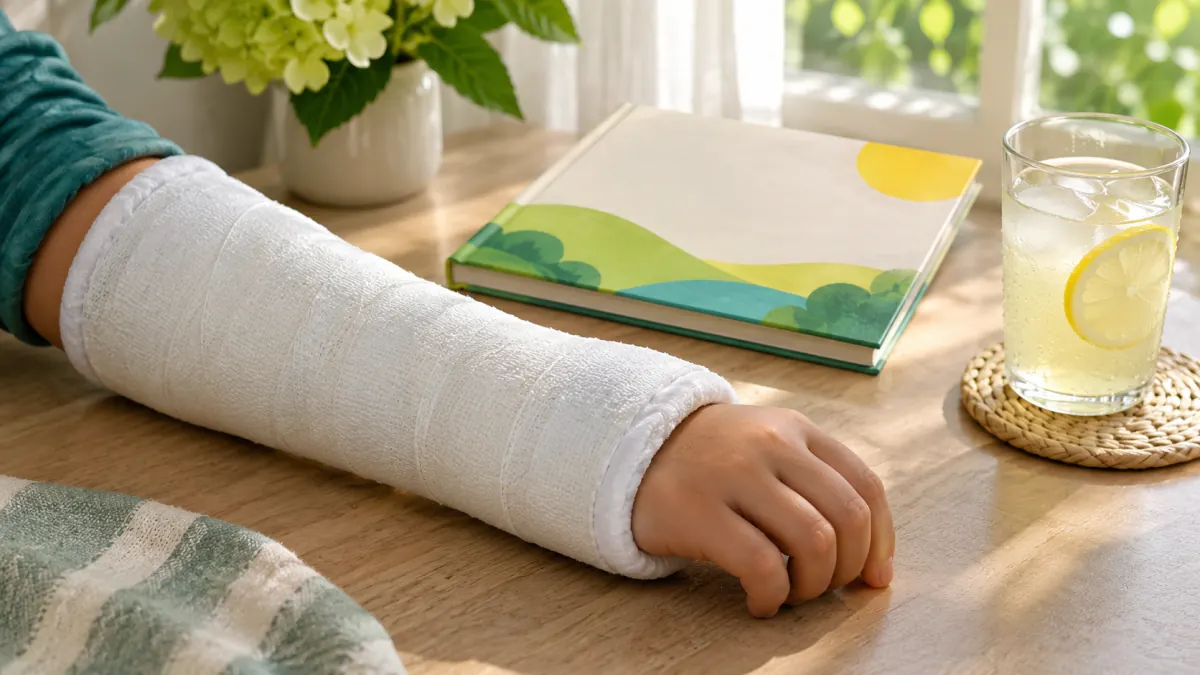
An eight-year-old bounces a little too enthusiastically on a backyard trampoline in Ballantrae, lands on an outstretched hand and comes inside holding her wrist. She can wiggle her fingers. There’s no obvious bend. She cries, then calms down, then winces every time she tries to pick up her cup. Her parents face the question that comes up in Stouffville homes all summer: is this broken, and if it might be, where should we take her?
This scenario is a composite, but versions of it play out after bike falls on the trails, missteps on the stairs, slips on an icy driveway in February and tumbles on the soccer field. This article explains how fractures happen, the signs that suggest a break, when a hospital is the right place and when a clinic assessment with an X-ray referral is reasonable, plus what healing usually looks like.
The surprising truth about “If you can move it, it isn’t broken”
That old saying is simply wrong. Many people walk on a fractured foot bone or use a broken wrist for days before getting it checked. Movement depends on which bone is broken, how badly, and how the muscles and tendons around it are working. A small crack, called a hairline or non-displaced fracture, may allow nearly normal movement with pain.
What matters more than whether you can move it is a combination of how the injury happened, where it hurts, and what the area looks like.
Common types of fractures
| Type | What it means | Typical example |
|---|---|---|
| Non-displaced (hairline) | The bone is cracked but the pieces stay lined up | Wrist or foot after a fall |
| Displaced | The pieces have shifted out of alignment | Forearm with a visible bend |
| Buckle (torus) | The soft bone of a child compresses and bulges on one side | Child’s wrist after falling on an outstretched hand |
| Greenstick | The bone bends and cracks partly through, like a green twig | Children’s forearm |
| Growth plate | Injury involving the area of growing bone near the joint | Children’s wrist, ankle or knee |
| Stress fracture | A tiny crack from repeated impact rather than one injury | Runners’ shin or foot bones |
| Fragility fracture | A break from a minor fall, often linked to thin bones | Wrist, hip or spine in older adults |
| Open (compound) | The bone breaks through the skin | Any bone; always an emergency |
Children’s bones behave differently
Children’s bones are more flexible than adults’ and have growth plates near the ends. That’s why buckle and greenstick fractures are common in kids. Many buckle fractures heal very well with a removable splint. Growth plate injuries, on the other hand, need careful assessment because they can affect how a bone grows. A child who refuses to use a limb after a fall should be checked, even if there’s no swelling.
Older adults and bone strength
A wrist, hip or spine fracture from a simple fall from standing height can be a sign of osteoporosis. If this has happened to you or a parent, it’s worth discussing bone density testing afterwards. Our article on osteoporosis and bone health explains testing and prevention.
Signs that point to a fracture
None of these are definitive, but the more that apply, the more likely a break is:
- Pain focused on one specific spot on the bone, especially when you press directly on it
- Swelling and bruising that develop quickly
- A deformity: a bend, bump or angle that isn’t on the other side
- Inability to bear weight, or to take four steps, after a leg or foot injury
- A grinding sensation or a snap heard at the time of injury
- Numbness or tingling beyond the injury
- Pain that is getting worse over hours instead of slowly easing
Sprains and strains can cause many of the same symptoms, which is why X-rays are often needed to tell the difference. If an X-ray shows no fracture, our article on sprains and strains covers how to recover.
Hospital or clinic? Making the call
This is the practical decision most families need help with.
Go to the emergency department or call 911 if:
- Bone is visible, or there is an open wound over the injured area.
- The limb is obviously bent, twisted or deformed.
- The hand or foot beyond the injury is pale, cold, blue, numb or tingling.
- The injury involves the head, neck or back, especially with numbness, weakness or loss of bladder control. Don’t move the person; call 911.
- There’s a suspected hip fracture: an older adult can’t stand after a fall and the leg may look shorter or turned outward.
- The pain is severe and uncontrolled, or the person is faint, pale or confused.
- A pelvis or thigh injury happened in a high-energy event, such as a car crash or a fall from a height.
- A child has an injury that doesn’t fit the story given, or you are concerned about safety.
For families in Stouffville, Markham Stouffville Hospital and Uxbridge Hospital both have emergency departments. For suspected neck or back injuries, or any open fracture, call 911 rather than driving.
A clinic visit is often reasonable if:
- The person can move the limb somewhat and circulation is normal
- There is no deformity or open wound
- Pain is manageable with simple measures
- The injury is to a finger, toe, wrist, ankle or foot and you need to know whether it is broken
In these situations, a doctor can examine the injury, apply a temporary splint or support where appropriate, and arrange an X-ray through a diagnostic imaging referral. If the X-ray shows a fracture that needs specialist care, the next step is usually a referral to orthopaedics or a fracture clinic. Our Stouffville walk-in clinic can see many of these injuries without a pre-booked appointment, depending on the day.
If you aren’t sure which is right, Health811 (call 811) can help you decide.
First aid while you decide
Before you get to care, these steps reduce pain and protect the injury:
- Stop the activity. Don’t “test” the injury by walking it off or playing through.
- Support it. Keep the limb still in the most comfortable position. A rolled magazine, towel or pillow can act as a temporary splint for an arm; a sling can be made from a scarf.
- Apply cold. Wrap ice or a bag of frozen peas in a cloth and apply for 15 to 20 minutes. Never put ice directly on skin.
- Elevate the limb above heart level if possible.
- Remove rings, watches and bracelets from an injured hand or arm before swelling makes that impossible.
- Use pain relief like acetaminophen if appropriate. If surgery might be needed, it’s sensible not to eat a large meal until you’ve been assessed.
How fractures heal
Bone is living tissue, and it rebuilds itself. Healing follows a fairly predictable sequence: a blood clot forms around the break, soft tissue called callus bridges the gap, and that callus gradually hardens into new bone. Over months, the bone remodels to regain its strength and shape.
Typical healing times give a rough idea:
- Children: often three to six weeks for many common fractures
- Adults: six to eight weeks for many bones, longer for larger bones like the shin
- Older adults, smokers, and people with diabetes: healing can be slower
Casts, splints and boots
Treatment depends on the fracture. Some need only a removable splint or a walking boot; others need a cast, and a few need surgery with plates, screws or pins. Whatever is used, look after it:
- Keep plaster casts dry. Cover them with a plastic bag when showering, and ask before swimming even with a waterproof liner, as rules vary by cast type. A summer cast is no excuse to jump into the pool at the leisure centre.
- Don’t poke anything inside to scratch an itch.
- Elevate the limb for the first few days to control swelling.
- Wiggle fingers or toes often to keep circulation moving.
Cast warning signs
Contact a doctor promptly, or go to an emergency department, if you notice:
- Increasing pain or a feeling that the cast is too tight
- Fingers or toes that are cold, pale, blue or numb
- A burning or rubbing sensation under the cast
- A bad smell, drainage or staining from inside the cast
- Fever
Recovery and getting back to activity
When the cast or splint comes off, the limb will often feel stiff and weak, and the skin may be dry and flaky. That’s normal. Gentle movement, then gradual strengthening, helps restore function. Some people benefit from physiotherapy. A follow-up appointment is a good time to review when it’s safe to return to sports, heavy lifting or work duties.
Easing back in
Bones regain strength gradually even after an X-ray shows healing, so a staged return works best. A Stouffville teen eager to get back to rep hockey or a summer soccer league should usually start with skating or running drills before contact, and only return to full games once strength and range of motion match the uninjured side. Adults returning to physical jobs may need modified duties for a few weeks. If the injury happened at work, let your employer know and keep copies of your paperwork, since a workplace claim may apply.
Patience is the hardest part. Pushing too early is one of the most common reasons a fracture becomes painful again, and a second injury to a healing bone usually means starting the clock over.
Can a doctor tell if something is broken without an X-ray?
Why did my child's X-ray look normal when the doctor still thinks it's broken?
Getting a possible fracture looked at in Stouffville
When an injury isn’t an obvious emergency but you need an answer, HealthSmart Medical Clinic on Main Street can assess it, arrange imaging and help plan next steps. Book a visit or check our location page for directions and current hours before you head over, since hours may change.
Every injury is different; this article shares general information and doesn’t replace an in-person assessment.