Fever in Children: When to See a Doctor in Stouffville
How Stouffville parents can measure a child's fever accurately, keep a sick little one comfortable, and spot the signs that mean a doctor should take a look.
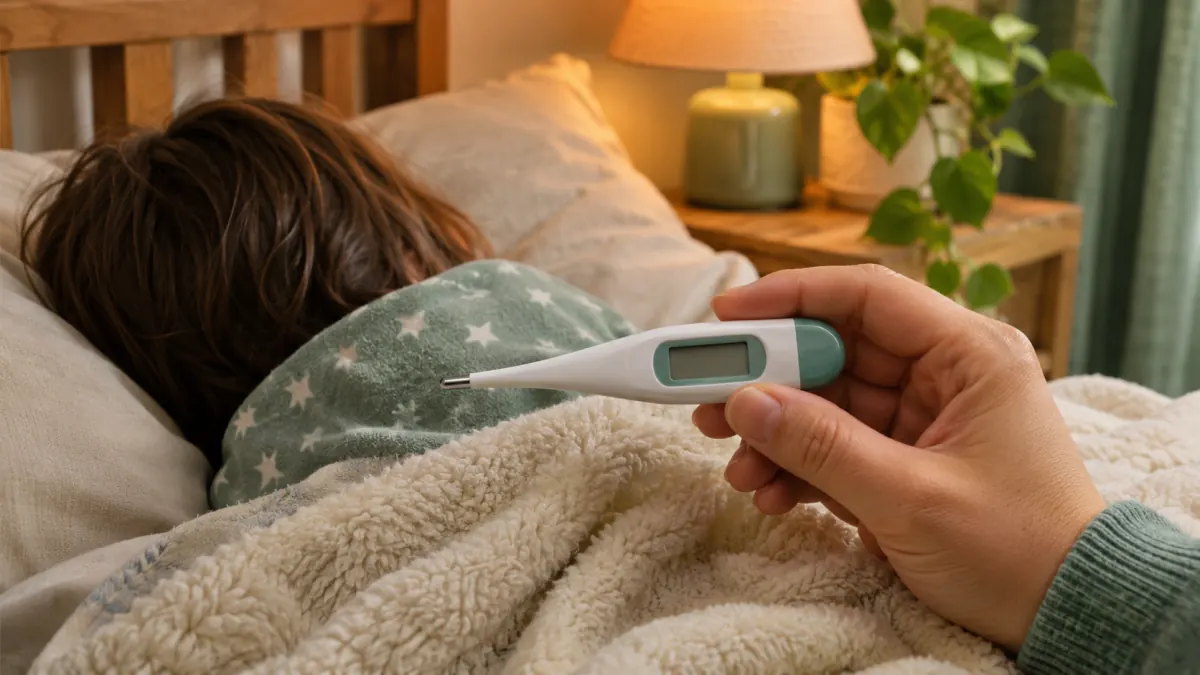
It is two in the morning. Your four-year-old wakes up crying, and when you put your hand on their forehead it feels like a radiator. You find the thermometer in the bathroom drawer, it reads 39.2°C, and suddenly a dozen questions arrive at once. Is that dangerous? Should you wake them to give medicine? Do you drive to the hospital in Markham, wait for the clinic to open, or just watch and see? Almost every parent in Stouffville has been in that hallway at some point. The good news is that most childhood fevers are caused by ordinary viral infections and settle on their own. The trick is knowing which details actually matter, and which ones can safely wait until morning.
What a fever is, and what it is not
A fever is not an illness. It is a sign that the body is fighting one. When the immune system detects an infection, it resets the brain’s internal thermostat to a higher temperature, which helps slow the growth of some germs and speeds up parts of the immune response. That is why a child can shiver and feel cold even while their skin is hot: their body is working to reach the new set point.
Parents are often most worried about the number on the thermometer, but for children over three months old, the height of the fever is a less reliable guide than how the child looks and behaves. A child at 39.5°C who is playing with blocks between doses of medicine is often less worrying than a child at 38.3°C who is limp and hard to wake.
It also helps to know that a fever caused by infection does not climb high enough to cause brain damage. That fear is common and understandable, but it is not something parents need to carry. The concern with fever is finding out what is causing it, not the temperature itself.
Taking an accurate temperature
Feeling a forehead tells you a child is warm; it does not tell you whether they have a fever. A digital thermometer is inexpensive and worth keeping at home. For many Stouffville families, it is the single most useful item in the medicine cabinet. The best method depends on age.
| Child’s age | Most reliable method | Also acceptable |
|---|---|---|
| Birth to 2 years | Rectal | Armpit (for a quick check; confirm a fever rectally) |
| 2 to 5 years | Rectal | Ear or armpit |
| Over 5 years | Mouth (oral) | Ear or armpit |
The number that counts as a fever also depends on where you measure:
- Rectal: 38.0°C or higher
- Mouth: 37.5°C or higher
- Armpit: 37.3°C or higher
- Ear: 38.0°C or higher
Forehead strip thermometers and many “touchless” devices are convenient but less precise. If one gives you a worrying number, double-check with a more reliable method.
Taking a rectal temperature, step by step
Many parents feel nervous about this, but it is quick and safe when done gently.
- Clean the thermometer tip with soap and cool water, then rinse.
- Cover the tip with a small amount of petroleum jelly.
- Lay your baby on their back with knees bent toward the chest, or tummy-down across your lap.
- Gently insert the tip about 2.5 cm (1 inch) into the bottom, holding it in place with your fingers.
- Wait for the beep, remove it, and read the number.
- Clean the thermometer well, and label it so it is not later used by mouth.
The age of your child changes everything
Doctors pay close attention to age because very young babies have immature immune systems and cannot show us clearly when something serious is going on.
Under 3 months
Any fever of 38.0°C or higher (rectal) in a baby under three months old needs to be seen by a doctor right away, even if the baby seems otherwise well. In practice, this usually means going to an emergency department such as Markham Stouffville Hospital or Uxbridge Hospital rather than waiting for a clinic appointment. Do not give fever medicine before the baby is assessed unless a doctor has advised it, because it can mask the fever.
3 to 6 months
A fever in this age group should be checked by a doctor, ideally the same day. Call the clinic or Health811 for guidance on where to go.
6 months and older
For older babies and children, you can usually watch at home for a day or two if the child is drinking, peeing normally, and acts reasonably well when the fever comes down. You should arrange a visit if:
- The fever lasts more than 72 hours (three days) in any child
- A child under two has had a fever for more than 24 hours with no obvious cause like a cold
- The fever went away for a day or more and then came back
- Your child has a chronic health condition or a weakened immune system
- They have other symptoms that concern you, such as ear pain, a very sore throat, painful urination, a rash, or a cough that is getting worse
- Your instincts tell you something is not right
That last point matters. Parents know their children better than anyone, and “they’re just not themselves” is a legitimate reason to have a child examined.
Keeping a feverish child comfortable
Treating a fever is about comfort, not chasing a particular number. If your child is sleeping peacefully, there is usually no need to wake them for medicine.
Fluids come first. Fever increases water loss. Offer small, frequent sips of water, milk, or an oral rehydration solution. Popsicles count. For babies, keep offering breast milk or formula more often.
Dress them lightly. One light layer of clothing and a sheet or thin blanket is enough. Bundling a hot child can push the temperature higher.
Medicine, if they are uncomfortable.
- Acetaminophen (such as Tempra or Tylenol) can be used from birth, but a baby under three months with a fever should be seen by a doctor first.
- Ibuprofen (such as Advil or Motrin) can be used from six months of age.
- Dose by your child’s weight, not age, using the measuring device that comes with the product. Children’s and infants’ formulas have different strengths, so read the label each time. If you are unsure of the right amount, a pharmacist in Stouffville can help you work it out.
- Never give ASA (Aspirin) to children or teenagers because of its link to Reye’s syndrome, a rare but serious condition.
- Avoid routinely alternating acetaminophen and ibuprofen unless a doctor or pharmacist has advised it, because it increases the chance of dosing errors.
Skip the old remedies. Cold baths, ice, and rubbing alcohol are uncomfortable, can make a child shiver (which raises temperature), and alcohol can be absorbed through the skin. A lukewarm cloth is fine if your child finds it soothing.
Keep them home. Children with a fever should stay home from school or daycare until they have been fever-free for at least 24 hours and feel well enough to take part.
Febrile seizures: frightening, usually harmless
Some young children, usually between six months and five years old, have a seizure when their temperature rises quickly. The child may stiffen, jerk, roll their eyes back, or become unresponsive for a minute or two. Watching this is terrifying, but simple febrile seizures do not cause brain damage and most children outgrow the tendency.
If it happens:
- Stay calm and note the time.
- Lay your child on their side on a safe surface, away from hard or sharp objects.
- Do not put anything in their mouth or try to restrain them.
- Call 911 if it is your child’s first seizure, if it lasts more than five minutes, if your child has trouble breathing, or if they do not wake up afterward.
Every child who has a first febrile seizure should be examined by a doctor to look for the cause of the fever.
Red flags: call 911 or go to the emergency department
Seek emergency care right away if your child of any age:
- Is very drowsy, floppy, or difficult to wake
- Is struggling to breathe, breathing very fast, or the skin between the ribs pulls in with each breath
- Has lips or face that look blue or grey
- Has a stiff neck, a severe headache, or seems confused
- Has a rash of small purple or red spots that do not fade when you press a glass against them
- Is crying inconsolably or has a high-pitched cry
- Shows signs of dehydration: no wet diaper or urine in 8 hours or more, very dry mouth, no tears, sunken eyes, or a sunken soft spot on a baby’s head
- Has a seizure (see above)
- Is under three months old with any fever
If you are not sure, Health811 (call 811) connects you to a registered nurse at any hour, which can be a calm voice to help you decide between the ER, a clinic visit, or watching at home.
What usually causes fevers in kids
Most fevers in children come from viruses: colds, influenza, COVID-19, RSV, stomach bugs, and the many viruses that make the rounds in Stouffville classrooms and daycares each fall and winter. These do not need antibiotics. Some fevers come from bacterial infections that may need treatment, such as:
- Ear infections, especially when a young child is pulling at an ear or waking at night in pain (see ear infection treatment)
- Strep throat, often with a very sore throat and swollen glands but little cough
- Urinary tract infections, which in young children may show up as fever alone
- Pneumonia, with fast breathing and a worsening cough
A doctor’s exam helps sort these apart. Sometimes a urine test, throat swab, or other test is needed. Other times, the most useful plan is a clear set of instructions on what to watch for and when to come back.
What to expect at a clinic visit
When you bring your child in for a fever assessment, it helps to have a few details ready:
- When the fever started, and the highest reading (and how you measured it)
- What medicine you have given, how much, and when
- How much your child has been drinking and how often they are peeing
- Other symptoms, including rashes, cough, vomiting, diarrhea, or ear pain
- Any recent travel, sick contacts, or new medications
- Your child’s vaccination history
The doctor will look at your child’s general appearance, check their ears, throat, chest, and skin, and may examine their tummy. With that information, they can tell you whether the illness is likely viral, whether a test or treatment is needed, and what warning signs to watch for over the next few days. Our childhood illness treatment page outlines the range of common problems the team sees.
Is teething a cause of high fever?
My child's fever comes back every few hours. Is the medicine not working?
Do children need routine vaccines to prevent fevers?
Having your child seen at HealthSmart
For children who are past the newborn stage and do not have emergency warning signs, a clinic visit is often the right next step. You can book a visit online, and if your family is looking for ongoing care with one practice, our family doctor page explains how registration requests work; they are reviewed by the clinic team. We are on Main Street in Stouffville, and because hours can change, please check our location page or call 905-642-6300 before you come.
This post shares general information about fever in children and does not replace an individual assessment by a health professional.