Ontario's Children's Vaccine Schedule in Stouffville: A Visit-by-Visit Guide for Parents
From the two-month visit to Grade 7 shots, a clear walk through Ontario's routine childhood vaccines, school record rules and catching up in Stouffville.
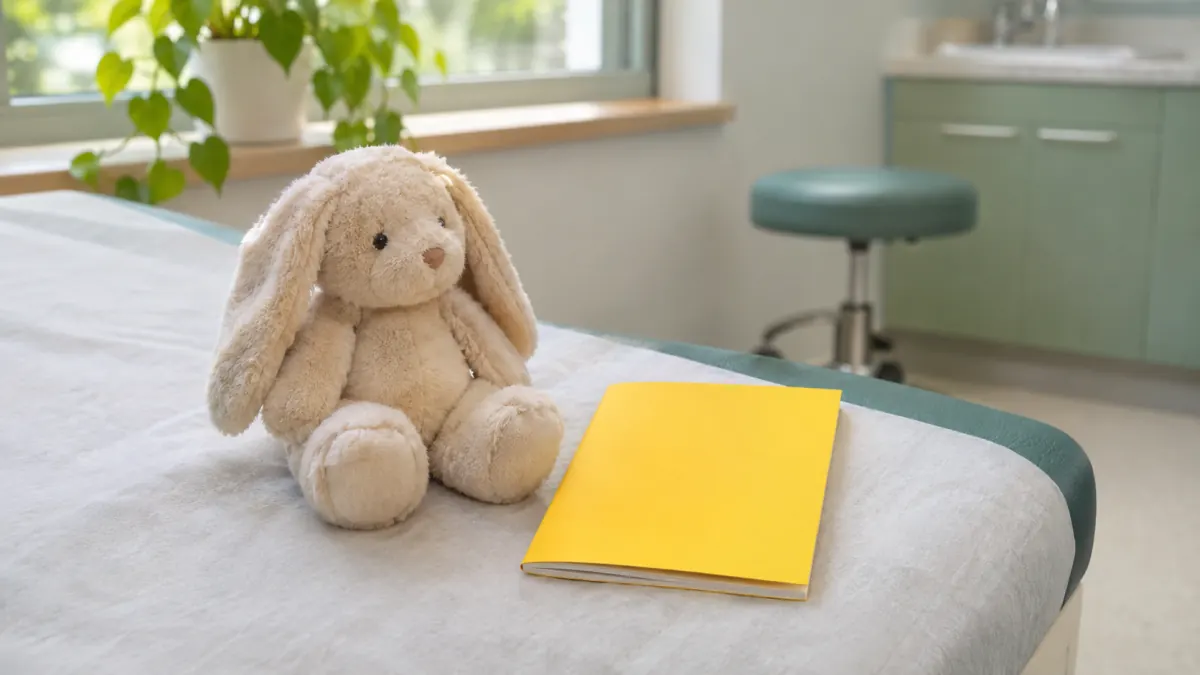
Three things every parent in Ontario should know about childhood vaccines, before we get into the details:
- Most routine shots happen in the first two years. The heaviest stretch is between two months and 18 months, with a booster round before kindergarten and another in Grade 7.
- Your clinic does not automatically report vaccines to the school system. In Ontario, parents are responsible for reporting their child’s immunizations to the local public health unit, which for Stouffville families is York Region Public Health.
- Falling behind is common and fixable. A missed appointment does not mean starting over. Clinicians build a catch-up plan from wherever your child is.
With those in mind, this guide walks through the publicly funded schedule visit by visit, explains what each vaccine protects against, and covers the practical side: the yellow card, school requirements, comfort tips and what to watch for afterward.
The routine schedule at a glance
The table below reflects Ontario’s publicly funded routine schedule for healthy children. Ontario updates its schedule from time to time as new vaccines and evidence come along, so your clinician may use slightly different products or timing, and children with certain medical conditions may be offered additional vaccines.
| Age | Vaccines usually given | Protects against |
|---|---|---|
| 2 months | DTaP-IPV-Hib, pneumococcal conjugate, rotavirus (oral) | Diphtheria, tetanus, pertussis (whooping cough), polio, Haemophilus influenzae type b, pneumococcal disease, rotavirus |
| 4 months | DTaP-IPV-Hib, pneumococcal conjugate, rotavirus (oral) | Same as above |
| 6 months | DTaP-IPV-Hib | Diphtheria, tetanus, pertussis, polio, Hib |
| 12 months | MMR, meningococcal C conjugate, pneumococcal conjugate | Measles, mumps, rubella, meningococcal C disease, pneumococcal disease |
| 15 months | Varicella | Chickenpox |
| 18 months | DTaP-IPV-Hib | Booster for diphtheria, tetanus, pertussis, polio, Hib |
| 4 to 6 years | Tdap-IPV, MMRV | Boosters for diphtheria, tetanus, pertussis, polio, measles, mumps, rubella and chickenpox |
| Grade 7 (school program) | Hepatitis B, HPV, meningococcal ACYW conjugate | Hepatitis B, human papillomavirus, four meningococcal strains |
| 14 to 16 years | Tdap | Teen booster for tetanus, diphtheria and pertussis |
| Every fall, from 6 months | Influenza (and COVID-19 as recommended) | Seasonal flu and COVID-19 |
Ontario has also offered RSV protection for infants in recent respiratory seasons. Eligibility has changed from year to year, so ask at your baby’s visit or at birth whether your child qualifies.
Visit by visit: what actually happens
The two-, four- and six-month visits
The first three vaccine appointments usually line up with well-baby visits, where the clinician also checks weight, length, head circumference, feeding and development. At two and four months, babies typically receive two injections (one in each thigh) plus rotavirus drops by mouth. The six-month visit is usually a single injection.
Pertussis protection is a big reason the early timing matters. Whooping cough is most dangerous in young babies, who can stop breathing during coughing spells. Starting on time builds protection as early as possible. Rotavirus vaccine also has strict age limits: the first dose must be given while the baby is still young, generally before about 15 weeks of age, and the series finished by about eight months. If a rotavirus dose is missed, it often can’t be made up later, so try not to delay these early visits.
The 12-month visit
This one is easy to remember because it falls on or just after the first birthday. Ontario’s schedule says these vaccines should be given on or after the first birthday, not before; doses given too early may not count. Three vaccines are given at this visit: MMR, meningococcal C and a pneumococcal booster. Some children get a mild fever or a faint rash about seven to 12 days after the MMR, which is a normal reaction to the live vaccine and isn’t contagious.
The 15- and 18-month visits
The chickenpox vaccine is given at 15 months, and the DTaP-IPV-Hib booster at 18 months. The 18-month visit is also an important developmental checkpoint in Ontario. Clinicians look closely at language, social skills, movement and behaviour, and it is a natural time to raise any concerns. Our growth and development assessments cover this kind of review.
The pre-school boosters (4 to 6 years)
Before or around the start of school, children receive Tdap-IPV and MMRV (measles, mumps, rubella and varicella combined). These second doses and boosters are what turn early protection into long-lasting immunity. Many families in Stouffville get these done in the year before junior kindergarten or senior kindergarten, so they are not scrambling when the school sends a notice.
Grade 7 and the teen booster
In Grade 7, York Region Public Health runs school-based clinics, including in Stouffville schools, for hepatitis B, HPV and meningococcal ACYW vaccines. If your child misses the school clinic, these vaccines can often still be given later; eligibility for publicly funded doses can depend on age and grade, so ask. Around age 14 to 16, a Tdap booster is due. That teen booster is easy to forget because no school form prompts it at that age, so it is worth putting a reminder in your phone. For more on how health visits change in the teen years, see our post on teen health visits.
School and daycare: the paperwork side
Ontario’s Immunization of School Pupils Act requires students to be immunized against diphtheria, tetanus, polio, measles, mumps, rubella, meningococcal disease, pertussis and, for children born in 2010 or later, varicella, unless they have a valid exemption. Licensed child care centres have similar requirements.
Here is how the system works in practice:
- Your child receives vaccines at a clinic.
- The clinician records them on your child’s yellow immunization record card and in the clinic chart.
- You report the vaccines to York Region Public Health, usually online.
- If public health’s records are incomplete, you may receive a notice asking for updated information, and a student can eventually be suspended from school until records are brought up to date.
Many suspension notices go out not because a child is unvaccinated, but because the vaccines were never reported. Keeping the yellow card current and reporting after each visit, or at least after the 4- to 6-year boosters, saves a lot of last-minute stress.
Lost the yellow card?
It happens. Your clinic chart should still have a record of vaccines given there. If shots were given elsewhere, such as at a previous clinic or in another province, you may need to request records from those providers. Bring whatever you have to an appointment and the clinician can help piece together the history.
Behind on the schedule? How catch-up works
Children fall behind for all sorts of reasons: a move, a new baby, illness at the time of an appointment, a family doctor retiring, or arriving in Stouffville from a country with a different schedule. The key principle is that you rarely need to restart a series. The clinician counts the doses already received, checks the minimum intervals between doses, and plans the remaining ones, sometimes giving several at one visit to catch up faster. Our catch-up immunization service is designed for exactly this.
Records from other countries can be translated and matched against Ontario’s schedule. Some vaccines may be counted as is, some may need an extra dose, and occasionally a blood test is used to check immunity.
Making the visit easier for your child
Vaccine visits are short, but they can loom large for kids (and parents). A few evidence-supported comfort measures:
- For babies: breastfeed or offer a bottle during or right after the injection, or give a small amount of sugar water if your clinician suggests it. Holding your baby skin to skin or upright on your lap helps.
- For toddlers and young children: sit them on your lap in a hug hold, bring a favourite toy, and use distraction, such as bubbles, a song or a video.
- For older children: be honest that it will pinch for a second, avoid saying “it won’t hurt,” and let them choose which arm when possible.
- Topical numbing creams or patches from the pharmacy can be applied beforehand for children who are very anxious. Check the package for timing and ask the pharmacist which products suit your child’s age.
- Stay calm and matter-of-fact. Kids read our cues closely.
Avoid giving acetaminophen or ibuprofen routinely before vaccines “just in case.” It is fine to use afterward for fever or soreness, at the right dose for your child’s weight.
After the shots: what’s normal and what isn’t
Common, expected reactions in the day or two afterward include:
- Redness, swelling or tenderness at the injection site
- Fussiness or sleepiness
- A low-grade fever
- With MMR and varicella, a mild fever or small rash one to two weeks later
Serious reactions are rare. Clinics ask families to wait about 15 minutes after vaccination so staff can respond quickly to the very uncommon allergic reaction.
Call 911 if, after a vaccine, your child develops difficulty breathing, swelling of the face, lips or tongue, hives spreading over the body, or becomes pale, floppy or unresponsive. Seek prompt medical care for a fever over 40°C, a seizure, crying that cannot be settled for more than three hours, or any reaction that worries you. Reactions should also be reported to your clinician so they can be documented.
Can my child get vaccines if they have a cold?
Is it safe to give several vaccines at the same visit?
Are routine childhood vaccines covered by OHIP?
Keeping your child on track with HealthSmart
Whether your baby is due for their two-month shots, your four-year-old needs pre-school boosters, or you have just moved to Stouffville and aren’t sure where your child’s record stands, our team can help. Book a visit and bring the yellow card or any records you have. Our childhood vaccination appointments include time for questions, and we can review development and general health at the same visit through our children’s health services.
This guide is general information for Stouffville parents, not personal medical advice; Ontario’s schedule may change, so confirm details with your child’s clinician.