Cutting Back on Alcohol in Stouffville: What the New Guidance Means for You
Canada's 2023 alcohol guidance says less is better. See where your weekly drinks fall, proven ways to cut back in Stouffville, and when to get medical help.
For more than a decade, Canadians were told that up to ten drinks a week for women and fifteen for men counted as low risk. Many people still carry those numbers around in their heads. In January 2023, that advice was replaced. Canada’s Guidance on Alcohol and Health, developed by the Canadian Centre on Substance Use and Addiction, took a fresh look at the research and landed somewhere quite different: when it comes to alcohol, less is better, and the risks start at lower amounts than most of us assumed.
The new guidance is not a rule, and it does not tell anyone they must stop drinking. It is information to help you make your own choices. With the holidays behind us and plenty of people in Stouffville trying a dry or lighter January, this is a good moment to understand what the guidance actually says, how to count what you drink, and what works when you want to cut back. We will also cover when cutting back on your own is not safe, and where to find support.
What Canada’s guidance says
The 2023 guidance describes risk as a continuum. Instead of a single cut-off between “safe” and “unsafe,” the risk of harm rises gradually with each additional drink per week.
| Standard drinks per week | Risk level described in the guidance |
|---|---|
| 0 | Not drinking has benefits, such as better health and better sleep |
| 2 or fewer | Low risk: you are likely to avoid alcohol-related consequences for yourself or others |
| 3 to 6 | Moderate risk: your risk of developing several types of cancer, including breast and colon cancer, increases |
| 7 or more | Increasingly high risk: your risk of heart disease or stroke also increases significantly |
A few other points from the guidance are worth knowing:
- Each additional drink makes a difference. Going from ten drinks a week to six lowers your risk, even if you do not reach two.
- Avoid more than two drinks on any one occasion. Drinking more at once raises the risk of injuries and other harms, regardless of your weekly total.
- Pregnancy. When pregnant or trying to get pregnant, there is no known safe amount of alcohol.
- Breastfeeding. Not drinking is the safest option.
- Sex differences. At low levels, the risks are similar for men and women. Above six drinks a week, risk increases more steeply for women.
- Young people should delay starting to drink for as long as possible.
- Do not drink at all if you are taking medications or other substances that interact with alcohol, or if you have certain health conditions.
The guidance also notes that the idea of drinking for heart health has not held up well. Newer research suggests the apparent benefits seen in older studies were largely due to how those studies were designed.
Counting accurately: what is a standard drink?
Most people underestimate how much they drink, not because they are hiding anything but because glasses, cans and pours have grown. In Canada, one standard drink contains about 13.45 grams of pure alcohol, which equals:
- 341 ml (12 oz) of beer, cider or cooler at 5% alcohol
- 142 ml (5 oz) of wine at 12% alcohol
- 43 ml (1.5 oz) of spirits at 40% alcohol
That means:
- A 473 ml tall can of 5% beer is about 1.4 standard drinks. A tall can of a stronger craft beer or a high-alcohol cooler can be two or more.
- A generous restaurant pour of wine, or a large home glass filled halfway, may be 1.5 to 2 drinks.
- A standard 750 ml bottle of 12% wine holds about five standard drinks.
- A mixed drink or cocktail can contain two or more servings of spirits.
Try tracking for a week before changing anything. Write down each drink, its size and strength. It is often eye-opening, and it gives you a real starting point.
Why it is worth cutting back
Reducing alcohol, even without stopping, has benefits that many people notice within weeks:
- Better sleep. Alcohol may help you fall asleep, but it fragments sleep later in the night and worsens snoring and sleep apnea. If you struggle with sleep, our post on sleep problems and insomnia is a helpful companion.
- Lower blood pressure. Regular drinking raises blood pressure, and cutting back can bring it down. If you are managing hypertension, our high blood pressure management care can track the change.
- Mood and anxiety. Alcohol can worsen low mood and anxiety, especially the day after.
- Weight and blood sugar. Drinks carry a lot of calories and can affect blood sugar control in people with diabetes.
- Liver health. Fatty liver can begin with regular drinking and often improves when alcohol is reduced.
- Long-term risks. Lower intake means lower risk of several cancers, including mouth, throat, esophagus, liver, breast and colon, as well as heart disease and stroke.
- Safety. Fewer drinks mean fewer falls, injuries and impaired driving risks on the back roads around Stouffville, Ballantrae and Goodwood.
A practical plan for drinking less
Change sticks best when it is specific. Here is an approach many people find useful:
- Pick a goal you can measure. “Drink less” is vague; “no more than four drinks a week, and never more than two in a sitting” is clear. Some people prefer a set number of alcohol-free days, or a full break for a month.
- Know your starting point. Use your tracking week as a baseline.
- Identify your triggers. Is it the drive home from work, Friday pizza, watching the game, stress, or certain friends? Plan specifically for those moments.
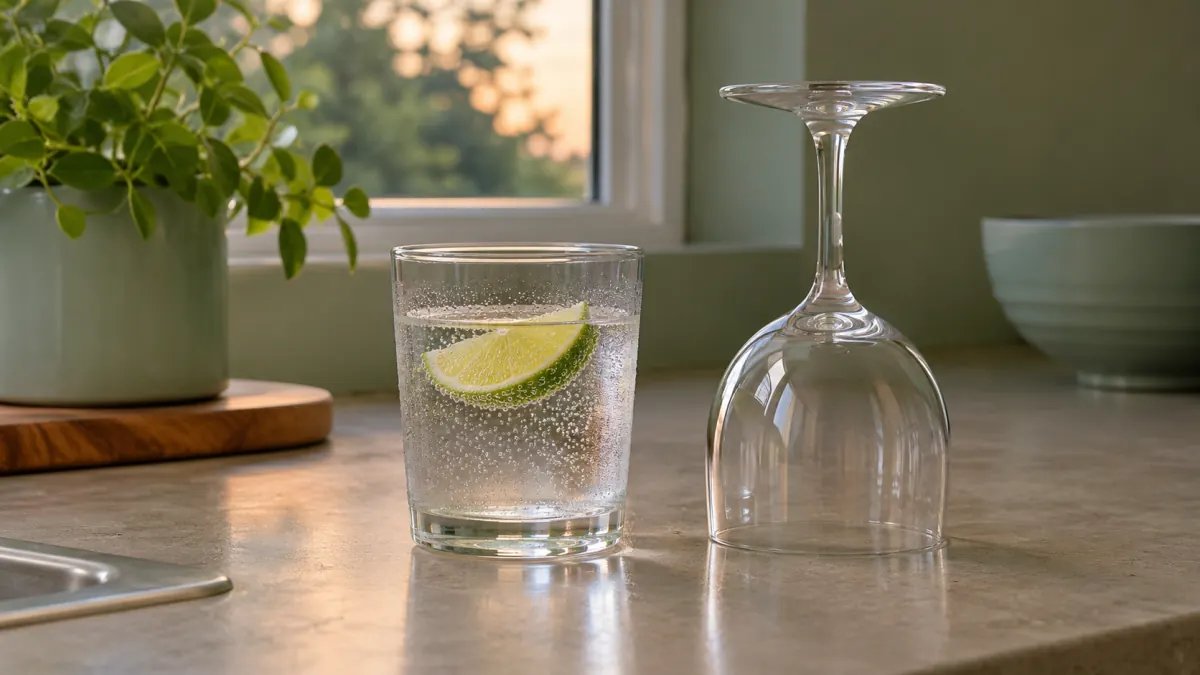
- Change the routine around the drink. If the habit is a beer while cooking dinner, swap in a sparkling water with lime, a non-alcoholic beer or a cup of tea in the same glass at the same time.
- Slow down. Alternate alcoholic drinks with water, eat before and while drinking, and choose lower-alcohol options.
- Keep less at home. It is harder to have a second glass if the bottle is not in the fridge.
- Prepare a line for social events. “I’m driving,” “I’m taking a break this month,” or simply “No thanks” is enough. Holding a non-alcoholic drink cuts down on offers.
- Fill the time. A walk on the Stouffville Reservoir trail after dinner, a class at the Whitchurch-Stouffville Leisure Centre, or a project you have been putting off can replace the evening drink.
- Review weekly. Look at what worked and what did not. A slip is information, not failure.
Many people find a supportive app, a friend making the same change, or a weekly check-in helpful.
Who should talk to a clinician first
For most people, cutting back gradually is safe. But for some, alcohol needs medical attention before or during any change.
Do not stop suddenly on your own if you drink heavily every day. People who have been drinking large amounts daily for a long period can develop alcohol withdrawal when they stop or cut down sharply. Mild withdrawal causes shakiness, sweating, anxiety, nausea and poor sleep. Severe withdrawal can cause seizures, hallucinations and a dangerous condition called delirium tremens. If you have had withdrawal symptoms before, need a drink in the morning to feel steady, or drink a lot daily, talk to a doctor about a safe plan.
You should also speak with a clinician if:
- You have tried to cut back before and found you could not
- Alcohol is causing problems with work, family, relationships, money or the law
- You drink to cope with stress, anxiety, grief, trauma or low mood
- You take medications that interact with alcohol, including sedatives, sleeping pills, opioids and some pain or mood medications
- You have liver disease, pancreatitis, heart failure or another condition affected by alcohol
- You are pregnant or planning a pregnancy
How a doctor can help
A conversation about alcohol is a routine part of medical care, and it is handled confidentially and without judgment. Support may include:
- A frank look at the numbers, using your tracking diary, and a plan that fits your goals
- Blood work to check liver function, blood counts and other markers when appropriate; our blood work requisitions service handles the paperwork
- Medications that reduce cravings or help prevent relapse, such as naltrexone or acamprosate, for people with alcohol use disorder. These are underused and can make a real difference.
- A safe withdrawal plan if it is needed, which sometimes means a supervised setting
- Treatment for related concerns, such as depression, anxiety, insomnia or high blood pressure
- Connections to counselling, peer support and community programs
ConnexOntario offers free, confidential information about addiction and mental health services across the province, 24 hours a day, at 1-866-531-2600.
Urgent situations
Call 911 or go to the nearest emergency department for:
- Signs of alcohol poisoning: confusion, vomiting while drowsy, seizures, slow or irregular breathing, bluish or pale skin, low body temperature, or being unable to wake someone. Turn the person on their side and stay with them until help arrives.
- Seizures, hallucinations or severe confusion during withdrawal
- Vomiting blood or passing black, tarry stools
- Yellowing of the skin or eyes with abdominal swelling or confusion
If you or someone you care about is thinking about suicide, call or text 9-8-8, the Suicide Crisis Helpline, at any time. Markham Stouffville Hospital and Uxbridge Hospital have the nearest emergency departments.
Talking with HealthSmart about alcohol
If you would like help setting a goal, checking in on your health, or exploring treatment options, you can book an appointment online or by calling 905-642-6300. Some people find it easier to start this conversation from home through virtual care, with in-person follow-up when needed. We are at 208-5892 Main Street in Stouffville; please check our location page for current hours, as they may change.
This post provides general information about alcohol and health and is not a replacement for individual medical advice.