Diabetic Foot Care in Stouffville: Daily Checks That Prevent Serious Problems
Small blisters can turn serious when you live with diabetes. Stouffville patients can use this daily foot routine, winter footwear advice and warning-sign list.
A man in his early sixties, a composite of many patients seen in family practice, buys a sturdy pair of winter boots in January and wears them straight out for a long walk on a cold, bright Saturday. His feet feel fine, or rather, they do not feel much of anything, which he has stopped noticing over the years since his type 2 diabetes was diagnosed. That evening he does not look at his feet. Nor the next day. By the time his sock sticks to his heel later that week, a blister has broken open, the skin around it is red, and a small wound has begun that will take months to heal. Nothing about this story is dramatic, and that is the point. Most serious diabetic foot problems start with something ordinary: a rubbing boot, a corn, a nail trimmed too short, a small cut that went unnoticed. In a Stouffville winter, with heavy boots, dry indoor air, road salt and cold toes, those everyday risks multiply. The good news is that a few minutes of attention each day prevents a great deal of harm.
Why diabetes changes the rules for feet
Diabetes affects the feet in two main ways, and they compound each other.
Nerve damage (peripheral neuropathy)
Over time, high blood sugar can damage the nerves that carry sensation from the feet. Neuropathy often starts in the toes and works upward. Some people notice tingling, burning or pins and needles, especially at night. Many notice nothing at all, simply a gradual loss of feeling. Without normal sensation, a pebble in a shoe, a blister or a burn from a hot bath may go completely unnoticed. Neuropathy can also change the shape of the foot and the way weight is distributed, creating pressure points where calluses and ulcers form.
Reduced circulation (peripheral arterial disease)
Diabetes speeds up narrowing of the arteries, including those supplying the legs and feet. Poorer blood flow means wounds heal more slowly and infections are harder to fight. Smoking makes this much worse. Signs can include cold feet, pain in the calves when walking that eases with rest, shiny hairless skin on the shins, and slow-healing sores.
When reduced feeling meets reduced blood flow, a minor injury can become a foot ulcer, and an ulcer can become infected. Foot complications are among the leading reasons for hospital stays in people with diabetes, and they are a major cause of lower-limb amputation. Much of that is preventable.
Your daily foot routine
Set aside a few minutes every day, perhaps after a shower or before bed. Make it as automatic as brushing your teeth.
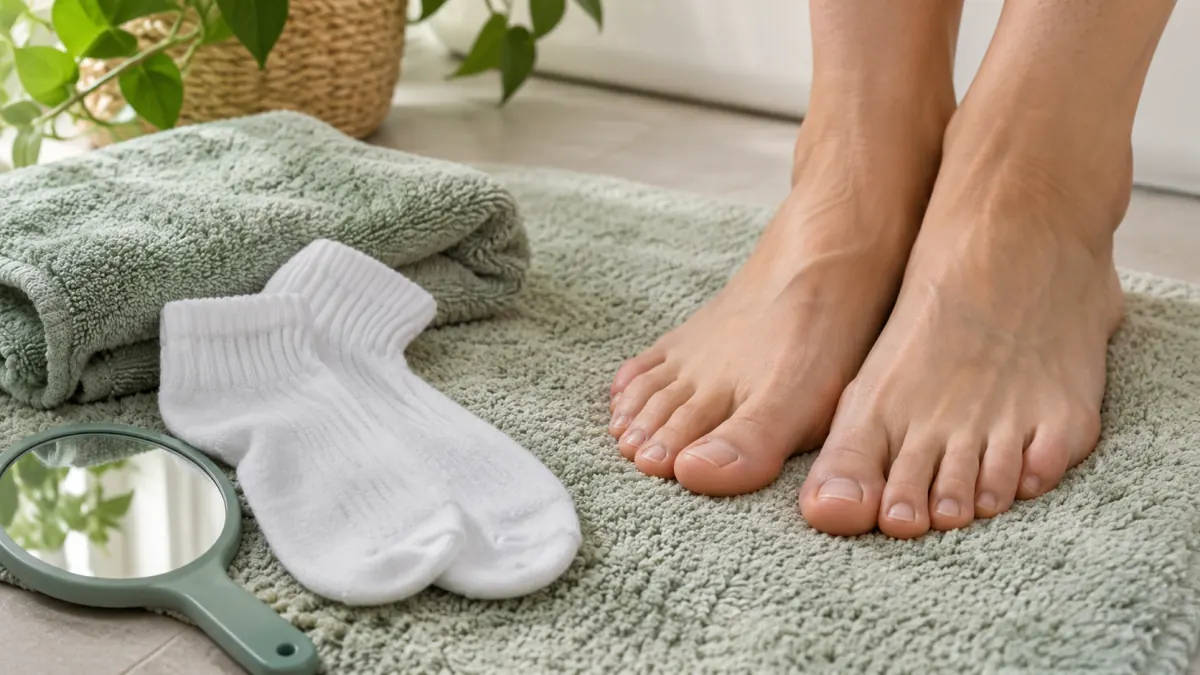
- Look at both feet, every surface. Check the tops, soles, heels and between every toe. Use a hand mirror for the soles, or ask a family member to help if your eyesight or flexibility makes it difficult. Some people take a quick photo with their phone.
- Look for anything new: cuts, blisters, red areas, swelling, cracks, calluses, corns, ingrown nails, colour changes, or drainage on your socks.
- Wash gently in lukewarm water. Test the temperature with your elbow or a thermometer, not your foot. Do not soak for long periods, which can dry and crack the skin.
- Dry thoroughly, especially between the toes, where moisture invites fungal infection and skin breakdown.
- Moisturize the tops and soles to prevent cracking, but avoid putting cream between the toes.
- Put on clean, dry socks. Choose seamless or smooth socks that do not leave deep marks on the skin. Change them if they get damp.
- Check your shoes before putting them on. Run your hand inside to find stones, rough seams or anything that has fallen in.
Footwear through a Stouffville winter
Winter brings specific challenges, and footwear is often where foot injuries begin.
- Break in new boots gradually. Wear new footwear for an hour or two at a time at first, and check your feet afterward for red marks.
- Choose the right fit. Shop later in the day when feet are slightly larger, allow a thumb’s width at the toe, and make sure the toe box is wide and deep enough. Wear the socks you will actually use.
- Keep feet dry. Waterproof boots matter during slush season. Bring a spare pair of socks for long days out, and swap them if your feet get wet.
- Never go barefoot, even indoors. Wear supportive slippers with a firm sole around the house.
- Warm feet safely. Do not use heating pads, hot water bottles or space heaters near the feet, and do not prop feet against a fireplace or car heater vent. With reduced feeling, serious burns can happen without pain. Warm socks are the safer option.
- Watch for cold injury. Numb feet are at higher risk of frostbite because the warning signs are muted. Limit time outside in severe cold and check your feet after coming in.
- Mind the salt. Road and sidewalk salt can dry and crack the skin if it soaks through. Rinse and dry feet if your socks become wet with slush.
If your feet have changed shape or you have had ulcers before, specialized footwear or custom orthotics may be recommended through a foot care specialist.
Nails, corns and calluses: what not to do
- Trim toenails straight across after bathing, when they are softer, and gently smooth the edges with a file. Do not cut down into the corners.
- Do not cut corns or calluses yourself, and avoid razor blades and over-the-counter corn removers or acid pads, which can burn healthy skin.
- Seek professional help if you cannot see or reach your feet well, if your nails are very thick or curved, or if you have significant neuropathy or circulation problems. A chiropodist or podiatrist can provide regular foot care.
- Get ingrown nails assessed early. Our guide to ingrown toenails explains treatment options, but if you have diabetes, do not attempt home “surgery” on them.
The annual foot exam
Everyone with diabetes should have their feet examined by a health professional at least once a year, and more often if they have neuropathy, circulation problems, foot deformities or a past ulcer. The exam is quick and painless and usually includes:
- Inspection of skin, nails and foot shape
- Checking sensation, commonly with a thin nylon filament touched to several points on the sole, and sometimes with a tuning fork for vibration sense
- Feeling the pulses at the ankle and top of the foot
- Looking at your footwear
The results help your clinician assess your risk level and decide how often to recheck. Foot checks fit naturally into regular diabetes management visits, alongside blood sugar, blood pressure, kidney and eye checks. Our broader article on living well with type 2 diabetes covers those other pieces.
Keeping the bigger picture in view
Foot health depends heavily on overall diabetes care. Keeping blood sugar within your target range slows nerve damage. Controlling blood pressure and cholesterol protects blood vessels. Stopping smoking is one of the most powerful things you can do for circulation, and help with quitting is available.
Warning signs: when to get help
See a clinician within a day or two if you notice
- A blister, cut or sore that is not clearly improving after a day or two
- A new ingrown nail or a corn that is painful or bleeding
- Cracked skin on the heels that is deep or weeping
- Fungal infection between the toes with broken skin
- New numbness, tingling or burning in the feet
Early wound care makes a large difference. A minor sore can often be managed with minor wound care and regular dressing changes, with close follow-up.
Go to the emergency department or call 911 if you have
- Spreading redness, warmth or swelling, particularly with fever, chills or feeling unwell
- A wound with pus, a foul smell or red streaks moving up the leg
- Skin that turns black, blue or very pale, or a foot that is suddenly cold and painful, which may indicate a blocked artery
- A red, hot, swollen foot with or without pain, even without a wound, which can be a sign of a serious joint and bone condition called Charcot foot or of deep infection
- High or very low blood sugars that you cannot bring back into range alongside an infection
The nearest emergency departments for Stouffville residents are Markham Stouffville Hospital and Uxbridge Hospital. If you are unsure, Health811 (dial 811) is available day and night.
My feet do not hurt, so do I still need to check them?
Foot checks as part of your diabetes care
At HealthSmart Medical Clinic, 208-5892 Main Street in Stouffville, foot assessments are part of regular diabetes follow-up. If it has been more than a year since anyone examined your feet, or you have noticed a change, book an appointment or call 905-642-6300. Clinic hours can change with the seasons, so check our location page before coming in, and leave your boots on until you are in the exam room; we will take it from there.
This post offers general foot care information for people in Stouffville living with diabetes and is not a replacement for individual advice from your health care team.