Dry Eyes in Stouffville: Screens, Furnace Air and Gritty Mornings
Burning, watery or gritty eyes after screen time? Why dry eye flares in Stouffville homes each fall, what helps at home, and which symptoms need urgent care.
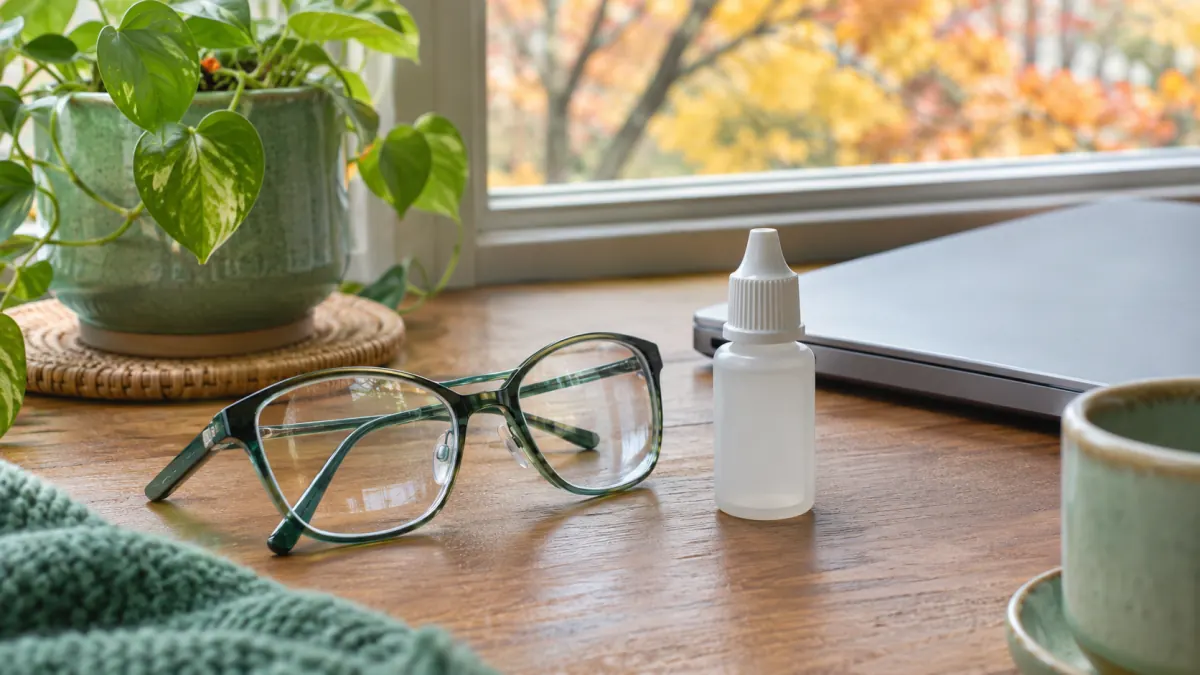
Your eyelids work a little like windshield wipers on a dusty road. Every blink sweeps a fresh, thin film of tears across the front of the eye, clears away debris, and smooths the surface so light focuses cleanly. When that film is too thin, evaporates too fast, or is spread unevenly, the surface dries out between blinks, and you feel it as burning, grittiness, blurry patches that clear when you blink, or, oddly enough, eyes that water constantly.
Dry eye is one of the most common reasons adults rub their eyes through an afternoon and assume nothing can be done. It is rarely dangerous, but it is genuinely uncomfortable, it can make reading and driving at night harder, and it often improves a great deal with a few targeted changes. This article walks through why it happens, why it seems to get worse around the time furnaces come on in Stouffville, what you can try at home, and when red or painful eyes need to be seen quickly.
What the tear film actually does
Tears are not just salty water. The film that coats your eye has three layers working together:
- An oily outer layer made by tiny glands along the edges of your eyelids (the meibomian glands). This oil slows evaporation.
- A watery middle layer produced by the tear glands. It keeps the surface moist and carries nutrients and infection-fighting proteins.
- A mucus inner layer that helps the watery layer cling evenly to the eye.
Problems with any one of these can cause dry eye. Clinicians often divide it into two broad types, although many people have a mix of both.
Evaporative dry eye is the more common type. The oil glands along the lid margin become blocked or produce thick, poor-quality oil, so tears evaporate too quickly. This is often linked to blepharitis (inflammation of the eyelid edges), rosacea, and long hours of screen use with reduced blinking.
Aqueous-deficient dry eye means the tear glands are not producing enough of the watery layer. It is more common with age, after menopause, with certain medications, and with autoimmune conditions such as Sjögren’s syndrome or rheumatoid arthritis.
Why watery eyes can still be dry eyes
It surprises many people that dry eye can cause tearing. When the surface becomes irritated, the eye responds with a flood of reflex tears. These emergency tears are mostly water, lack the oil and mucus to stay put, and spill over the lid. So you can be dabbing your cheeks while the underlying problem is still poor-quality tear film.
Why it seems worse in the fall and winter
Late October and November bring a noticeable uptick in dry eye complaints. A few things stack up at once in Stouffville households:
- Forced-air heat. Once the furnace switches on, indoor humidity can drop sharply. Dry air pulls moisture from the eyes as readily as it does from skin and lips.
- More time indoors and on screens. Shorter days push us toward laptops, phones and TV. When we concentrate on a screen, we blink far less often, and many blinks become incomplete, meaning the lids do not fully close.
- Wind and cold outside. A brisk walk along the Stouffville Reservoir trail on a windy day, or clearing the driveway in a north wind, can leave eyes stinging and watering.
- Car heater vents. Hot air blowing toward the face on the commute down Highway 48 or the 404 is a classic trigger.
If your skin also gets dry and itchy at this time of year, the pattern is the same; our article on eczema and dry winter skin covers that side of it.
Common contributors worth knowing
| Contributor | How it affects the eyes |
|---|---|
| Long screen sessions | Fewer and incomplete blinks, faster evaporation |
| Contact lenses | Can disrupt the tear film; overwear makes it worse |
| Age and hormonal changes | Tear production often falls, especially after menopause |
| Certain medications | Antihistamines, some antidepressants, some blood pressure pills, acne medication such as isotretinoin, and others can reduce tears |
| Eyelid conditions | Blepharitis, rosacea and blocked oil glands |
| Autoimmune and thyroid conditions | Sjögren’s syndrome, rheumatoid arthritis, lupus and thyroid eye disease can all involve dry eye |
| Previous eye surgery | Some people notice dryness for a period after laser vision correction |
| Environment | Dry indoor air, fans, wind, smoke |
Never stop a prescribed medication on your own because you suspect it is drying your eyes. Bring it up instead; there is often an alternative or a way to manage the side effect.
Home steps that genuinely help
Most mild dry eye responds to a combination of the following. Give changes two to four weeks before deciding whether they are working; the surface of the eye needs time to settle.
1. Use artificial tears properly
Over-the-counter lubricating drops are the first step for most people. A few practical points:
- Use them on a schedule, not just when your eyes hurt. Three or four times a day while you are working at a screen is a reasonable start.
- If you need drops more than about four times a day, choose preservative-free drops (usually sold in single-use vials or special multi-dose bottles). Preservatives can irritate the eye with frequent use.
- Gels and ointments are thicker. They blur vision for a while, so they are usually best at bedtime.
- Be cautious with “redness relief” drops. They shrink blood vessels to whiten the eye but do not treat dryness, and frequent use can lead to rebound redness.
A pharmacist can help you compare options on the shelf.
2. Warm compresses and lid hygiene
If your eyes feel worst in the morning, or the lid edges look red or crusty, blocked oil glands may be part of the problem. A warm compress for five to ten minutes, followed by a gentle massage of the lids toward the lashes, can help soften and release the oil. A clean face cloth soaked in warm (not hot) water works, though it cools quickly; microwaveable eye masks designed for this purpose hold heat longer. Afterward, gently clean along the lash line with a lid wipe or a diluted, tear-free cleanser on a clean cloth.
3. Blink on purpose and follow the 20-20-20 rule
Every 20 minutes, look at something about 20 feet away for 20 seconds. While you do, blink fully a few times, letting the lids close completely. It sounds trivial, but people who try it during a long workday often notice a real difference. Placing the monitor slightly below eye level also helps, because the eyes are less wide open when looking down.
4. Change the air around you
- Run a humidifier in the bedroom or home office through the heating season, and clean it as the manufacturer recommends.
- Point car vents toward your feet or chest rather than your face.
- Avoid sitting directly in front of fans or heating registers.
- Wraparound sunglasses on windy days help more than you might expect.
5. Look after the basics
Drinking enough water, getting adequate sleep and avoiding smoke all support a healthier eye surface. Some people try omega-3 supplements; the evidence is mixed, so discuss it with your doctor or pharmacist before spending money on them.
Contact lens wearers
Contact lenses sit right in the tear film. If you wear them and your eyes are dry, cut back on wearing time, never sleep in lenses unless they are specifically approved for it, replace them and their cases on schedule, and ask your eye care provider whether a different lens material or rewetting drop is better suited to you. Any red, painful eye in a contact lens wearer should be assessed promptly, because infections of the cornea can progress quickly.
When dry eye is not just dry eye
Most dry eyes are a nuisance rather than an emergency. Some eye symptoms, however, should never be waited out.
Go to emergency (Markham Stouffville Hospital or Uxbridge Hospital are the closest) or call 911 if you have:
- Sudden loss of vision or a curtain or shadow moving across your vision.
- A sudden shower of new floaters or flashes of light.
- Severe eye pain, especially with headache, nausea, a hazy cornea or seeing halos around lights.
- A chemical splash in the eye. Rinse with lots of clean water for at least 15 minutes first, then get care.
- An eye injury from a high-speed object, such as metal from grinding or a hammer strike.
Book a prompt same-day visit if you have:
- A red, painful eye while wearing contact lenses.
- Marked light sensitivity or blurred vision that does not clear with blinking.
- Thick yellow or green discharge, or swelling of the lids.
- Redness in one eye only that is getting worse.
- Dry eye together with a dry mouth, joint pain or swelling, or a new rash, which may point to an autoimmune condition worth investigating.
If you are not sure whether a red eye is simple conjunctivitis, our post on pink eye covers the differences.
Who checks what: family doctor or eye care provider?
Both have a role, and many people in Stouffville end up seeing both. Your family doctor or a walk-in physician can:
- Review your symptoms and medication list for drying side effects.
- Look for underlying conditions such as thyroid disease, rosacea or autoimmune disease, and arrange laboratory testing if needed.
- Treat related problems like blepharitis or allergic conjunctivitis.
- Arrange a specialist referral to an ophthalmologist when symptoms are severe or do not respond to treatment.
Optometrists can examine the surface of the eye in detail with specialized equipment, measure tear production and quality, and recommend or provide more advanced dry eye treatments. In Ontario, OHIP covers routine eye exams for children and teens under 20 and adults 65 and older, and covers exams for people with certain medical conditions; for many adults between those ages, a routine eye exam is not covered. Ask the optometry office about coverage before your visit.
Can screen glasses or blue-light filters cure dry eyes?
Are dry eyes a normal part of getting older?
Is it safe to use eye drops every day?
Getting your eyes looked at in Stouffville
If gritty, burning eyes have become part of your daily routine, a visit can help sort out whether medications, an eyelid problem or an underlying condition is playing a role. You can book an appointment at HealthSmart Medical Clinic at 208-5892 Main Street, or start with a virtual care visit to talk through symptoms and drop options, with an in-person exam arranged if the doctor needs to see the eye. Clinic hours may change, so please check our location page or call 905-642-6300 before coming in. Sudden vision changes or severe pain are emergency symptoms and should go straight to a hospital.
This article is general health information and is not a substitute for an assessment of your own eyes by a qualified professional.