Fall Allergies and Ragweed Season in Stouffville
Sneezing every September? A Stouffville clinic explains ragweed season, fall mould, smart antihistamine use, and when allergy symptoms deserve a doctor's visit.
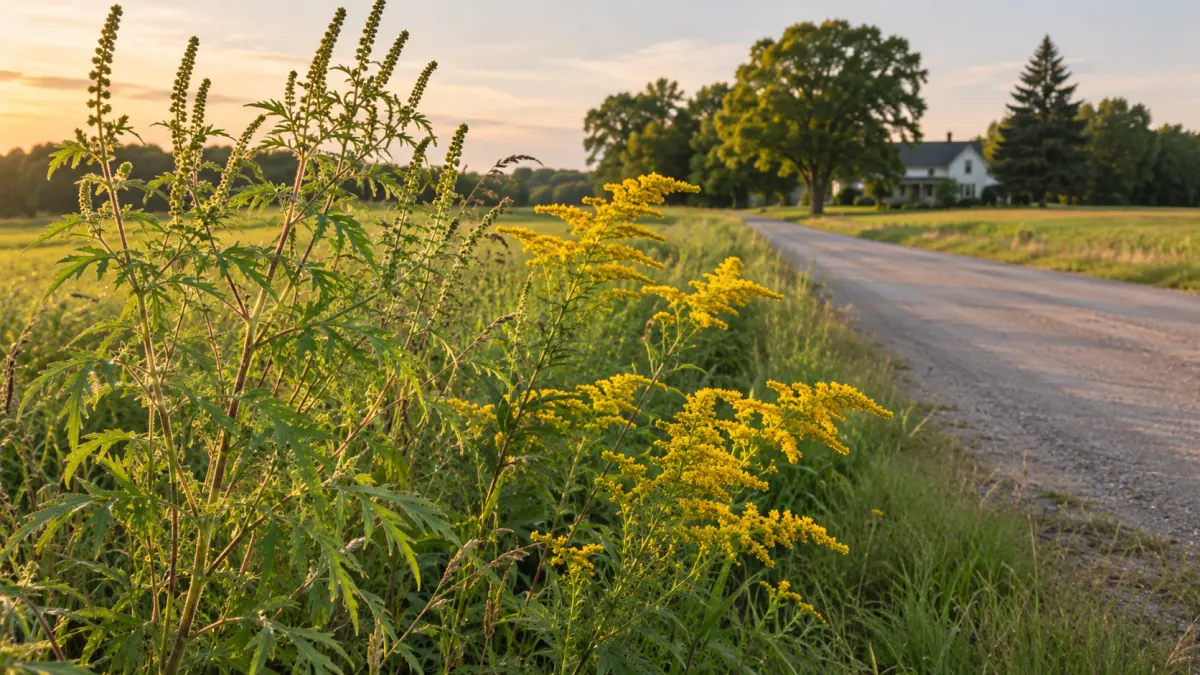
Drive any of the concession roads between Stouffville and Ballantrae in early September and you will see the ditches glowing gold. It is one of the prettiest sights of the season, and for a lot of people it arrives with a week of sneezing, itchy eyes, and a nose that will not stop running. The timing is no coincidence. Late summer into fall is ragweed season in southern Ontario, and for many allergy sufferers it is the hardest stretch of the whole year.
If your “end-of-summer cold” shows up at the same time every year and never quite turns into a real cold, there is a good chance it is not a cold at all.
The plant behind the misery
Common ragweed is a scrappy, unremarkable-looking weed with fern-like leaves and slender green flower spikes. It thrives in disturbed soil: roadsides, vacant lots, construction sites, field edges, and the margins of new subdivisions. A single plant can release an enormous amount of fine pollen, and because that pollen is light, wind carries it a long way. You do not need ragweed in your own yard to be affected by it, and the farm fields and ongoing construction around Stouffville give it plenty of places to grow.
In southern Ontario, ragweed typically begins releasing pollen in mid-August, peaks in late August and early September, and continues until the first hard frost, which in York Region often comes sometime in October. Warm, dry, breezy days tend to be the worst. Rain temporarily clears the air, although humid days after rain can bring their own problems.
Goldenrod gets the blame, unfairly
Here is a myth worth clearing up. Goldenrod, the bright yellow plume you see in those roadside fields, blooms at the same time as ragweed and is far more noticeable, so it often gets blamed for hay fever. In reality, goldenrod pollen is heavy and sticky and is carried mainly by insects rather than the wind. It rarely causes airborne allergy symptoms. The plain green ragweed growing quietly beside it is usually the real culprit. (People who handle goldenrod directly or work closely with it are a different story, but that is uncommon.)
The other fall trigger: mould
As leaves come down and pile up in yards, ravines, and along the trails at the Stouffville Reservoir and through the Oak Ridges Moraine, outdoor mould spores rise. Damp leaf litter, compost piles, and wet weather all feed mould growth, and spore counts can stay elevated well after the first frost ends ragweed season. Raking leaves, jumping in leaf piles, or a long walk through damp woods can trigger symptoms in sensitive people.
Indoors, the shift to closed windows and forced-air heating stirs up dust mites and pet dander that may have been less noticeable over summer. So for some people, fall allergies simply hand off to winter indoor allergies without a break.
How to tell fall allergies from a cold
| Clue | More likely allergies | More likely a cold |
|---|---|---|
| Itchy eyes, nose, or throat | Yes, often prominent | Uncommon |
| Sneezing in bursts | Very common | Sometimes |
| Discharge | Thin, clear, watery | Clear at first, may thicken |
| Fever or body aches | No | Sometimes |
| Duration | Weeks, as long as exposure continues | About 7–10 days |
| Same time each year | Yes | No pattern |
| Others at home sick too | Not related | Often |
Dark circles under the eyes, a crease across the bridge of the nose in children who rub it upward constantly, and a feeling of fatigue from poor sleep are also common with allergies.
Symptoms beyond the nose
Ragweed allergy can show up in surprising ways:
- Allergic conjunctivitis: red, watery, intensely itchy eyes, sometimes with puffy lids.
- Asthma flares: pollen and mould are common asthma triggers. If you or your child has asthma and notice more coughing at night, wheezing, or using a rescue inhaler more often in September, allergies may be driving it. Our asthma management service can help adjust a plan for the season.
- Oral allergy syndrome: some people allergic to ragweed notice an itchy or tingly mouth after eating certain raw fruits and vegetables, such as melons, bananas, cucumber, or zucchini, because the proteins resemble ragweed pollen. Cooking usually breaks down the proteins. Any swelling of the throat or difficulty breathing after eating is an emergency.
- Sleep and concentration: congestion at night leads to poor sleep, which leads to foggy days. For students heading back to class, that can affect learning.
A practical plan for ragweed season
Before the season starts
If you know ragweed bothers you, the most effective strategy is to begin treatment a week or two before symptoms usually start, around early-to-mid August. Intranasal steroid sprays in particular work best when they are already established by the time pollen arrives.
Daily habits during peak weeks
- Check pollen forecasts. Many weather services publish daily pollen levels. On high days, plan outdoor errands for later in the day after a rain, when counts tend to be lower.
- Keep windows closed at home and in the car, and use air conditioning on recirculate if you have it.
- Shower and change clothes after spending time outdoors, especially before bed, so you are not sleeping on pollen.
- Wash bedding weekly in hot water.
- Dry laundry inside during ragweed season rather than on an outdoor line.
- Wear sunglasses outdoors to reduce the amount of pollen reaching your eyes.
- Wipe down pets after walks; their fur carries pollen indoors.
- Delegate the leaf raking if mould is a trigger for you, or wear a well-fitted mask while doing it.
Medications that help
Most fall allergy symptoms respond well to medications available at a pharmacy. A pharmacist can help you choose, and your doctor can advise if you have other health conditions, are pregnant, or are treating a young child.
- Intranasal corticosteroid sprays are often the most effective single treatment for nasal symptoms, including congestion. They need daily use, and the full benefit builds over several days. Aim the spray slightly outward, away from the centre of the nose.
- Non-sedating oral antihistamines help with sneezing, itching, and runny nose. Older antihistamines such as diphenhydramine cause drowsiness and slower reaction times and are best avoided for daytime use, particularly if you drive.
- Antihistamine eye drops target itchy, watery eyes directly.
- Saline rinses wash pollen out of the nasal passages and are safe to combine with other treatments. Use distilled, sterile, or boiled and cooled water.
- Decongestant sprays should be limited to a few days at most to avoid rebound congestion.
If you have been using an over-the-counter product for a couple of weeks without relief, or you are unsure how to combine treatments, it is worth a visit rather than adding more products.
When to see a doctor
Book an appointment if:
- Symptoms are not controlled with over-the-counter treatment
- Allergies are disrupting sleep, school, or work
- You develop frequent sinus infections or ear infections during allergy season
- Asthma symptoms are worsening
- You are not sure whether your symptoms are allergies at all
- You are interested in longer-term options
A clinician can confirm the likely diagnosis, adjust medications, and decide whether allergy testing or a referral to an allergist makes sense. Visit our allergy treatment page for an overview of how we approach seasonal allergies.
Longer-term treatment: immunotherapy
For people whose ragweed allergy is severe or not controlled with medication, allergen immunotherapy can reduce sensitivity over time. It is given either as a series of injections or, for some allergens including ragweed, as a tablet dissolved under the tongue. Immunotherapy generally requires confirmation of the allergy by testing and a commitment of several years, and it starts well before the pollen season. An allergist usually oversees the start of treatment, and your family doctor can arrange that specialist referral.
Red flags: get emergency help
Seasonal allergies are uncomfortable but rarely dangerous. Call 911 or go to the nearest emergency department, such as Markham Stouffville Hospital or Uxbridge Hospital, if you or someone with you has:
- Swelling of the lips, tongue, or throat
- Difficulty breathing, wheezing that does not settle with a rescue inhaler, or inability to speak in full sentences
- Hives spreading over the body with dizziness or vomiting
- Bluish lips or extreme drowsiness during an asthma attack
If someone has a prescribed epinephrine auto-injector and is having a severe allergic reaction, use it right away and call 911.
A note for parents
Children often show allergies differently from adults. Instead of complaining of itchy eyes, they may rub their nose upward, sniff constantly, breathe through their mouth, or seem tired and irritable. Back-to-school timing in Stouffville lines up almost exactly with peak ragweed, so it is easy to mistake allergies for “picking something up at school.” If your child seems to have the same cold every September, mention it at their next visit. Our children’s health team can help sort it out and recommend age-appropriate treatment.
Does local honey help with ragweed allergies?
Can allergies start in adulthood?
Getting relief through HealthSmart
You do not need to white-knuckle your way to the first frost. If fall allergies are getting in the way of work, sleep, or enjoying the best weather of the year around Stouffville, book a visit in person or virtually, and we can put together a plan that suits you. Directions to our Main Street clinic, and a reminder that hours may change, are on our location page.
This article shares general information about seasonal allergies and is not a substitute for individual medical advice.