Food Allergies and Anaphylaxis in Stouffville: Staying Safe Through the Holidays and Beyond
Shared platters, unlabelled baking and busy kitchens raise allergy risk. How Stouffville families can spot anaphylaxis, use epinephrine and plan ahead.
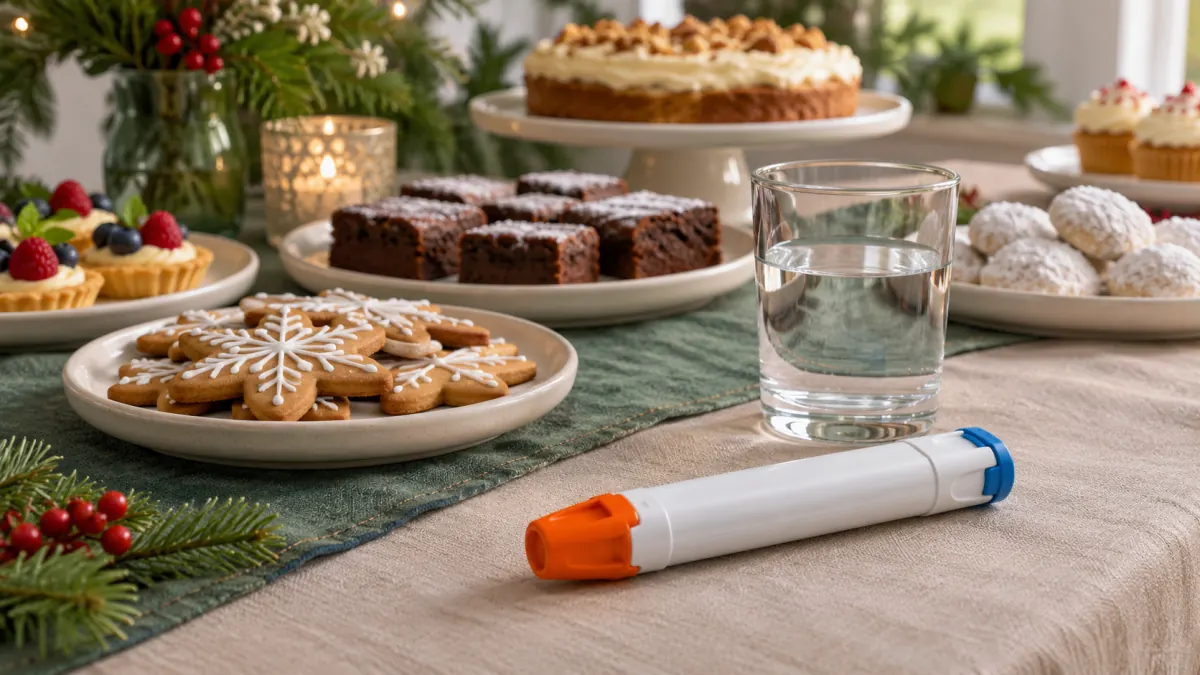
The host has gone to real trouble. Every dish on the buffet has a little folded card in front of it: “contains nuts,” “dairy-free,” “gluten-free.” Every dish except the plate of shortbread a neighbour dropped off on the way in, the one dusted with something that might be ground almonds or might just be sugar. For most guests it is a non-issue. For the eight-year-old with a tree nut allergy, it is the one plate on the table that matters most, and the adults around her are the ones who have to decide.
Holiday gatherings are where food allergies get tested in real life. Recipes come from other people’s kitchens, labels end up in the recycling, cousins share spoons, and routines that work perfectly well at home fall apart in a crowded house in Ballantrae or a rented hall on Main Street. This post covers what a food allergy actually is, how to recognize anaphylaxis, exactly what to do if it happens, and how Stouffville families can make the season (and the rest of the year) safer.
Allergy, intolerance or sensitivity?
These words get used interchangeably, but they describe very different things.
A food allergy is an immune system reaction. The body mistakes a food protein for a threat and releases chemicals such as histamine. Reactions usually start within minutes to two hours of eating, and even a small amount of the food can trigger one. A food allergy can be life-threatening.
A food intolerance is a digestive issue, not an immune one. Lactose intolerance is the classic example: the gut lacks enough of the enzyme that breaks down milk sugar, so dairy causes bloating, gas or loose stools. It is uncomfortable, often dose-dependent (a splash of milk in coffee may be fine, a bowl of ice cream is not), and it does not cause anaphylaxis.
Sensitivity is a vaguer term that people use for symptoms they link to a food without a clear mechanism. It may be real and worth exploring, but it is not the same as an allergy and should not be managed as one.
The distinction matters because it changes what you need to carry, how strict avoidance has to be, and whether a child’s school needs an emergency plan.
The foods behind most reactions
Health Canada lists a group of “priority” food allergens that must be clearly identified on packaged food labels: peanuts, tree nuts, sesame, milk, eggs, fish, crustaceans and molluscs (shrimp, crab, lobster, clams, mussels), soy, wheat and triticale, and mustard, with sulphites and gluten sources also required to be declared. Peanut, tree nut, sesame, fish and shellfish allergies tend to be lifelong. Milk and egg allergies that start in infancy are often outgrown during childhood, which is one reason periodic reassessment with an allergist is worthwhile.
Adults can develop new food allergies too. Shellfish allergy in particular sometimes appears for the first time in adulthood, which surprises people who have eaten shrimp rings at every holiday party for decades.
Recognizing anaphylaxis
Anaphylaxis is a severe allergic reaction that involves more than one body system or affects breathing or circulation. It can start with something minor and escalate quickly, so it helps to know the full picture.
| Body system | Signs to watch for |
|---|---|
| Skin | Hives, widespread redness or flushing, itching, swelling of the lips, eyes or face |
| Breathing | Coughing, wheezing, shortness of breath, hoarse voice, throat tightness, trouble swallowing |
| Stomach | Repeated vomiting, cramping pain, diarrhea, nausea |
| Heart and circulation | Pale or bluish skin, weak pulse, dizziness, fainting, floppiness in a young child |
| Other | A sense of doom, sudden anxiety, a child who suddenly goes quiet or clingy |
Two important points. First, hives are not always present. Some of the most serious reactions show up as breathing trouble or a sudden drop in blood pressure without much happening on the skin. Second, young children often cannot describe what they are feeling. A child may say their tongue feels “spicy,” “fuzzy” or “too big,” or that there is “something stuck” in their throat. Take those words seriously.
What to do: epinephrine first, then 911
If someone shows signs of anaphylaxis, the order of operations is simple and does not change.
- Give epinephrine right away. Use the person’s auto-injector in the outer middle of the thigh. It can go through clothing. Hold it in place for the time stated on the device.
- Call 911. Say the word “anaphylaxis” so the dispatcher understands the situation. Do this even if the person seems to improve after the injection.
- Position the person. Have them lie on their back with legs raised if they feel faint. If they are having trouble breathing, let them sit up. If they are vomiting, place them on their side. Do not have them stand up suddenly or walk to the car.
- Give a second dose if needed. If symptoms are not improving or are getting worse after about five minutes, and a second auto-injector is available, use it.
- Go to hospital. Everyone who receives epinephrine for anaphylaxis needs emergency assessment and a period of observation, because symptoms can return hours later, a pattern called a biphasic reaction. Paramedics will decide where to go; for most of Stouffville that is Markham Stouffville Hospital or Uxbridge Hospital.
Do not wait for an antihistamine to “kick in.” Antihistamines can ease itching and hives, but they do not reverse airway swelling or low blood pressure, and they work too slowly. Asthma puffers likewise help wheeze but do not treat anaphylaxis. Epinephrine is the only first-line treatment, and the most common mistake in serious reactions is giving it too late, not giving it when it was not strictly needed.
Holiday-specific risks
Food allergy risk is not evenly spread across the year. A few things make the holidays trickier.
Baking from other kitchens. Cookie exchanges, potluck desserts and boxes of homemade treats rarely come with ingredient lists. Nut flours, marzipan, praline, pesto, tahini and sesame seeds can hide in places you would not expect. If you do not know exactly what is in it, the safest choice for a person with a serious allergy is to skip it.
Cross-contact. A knife used on a nut torte and then on a plain cake, a shared serving spoon, a cutting board that held shrimp: tiny amounts of an allergen can transfer this way. Washing with soap and water removes allergens from hands and surfaces; hand sanitizer and a quick wipe do not.
Alcohol and exercise. Both can make an allergic reaction more severe, and both are more common at parties. Teens are at particular risk: they are often eating food they did not prepare and are less inclined to carry an auto-injector.
A host’s short checklist
- Ask guests in advance about allergies, and take the answer seriously.
- Keep original packaging or ingredient lists for anything you serve.
- Prepare allergy-safe dishes first, cover them, and serve them with their own utensils.
- Put allergy-safe food at one end of the table, away from crumbs and drips.
- Know where the guest keeps their auto-injector, and agree on who will call 911 if needed.
Auto-injectors: carry, check and practise
An epinephrine auto-injector only helps if it is nearby. A few practical habits make the difference:
- Carry it everywhere. Not in the car, not in a coat left in another room: on the person or in a bag that stays with them. Many allergists recommend carrying two, since a second dose is sometimes needed and the ambulance may be some distance away in rural parts of Whitchurch-Stouffville.
- Check the expiry date. Mark it on a calendar and replace devices before they expire. Look through the viewing window; the liquid should be clear.
- Protect it from cold. Ontario winters are hard on medications. Keep auto-injectors at room temperature and avoid leaving them in a car overnight.
- Practise with a trainer. Most brands offer trainer devices with no needle. Have the whole family, including grandparents and babysitters, practise at least once.
- Keep the action plan handy. A written anaphylaxis emergency plan with a photo of the person, their allergens and step-by-step instructions is easy for anyone to follow under stress.
In Canada, epinephrine auto-injectors can be bought from a pharmacy without a prescription, but a prescription is often needed for coverage under a drug plan, and a visit is the time to confirm the right dose for a growing child and review the plan.
Food allergies at school
Ontario was one of the first places in the world to put anaphylaxis protections into law. Sabrina’s Law, passed in 2005, requires publicly funded school boards to have an anaphylaxis policy. In general terms, that means schools must have strategies to reduce exposure to allergens, a way to communicate with parents and staff, regular training for staff, and an individual plan for each student known to be at risk. Students are generally allowed to carry their own auto-injector when they are old enough to do so safely.
What this looks like day to day varies from school to school. Some ask families to avoid sending certain foods; others focus on supervised eating and handwashing. If your child has a food allergy, speak with the school early in the year, provide up-to-date auto-injectors, and fill in the forms the school requests. If you need a physician’s signature on a school form or a refreshed action plan, that can be handled at a regular visit. The broader planning around allergies and school forms is also covered in our post on stings and serious reactions, which explains many of the same emergency steps for insect venom.
Getting a proper diagnosis
Food allergy is easy to suspect and surprisingly easy to misdiagnose. A rash after a meal could be an allergy, a viral rash that happened to appear at dinnertime, or a reaction to something else entirely. On the other hand, a genuine allergy that goes unrecognized can lead to a more serious reaction next time.
A good assessment starts with a detailed history: what was eaten, how much, how soon symptoms began, what they looked like and how long they lasted. Photos taken during a reaction are genuinely helpful. From there, your family doctor may arrange a referral to a specialist, usually an allergist, who can do skin prick testing, targeted blood tests, and in some cases a supervised oral food challenge.
It is worth knowing that broad “food panels” ordered without a clear history often cause more confusion than clarity. Many people have positive results to foods they eat every day without any trouble. Testing works best when it answers a specific question about a specific food.
When to see a doctor and when to call 911
Call 911 for any signs of anaphylaxis, after giving epinephrine if it is available. Also call for any reaction involving breathing trouble, throat swelling or fainting, even in someone with no known allergy.
Book a visit if:
- You or your child had a reaction to a food and have not been assessed.
- You have an allergy but your auto-injector is expired, missing or the wrong dose for your child’s current weight.
- You need an updated anaphylaxis plan or school paperwork.
- Your allergy seems to be changing, or you think a childhood allergy may have been outgrown.
- You are unsure whether symptoms are an allergy or an intolerance.
Our clinic offers allergy assessment and treatment, including reviewing past reactions, renewing prescriptions and arranging allergist referrals when they are needed. For children, this often fits naturally into a broader children’s health visit.
If my child's reaction was mild last time, will the next one be mild too?
Can I give an antihistamine first and wait to see if it helps?
Planning ahead with HealthSmart
If the holidays have you double-checking expiry dates or wondering whether that rash after a dinner party was an allergy, a short visit can sort out the next steps. You can book online with our team on Main Street in Stouffville, or ask about registering with a family doctor so allergy history, prescriptions and school forms stay in one place; registration requests are reviewed by the clinic team. And if a reaction is happening right now, use epinephrine and call 911, not the clinic.
This post is general information for Stouffville families and is no substitute for advice from a clinician who knows your situation.