Food Poisoning and Barbecue Safety in Stouffville: Keeping Summer Meals Safe
Safe grilling temperatures, cooler packing, leftovers and picnic timing, plus the food poisoning symptoms that mean a Stouffville family should get checked.
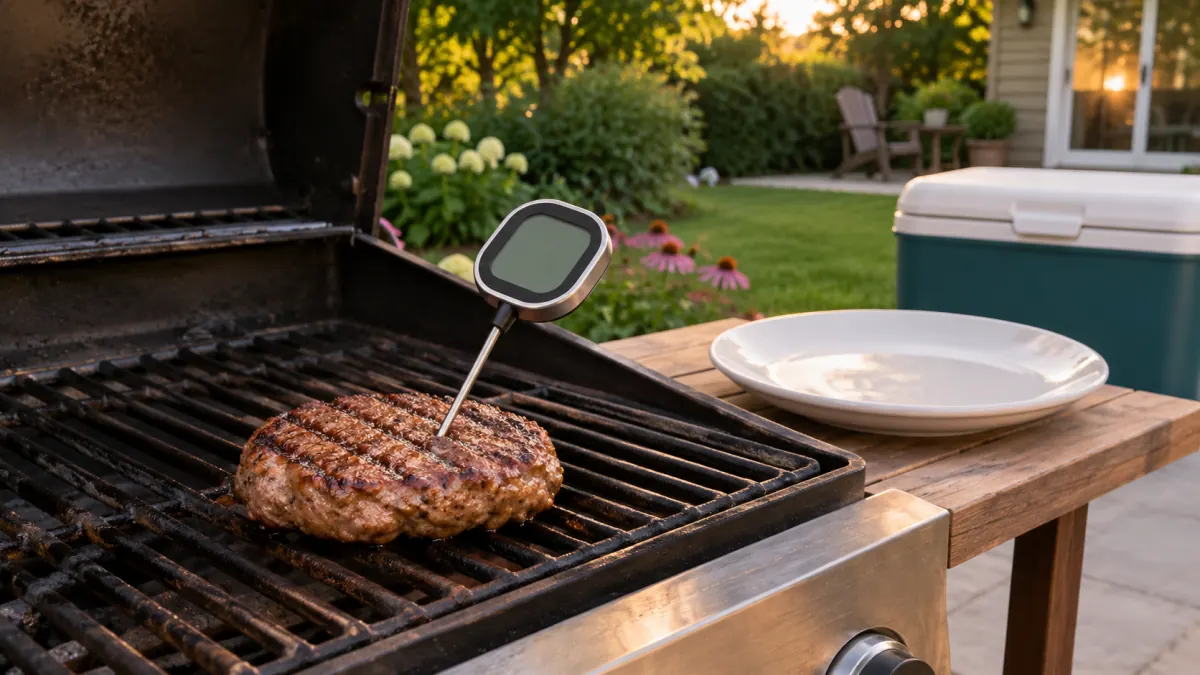
Federal health officials estimate that roughly one in eight Canadians gets sick from contaminated food every year. Most cases look like a rough night after a family gathering, a day off work blamed on “something I ate,” or a toddler who seems off after a picnic. A surprising number of them trace back to the same handful of habits: burgers judged by colour, potato salad left on a sunny deck, and a single cutting board doing double duty for raw chicken and fresh vegetables.
August is peak grilling season in Stouffville. Backyards from Ballantrae to Bloomington are busy, people are packing coolers for Musselman’s Lake, and leftovers are making their way into lunch bags. Warm weather is great for patios and terrible for food safety, because the bacteria behind most food poisoning multiply fastest at exactly the temperatures we enjoy. The good news is that a few simple routines prevent most of it. This guide focuses on prevention first, then covers what to watch for if someone does get sick.
Why summer food poisoning is so common
Bacteria such as Salmonella, Campylobacter, certain strains of E. coli and Listeria live naturally in many raw animal foods, and some can also turn up on produce. Cooking and refrigeration keep them in check. The trouble begins when food sits in the “danger zone” between 4°C and 60°C, where bacteria can double in number in as little as 20 minutes.
Summer stacks the odds against us in a few ways:
- Heat. A picnic table in the sun on a humid Stouffville afternoon can easily sit well above 30°C, and food warms up quickly.
- Distance from the kitchen. At a park or cottage, there may be no sink nearby for handwashing, and no fridge for leftovers.
- Crowds and grazing. At a backyard party, platters often stay out for hours while people come and go.
- Grilling by eye. Charred outsides can look done while the centre is still undercooked.
The four habits that prevent most problems
Food safety advice in Canada usually boils down to four steps: clean, separate, cook and chill. They sound obvious, but each one has a few details that are easy to miss at a barbecue.
1. Clean
Wash your hands with soap and water before handling food, after touching raw meat, and after using the washroom, changing a diaper or handling pets. If you’re away from a sink, bring a jug of water, soap and paper towels, or at least hand sanitizer and wet wipes. Sanitizer works poorly on greasy hands, so treat it as a backup.
Rinse fruits and vegetables under cool running water, including farm-stand finds from around Stouffville and melons and other produce with a rind you won’t eat, because a knife can drag surface bacteria into the flesh. Don’t rinse raw chicken; splashing spreads bacteria around the sink and counter without making the meat any safer.
2. Separate
Cross-contamination is one of the most common barbecue mistakes. Keep raw meat, poultry and seafood away from ready-to-eat foods from the grocery bag to the grill.
- Use one cutting board for raw meat and another for produce and bread.
- Never put cooked burgers back on the plate that held them raw. Bring a clean plate out to the grill (yes, the one in our featured photo).
- Pack raw meat in sealed containers or bags at the bottom of the cooler, so juices can’t drip onto other food.
- If you want to use marinade as a sauce, set some aside before it touches raw meat, or bring used marinade to a full boil first.
3. Cook
This is where a food thermometer earns its place in the drawer. Colour is not a reliable guide: ground beef can turn brown before it’s safe, and some properly cooked meat stays pinkish. Insert the thermometer into the thickest part of the food, away from bone, and check a few pieces.
| Food | Safe internal temperature |
|---|---|
| Ground beef, pork, veal or lamb (burgers, sausages) | 71°C (160°F) |
| Ground poultry (chicken or turkey burgers) | 74°C (165°F) |
| Chicken or turkey pieces (breasts, legs, wings) | 74°C (165°F) |
| Whole poultry | 82°C (180°F) |
| Pork chops, ribs and roasts | 71°C (160°F) |
| Beef, veal and lamb steaks or roasts (medium-rare) | 63°C (145°F) |
| Fish | 70°C (158°F) |
| Hot dogs and leftovers being reheated | 74°C (165°F) |
These figures follow Government of Canada guidance; you can find the full chart on canada.ca. Why the difference between steaks and burgers? On a whole cut, bacteria sit mostly on the surface, which gets seared. Grinding mixes surface bacteria all the way through the meat, so the centre of a burger needs to reach a higher temperature.
A few grilling extras: precook chicken pieces or ribs in the oven if your barbecue struggles with thick cuts, and keep cooked food hot (above 60°C) at the side of the grill rather than in a pile on a cool plate.
4. Chill
Cold slows bacterial growth. Your fridge should be at 4°C or colder and your freezer at -18°C. At outdoor events:
- Pack the cooler cold. Use plenty of ice packs or frozen water bottles, and fill empty space so the cold holds.
- Use two coolers if you can. One for drinks (which gets opened constantly) and one for food.
- Keep the cooler in the shade, with the lid closed as much as possible.
- Follow the two-hour rule. Perishable food shouldn’t sit at room temperature for more than two hours. On a hot day above about 32°C, cut that to one hour.
- When in doubt, throw it out. If the potato salad has been on the table all afternoon, it’s not worth the risk, even if it smells fine. Many food poisoning bacteria don’t change the smell or taste of food.
Thaw frozen meat in the fridge, in cold water changed every 30 minutes, or in the microwave if you’re cooking it right away. Thawing on the counter leaves the outside sitting in the danger zone while the middle is still frozen.
Foods that need extra care
Some foods carry a higher risk and deserve a little more attention in warm weather:
- Mayonnaise-based salads (potato, egg, macaroni, coleslaw). Commercial mayonnaise itself is acidic, but the ingredients mixed into it are perishable. Keep these salads on ice.
- Unpasteurized milk, juice or cider, and soft cheeses made from raw milk.
- Rice and pasta dishes left warm for long periods.
- Raw oysters and other shellfish.
- Deli meats and hot dogs straight from the package, for people at higher risk of Listeria (see below). Heating them until steaming hot reduces that risk.
Who is most at risk
Anyone can get food poisoning, but some people are more likely to become seriously ill:
- Pregnant people. Listeria can cross the placenta and harm the baby even when the parent feels only mildly unwell.
- Children under five, whose immune systems are still developing and who dehydrate quickly.
- Adults over 60.
- People with weakened immune systems, such as those on chemotherapy, transplant medications, or long-term steroids, or living with poorly controlled diabetes, kidney disease or liver disease.
If someone in your Stouffville household falls into one of these groups, it’s worth being stricter about temperatures, leftovers and higher-risk foods. A family doctor can also give personal guidance during a prenatal care referral visit or regular checkup.
What food poisoning looks like
Symptoms can start anywhere from a few hours to several days after eating contaminated food, depending on the germ involved. Some toxins, like those made by Staphylococcus aureus in food left out too long, cause sudden vomiting within one to six hours. Salmonella and Campylobacter usually take one to three days. Listeria can take weeks, which is why it’s so hard to trace back to a particular meal.
Common symptoms include:
- Nausea and vomiting
- Watery diarrhea, sometimes with cramps
- Fever and chills
- Headache and muscle aches
- Loss of appetite and fatigue
For most healthy adults, food poisoning settles on its own within a day or two to a few days. The main job at home is replacing lost fluid with small, frequent sips, ideally an oral rehydration solution from the pharmacy. Our earlier post on stomach flu and dehydration walks through home rehydration and the signs of dehydration in detail, so we won’t repeat it all here.
One caution worth repeating: if there is blood in the stool or a high fever, don’t take anti-diarrheal medicine such as loperamide without speaking to a doctor or pharmacist first. With some infections, slowing the gut down can make things worse.
Red flags: when to get medical help
Most people recover at home, but please seek care if you or someone you’re looking after has any of the following.
Call 911 or go to the nearest emergency department (Markham Stouffville Hospital or Uxbridge Hospital are closest to most of town) for:
- Signs of severe dehydration: no urine for eight hours or more, extreme thirst, dizziness when standing, confusion, or a baby with very few wet diapers and no tears
- Vomiting so frequent that no fluids stay down
- Bloody or black stools along with feeling very unwell, or a child with bloody diarrhea who is becoming pale, unusually drowsy or peeing less
- Blurred or double vision, drooping eyelids, slurred speech, trouble swallowing or muscle weakness, which can point to botulism, a rare but serious illness
- Severe, constant abdominal pain
Book a prompt visit with a doctor if:
- Diarrhea lasts more than three days, or vomiting more than two days
- You have a fever above 38.5°C that isn’t settling
- You’re pregnant and have fever, muscle aches or stomach upset after eating a higher-risk food
- You’re over 60, have a chronic condition or a weakened immune system and are getting sick
- Several people who ate the same food became ill (a doctor may suggest a stool test, and this can help public health find the source)
If you’re unsure, Health811 (call 811) offers free advice from a registered nurse at any hour.
Should you get a stool test?
Not everyone needs one. A doctor is more likely to order a stool sample if diarrhea is bloody, lasts longer than expected, comes with a high fever, follows recent travel, or occurs in someone at higher risk. Testing can identify the germ responsible, which sometimes changes treatment and helps York Region Public Health spot outbreaks in Stouffville and neighbouring towns. Antibiotics are not needed for most food poisoning and can even be harmful with certain E. coli infections, so they’re used selectively. You can read more about how we handle gastrointestinal illness on our services page.
A quick checklist for your next cookout
Before the next backyard dinner or day at the lake, run through this list:
- Food thermometer in the barbecue kit
- Separate plates and utensils for raw and cooked meat
- Two cutting boards
- Cooler packed cold, with a thermometer if you have one
- Soap, water and paper towels, or wipes and sanitizer
- A plan for leftovers: into the cooler or fridge within two hours (one hour on a scorching day)
- Shade for the food table
None of this needs to take the fun out of a Stouffville summer. Once routine, it’s no more effort than remembering the ketchup.
Is it safe to eat a burger that's a little pink in the middle?
How long do barbecue leftovers keep in the fridge?
Can I tell which meal made me sick?
Getting checked at HealthSmart
If a stomach illness is dragging on, or you’re in a higher-risk group and want reassurance, our team can assess you, arrange tests when they’re needed, and help you plan safe rehydration. You can book a visit, or see how our walk-in clinic works for same-day concerns. For milder questions, a virtual care appointment may be a convenient first step. We’re on Main Street in Stouffville; hours may change, so check our location page before heading over.
This article shares general food safety and health information and can’t replace advice from your own health care provider.