Hand, Foot and Mouth Disease in Stouffville: A Parent's Guide
Mouth sores, a spotty rash, a cranky toddler? How hand, foot and mouth disease spreads, how to ease the pain at home, and when Stouffville kids need a doctor.
“She had a fever yesterday, now she won’t eat, and there are little red spots on her palms. The daycare says three other kids have it. What is it, and do we need to come in?” Versions of that question come up every summer and early fall, and the answer is very often hand, foot and mouth disease. It’s a common, usually mild viral illness of early childhood, but it can make a small child truly miserable for several days, and it moves through daycares, day camps and playgroups with impressive speed.
Here’s what Stouffville parents should know about how it starts, how long it lasts, how to keep a sore-mouthed toddler drinking, and the uncommon signs that mean a child needs to be seen quickly.
First, a clarification about the name
Hand, foot and mouth disease (often shortened to HFMD) has nothing to do with foot-and-mouth disease in cattle and other livestock. They’re caused by entirely different viruses, and you can’t catch HFMD from farm animals or pets, or give it to them. With working farms all around Whitchurch-Stouffville, it’s a reasonable worry, but it’s not one you need to carry.
HFMD is caused by a group of viruses called enteroviruses, most often coxsackieviruses. Because several different strains circulate, a child can have it more than once.
Who gets it
Children under five are the most likely to catch HFMD, especially those in group care. Older children and adults can get it too. Many adults have few or no symptoms but can still pass the virus along, which is one reason it spreads so efficiently through households. Some adults, though, have a surprisingly painful case, with sore hands and feet that make walking uncomfortable for a few days.
Cases rise in summer and early autumn in Ontario, which lines up neatly with Stouffville day camps, splash pads and the return to school and daycare.
How it unfolds, day by day
Symptoms usually start three to six days after exposure. The typical course looks something like this:
- Days 1 to 2: Fever (often moderate), fussiness, reduced appetite, sore throat and a general “off” feeling. At this point it looks like many other viral illnesses.
- Days 2 to 3: Painful sores appear in the mouth: on the tongue, gums, inside of the cheeks and back of the throat. They start as small red spots and can turn into ulcers. This is when eating and drinking become a struggle and drooling may increase.
- Days 2 to 4: A rash develops, usually on the palms of the hands and soles of the feet, and often on the buttocks, diaper area, knees or elbows. The spots can be flat or raised, sometimes with small blisters. They’re usually not very itchy.
- Days 7 to 10: Most children are feeling much better, with sores and rash fading.
Some strains cause a more widespread rash that can look alarming, spreading over the arms, legs, face and around the mouth. Children with eczema may get a heavier rash in eczema-affected skin. These patterns are still usually manageable at home, but it’s reasonable to have a doctor take a look if you’re unsure what you’re seeing.
The nail surprise weeks later
A few weeks after recovering, some children (and adults) notice their fingernails or toenails peeling, ridging or even coming off. This can be unsettling, but it’s a known after-effect of certain HFMD strains and isn’t a sign of a new problem. The nails grow back normally over a few months. Mention it at your next visit if you’d like reassurance.
How it spreads
The virus is found in saliva, nose and throat secretions, fluid from blisters and stool. It spreads through:
- Close contact, such as hugging, kissing and sharing cups or utensils
- Coughing and sneezing
- Touching contaminated toys, door handles and surfaces, then touching the mouth
- Diaper changes and toileting
Children are most contagious during the first week of illness. The tricky part is that the virus can continue to be shed in stool for several weeks after a child seems completely well. That’s why good handwashing matters long after the spots have gone.
Caring for your child at home
There’s no specific antiviral treatment for HFMD, and antibiotics don’t help because it’s a virus. The goal is comfort and hydration while the illness runs its course.
Keep fluids going
The mouth sores are the real problem. A child who refuses to drink because swallowing hurts can become dehydrated, and dehydration is the most common reason children with HFMD need medical care. Some ideas that tend to work:
- Cold is soothing. Offer cool water, milk, ice pops, smoothies or oral rehydration popsicles from the pharmacy.
- Small and frequent. A few sips every 10 or 15 minutes adds up. A medicine syringe or spoon can help with toddlers.
- Avoid acidic and salty foods, such as orange juice, tomato sauce and chips, which sting.
- Offer soft, bland foods if they’re hungry: yogurt, applesauce, mashed potatoes, scrambled eggs, pudding or soup that has cooled down.
- A straw sometimes helps a child bypass sores at the front of the mouth.
- Babies should keep breastfeeding or bottle-feeding, offered more often.
Don’t worry too much if your child barely eats solid food for a couple of days. Fluids matter far more than food in the short term.
Manage pain and fever
Acetaminophen or ibuprofen, given at the correct dose for your child’s weight, can ease mouth pain and fever. Giving a dose about 30 minutes before meals or drinks may make it easier to get fluids in. Never give ASA (Aspirin) to children or teens. Ask your pharmacist before using numbing mouth gels or rinses, as some aren’t recommended for young children.
If your child has a fever and you’d like more detail on measuring temperature and when fever itself is a concern, our post on children’s fever covers that in depth.
Skin care
The rash usually doesn’t need treatment. Keep blisters clean and avoid popping them. In the diaper area, frequent changes and a barrier cream can help.
Watching for dehydration
Check for these signs, especially in babies and toddlers:
| Sign | What to look for |
|---|---|
| Urine | Fewer wet diapers than usual, or no pee for 8 hours or more in a toddler |
| Mouth and eyes | Dry, sticky mouth; crying with few or no tears |
| Energy | Unusually sleepy, floppy or hard to wake |
| Babies | A sunken soft spot on the top of the head |
A child who is peeing noticeably less and refusing fluids should be seen the same day.
When to get medical help
Most children with HFMD don’t need to see a doctor. Book an appointment or use our same-day options if:
- Your child isn’t drinking enough or is showing early signs of dehydration
- Fever lasts more than three days
- Symptoms haven’t improved after about 10 days
- The rash looks infected (increasing redness, warmth, swelling, pus or honey-coloured crusts)
- Your child has a weakened immune system or other significant health conditions
- You’re not sure the rash is HFMD at all
Go to the emergency department or call 911 if your child has:
- A stiff neck, severe headache, or unusual irritability that can’t be settled
- Unusual drowsiness, confusion or difficulty waking
- A seizure, sudden jerking movements, weakness or loss of balance
- Trouble breathing or fast breathing
- Signs of severe dehydration, such as no urine for many hours or a very dry mouth with no tears
- Any fever in a baby under three months old
Serious complications such as meningitis or encephalitis are rare, but these are the signs that need urgent attention. Markham Stouffville Hospital and Uxbridge Hospital have the nearest emergency departments. For questions in the middle of the night, Health811 (call 811) connects you with a registered nurse.
Daycare, camp and school
Policies vary between childcare centres, camps and schools, so it’s best to check directly with yours. In general, public health guidance in Ontario doesn’t usually require children with HFMD to stay home for a set period, because the virus keeps shedding for weeks and exclusion doesn’t stop the spread. Most places ask that children stay home while they have a fever, while they’re too unwell to take part in normal activities, or if they’re drooling heavily from mouth sores. Your child will likely feel like staying home for the first few days anyway.
If your daycare asks for a note confirming your child can return, our team can help, though some notes may not be covered by OHIP; ask when you book.
Preventing the spread at home
You can’t always stop HFMD from passing between siblings, but you can lower the odds:
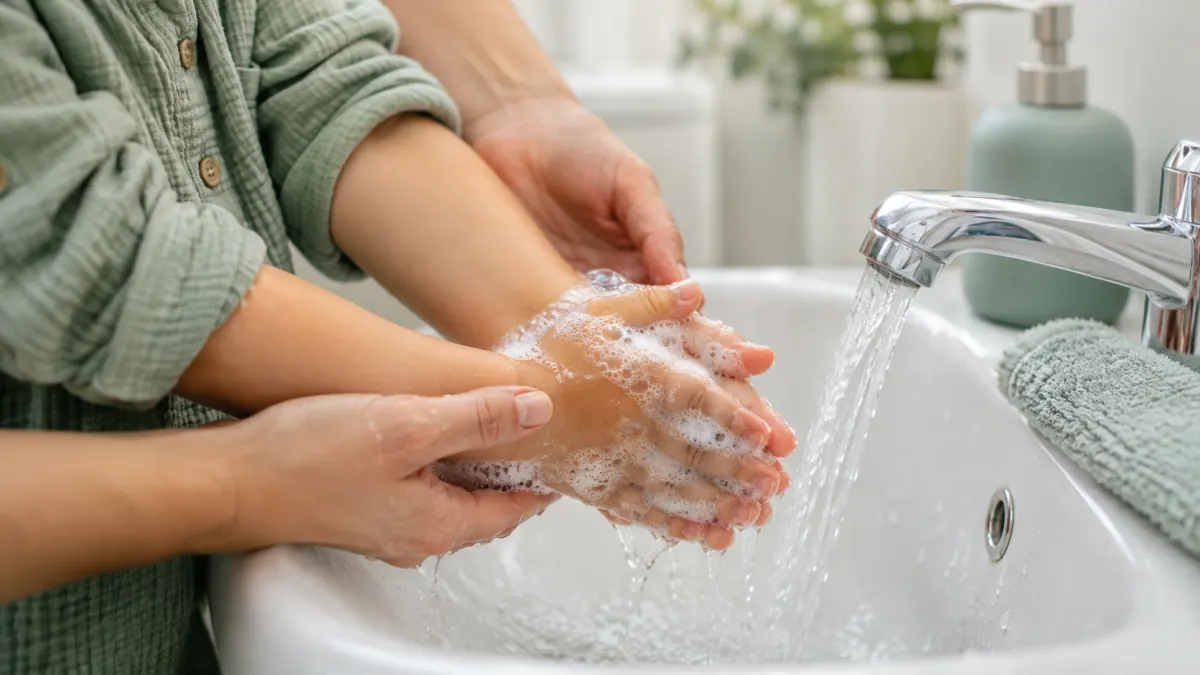
- Wash hands well and often with soap and water, especially after diaper changes, using the toilet, and before preparing food. Help small children wash theirs, scrubbing for about 20 seconds.
- Clean shared surfaces and toys regularly, including high chairs, change tables, bath toys and taps.
- Don’t share cups, utensils, toothbrushes or towels.
- Limit kisses on the face of a sick child, as hard as that is.
- Keep handwashing going for a few weeks after recovery, since the virus lingers in stool.
- Cover coughs and sneezes with a tissue or elbow.
A note for pregnant parents
Most pregnant people exposed to HFMD have no complications, and the illness is usually mild in adults. Still, if you’re pregnant and you have symptoms, especially close to your due date, let your doctor or midwife know. It’s routine to share any infection near delivery.
Can my child get hand, foot and mouth disease twice?
Is there a vaccine?
Will my child need a test to confirm it?
When you’d like a second opinion
Sometimes you just want someone to look in your child’s mouth and confirm it’s what you think it is. Our Stouffville team sees plenty of childhood illnesses every summer and can check hydration, confirm the diagnosis and talk through comfort measures. You can book an appointment or read about our broader pediatric care. We’re at 208-5892 Main Street in Stouffville. Hours may change, so please confirm them on our location page before you come in.
This guide offers general information for Stouffville families and isn’t a substitute for advice from your child’s own health care provider.