Hearing Loss in Stouffville: Early Signs, Common Causes and Where to Start
Hearing usually fades so slowly that family notices first. What causes hearing loss, which changes are urgent, and how Stouffville adults can get it checked.
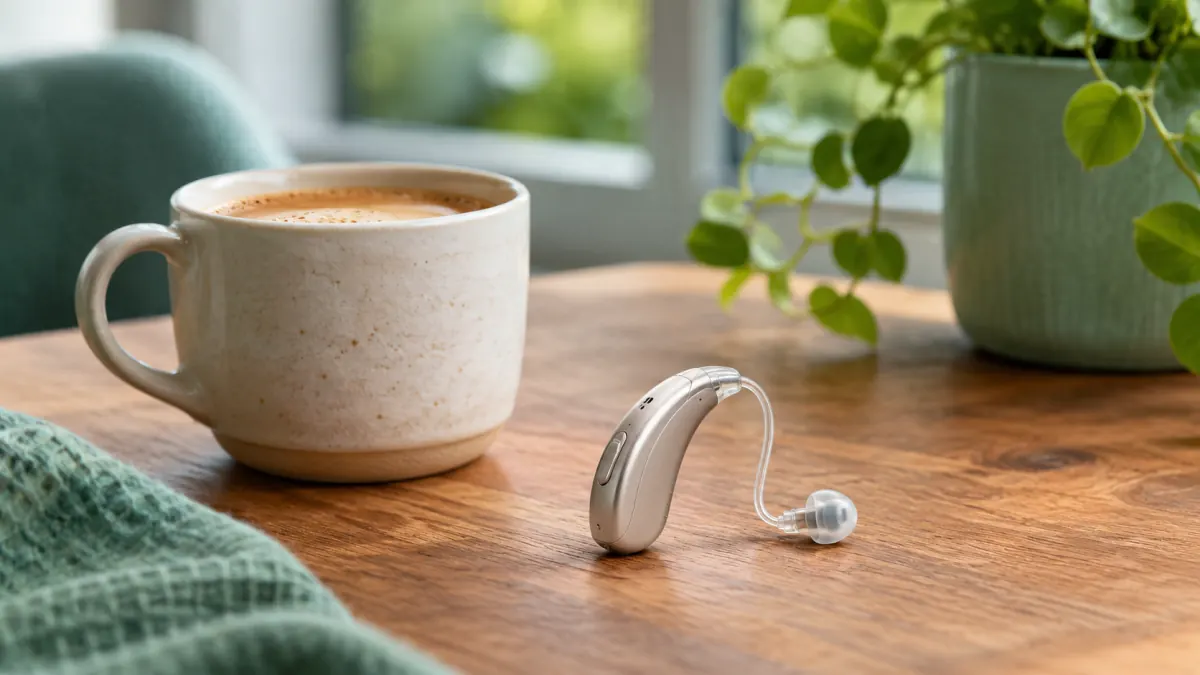
The television volume creeps up one notch at a time. Eighteen in September, twenty-two by Thanksgiving, twenty-six by the first snowfall. Nobody decides to turn it up; it just seems that everyone on screen has started mumbling. Around the same time, restaurant conversations get harder to follow, the grandkids’ voices seem to slip away mid-sentence, and the phone gets moved to the “good ear” without much thought.
That gradual drift is how most hearing loss arrives. It is so slow that the person experiencing it is often the last to notice, and family members are usually the first to say something. It is also one of the most common health changes in adulthood, and one of the most under-treated. If you or someone in your Stouffville household has been saying “pardon?” a lot lately, this post walks through what might be happening, what needs urgent attention, and how to get a proper assessment.
Small signs that add up
Hearing loss rarely announces itself with silence. It shows up as a set of everyday frustrations. Run through this list honestly:
- You often ask people to repeat themselves, especially in groups.
- Background noise, like a busy café on Main Street or a hockey arena, makes conversation exhausting.
- Others say the TV or radio is too loud when it sounds normal to you.
- Women’s and children’s voices are harder to understand than deeper voices.
- You hear people talking but cannot make out the words.
- You miss the doorbell, the microwave beep or the phone ringing in another room.
- You have ringing, buzzing or hissing in your ears (tinnitus).
- You feel tired or irritable after social events because listening takes so much effort.
- You have started avoiding gatherings or phone calls.
Two or three of these is a reasonable prompt to get your hearing checked. You do not need to wait until it is severe.
Three ways hearing goes wrong
Doctors usually sort hearing loss into categories based on where in the hearing pathway the problem sits.
Conductive hearing loss
Sound is not getting through the outer or middle ear properly. The inner ear and nerve may be perfectly healthy, but the message is blocked on the way in. Common causes include:
- Ear wax. A plug of wax is one of the most frequent and most fixable reasons for muffled hearing. It often happens suddenly, after a shower or swim, when water causes wax to swell.
- Fluid behind the eardrum, often after a cold or ear infection.
- A perforated eardrum from infection, injury or a sudden pressure change.
- Otosclerosis, a condition where one of the tiny middle ear bones stiffens.
Conductive loss is often treatable, sometimes in a single visit.
Sensorineural hearing loss
The problem lies in the inner ear (the cochlea) or the hearing nerve. This is the most common type in adults and is usually permanent, though very manageable. Causes include:
- Age-related hearing loss, which typically affects both ears equally and starts with high-pitched sounds. It explains why consonants like “s,” “f” and “th” get lost, making speech sound mumbled rather than quiet.
- Noise exposure, from work, music, power tools or recreation, which damages the delicate hair cells of the inner ear over time.
- Certain medications, including some antibiotics and chemotherapy drugs.
- Genetics, infections and other medical conditions.
Mixed hearing loss
A combination of both, such as age-related hearing loss with a wax blockage layered on top. Clearing the wax helps, but does not fully restore hearing.
Sudden hearing loss is an emergency
Most hearing loss is gradual, but one situation is time-sensitive and often misunderstood.
Sudden sensorineural hearing loss is a rapid drop in hearing, usually in one ear, over a few hours to three days. People often wake up with it, or notice it when they pick up the phone. It may come with a feeling of fullness, ringing or dizziness. It is easy to assume it is wax or a cold and wait it out, but early treatment, often with steroids, appears to give the best chance of recovery, and the window for that is measured in days.
Seek same-day care if you have:
- Sudden hearing loss in one or both ears without an obvious cause like a cold or known wax build-up
- Hearing loss with severe dizziness or vertigo
- Hearing loss after a head injury
- Hearing loss with facial weakness, a drooping face or other new neurological symptoms (call 911 for these, as they can signal a stroke)
- Severe ear pain with fever, swelling behind the ear, or discharge with blood
If you cannot be seen promptly at a clinic, go to an emergency department. In this area, that is generally Markham Stouffville Hospital or Uxbridge Hospital. Dizziness on its own has many causes, and our post on dizziness and vertigo covers how to tell those apart.
Why it is worth acting
It is tempting to treat hearing loss as a minor nuisance that comes with age. The research suggests it is more than that. Untreated hearing loss is linked to social isolation, low mood, strain in relationships, and a higher risk of falls. It has also been identified as one of the more significant modifiable risk factors for dementia in later life. The reasons are still being studied, but the brain seems to do better when it continues to receive rich sound input and stays socially engaged.
There is practical value too. People who address hearing loss earlier tend to adapt to hearing aids more easily than those who wait until it is severe, partly because the brain has had less time to get used to a quieter world.
How hearing gets checked
Getting your hearing assessed usually happens in two steps.
Step one: a medical visit. A doctor will ask about your symptoms, how quickly they came on, whether one or both ears are involved, your noise exposure, your medications and any ear surgery or infections in the past. They will look in your ears with an otoscope to check for wax, infection, fluid or a damaged eardrum, and may do simple bedside tests with a tuning fork to help distinguish conductive from sensorineural loss.
If wax is the culprit, it can often be dealt with right there. Our ear wax removal service handles this, and the ear wax post covers safe home softening and what to avoid (cotton swabs and ear candles top that list).
Step two: a formal hearing test. Proper hearing tests are performed by audiologists, who are regulated health professionals trained to measure hearing in detail in a sound-treated booth. The test maps out which pitches you hear and how well you understand speech. Audiologists can then recommend whether hearing aids or other devices would help, and fit and adjust them. Hearing aids may also be dispensed by hearing instrument practitioners.
You do not always need a doctor’s referral to book a hearing test, but it is a good idea to see a doctor first if the loss is in one ear only, came on quickly, comes with ringing in one ear, dizziness, pain or discharge, or if you have had ear surgery. Those situations may need a specialist referral to an ear, nose and throat doctor, sometimes with imaging.
Hearing aids and help with the cost
Modern hearing aids are a long way from the beige, whistling devices many people remember. Today’s models are small, often nearly invisible, and many connect to smartphones, televisions and video calls. They do not restore hearing to normal, but they make speech clearer and listening less tiring. Most people need a few weeks of regular use to adjust, and follow-up visits with the audiologist to fine-tune the settings make a big difference.
Cost is a real concern for many Stouffville families, particularly retirees on a fixed income. In Ontario, the Assistive Devices Program (ADP) helps eligible residents with a portion of the cost of hearing aids and certain other devices. Eligibility and the amount covered depend on the program’s rules, so ask the audiologist or hearing aid provider about it when you are assessed. Some workplace health plans, veterans’ programs and other insurance also contribute.
Other tools can help alongside or instead of hearing aids:
- Captioning on TV, streaming services and video calls
- Amplified phones and doorbells or alarms that flash
- TV listening devices that send sound directly to the listener
- Communication strategies at home, like facing each other and reducing background noise
Protecting the hearing you have
Noise-related damage is permanent but preventable. Hearing is at risk from sounds loud enough that you have to raise your voice to be heard by someone an arm’s length away. In a semi-rural community like Stouffville, much of that noise comes from ordinary chores and hobbies. Around Whitchurch-Stouffville, common culprits include:
- Snowblowers, chainsaws, leaf blowers and lawn mowers
- Snowmobiles and ATVs
- Woodworking and construction tools
- Concerts, loud bars and arenas
- Firearms, including at hunting and target ranges
- Earbuds turned up to drown out a noisy commute
Simple foam earplugs or earmuffs make a real difference and cost little. Keep a pair in the garage, the car and your coat pocket. For personal listening, a rough guide is to keep the volume below about 60 percent and take breaks. If your ears ring after an event, that is a sign the noise was loud enough to cause some harm.
Children’s hearing
Babies in Ontario are offered newborn hearing screening, but hearing can change later in childhood. Watch for speech delays, a child who does not respond to their name, frequent ear infections, or a teacher’s comment that they seem not to be listening. Fluid behind the eardrum after colds is a common and often temporary cause in young children. If you are worried, mention it at your child’s next visit.
My ears ring all the time. Does that mean I am losing my hearing?
Can I just buy hearing aids online or over the counter?
Starting with a visit at HealthSmart
If hearing changes have been creeping up on you, or a family member has been gently (or not so gently) pointing them out, a first visit at our Stouffville clinic is a sensible place to begin. We can look in your ears, deal with wax if that is the cause, and point you toward an audiologist or specialist when needed. Book a visit online, or get in touch if you have questions before coming in. Sudden hearing loss in one ear should be seen the same day, so do not wait for a routine slot.
This article is meant as general health information and does not replace a personal assessment by a qualified professional.