Heat Exhaustion and Heat Stroke in Stouffville: Spotting the Difference
Muggy August days can push the body past its cooling limits. How Stouffville residents can recognize heat exhaustion, act fast on heat stroke, and stay safer.
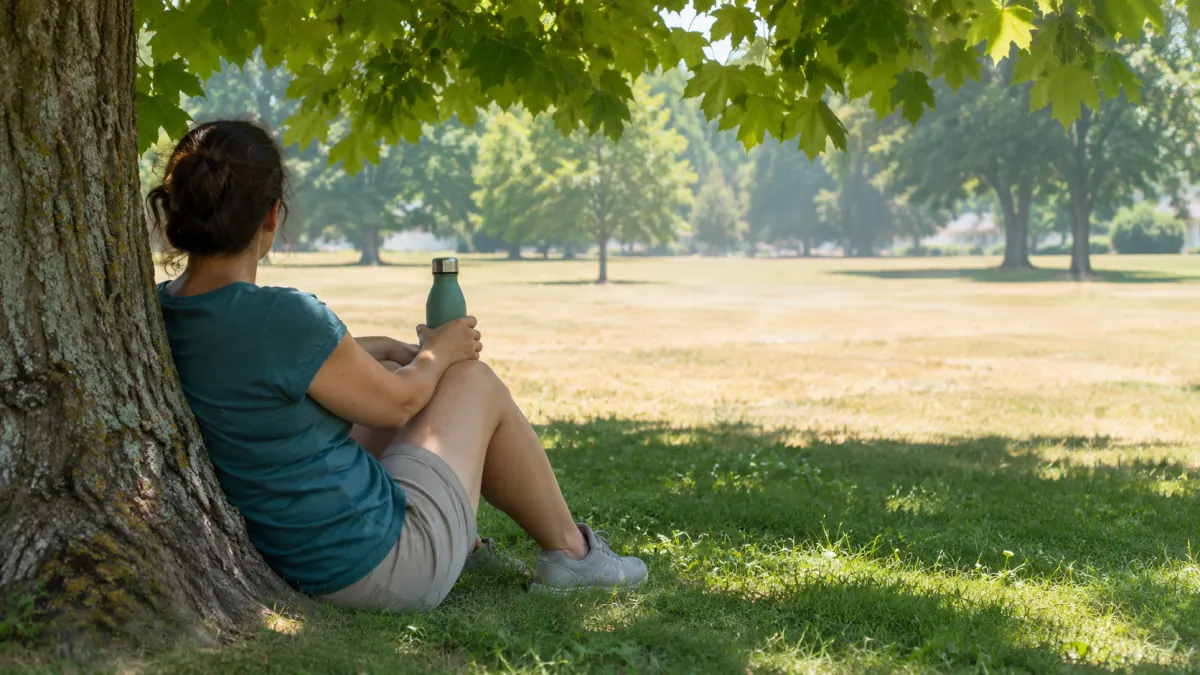
The thermometer is only half the story. On a humid southern Ontario afternoon, an air temperature of 30°C can feel closer to 40°C, because sweat that cannot evaporate does very little to cool you down. That is why heat illness so often catches people off guard: the roofer finishing a job in Ballantrae, the grandparent in a top-floor apartment without air conditioning, the teenager running drills on a turf field, or the cyclist who decided to ride out to Musselman’s Lake at two in the afternoon. None of them would describe the day as dangerous until they started to feel strange.
Heat-related illness sits on a spectrum. At one end are heat cramps and heat rash, which are uncomfortable but usually harmless. In the middle is heat exhaustion, which is common, treatable, and a clear warning. At the far end is heat stroke, a true medical emergency in which the body’s temperature control has failed. Knowing where someone sits on that spectrum, and how quickly they can slide from one stage to the next, is the most useful summer health skill a Stouffville household can have.
How your body normally handles heat
Muscles produce heat when you move, the sun adds more, and your body sheds it mainly by widening blood vessels near the skin and by sweating. That system works well until something gets in its way:
- Humidity slows evaporation, so you sweat more and cool less.
- Dehydration reduces the fluid available for sweat and for keeping blood pressure stable.
- Heavy clothing or protective gear traps heat against the skin.
- Lack of acclimatization matters too. It typically takes one to two weeks of gradual exposure for the body to adjust to working in heat, which is why the first hot spell of the season tends to cause the most trouble.
- Certain medications and conditions blunt sweating, thirst, or the heart’s ability to keep up.
When heat gain outpaces heat loss for long enough, core temperature starts to climb and symptoms follow.
The milder end: heat rash and heat cramps
Heat rash shows up as clusters of small red bumps or tiny blisters, usually where skin folds or where clothing rubs: the neck, chest, groin, and under the breasts. It happens when sweat ducts become blocked. Moving to a cooler place, wearing loose cotton, and keeping the area dry usually clears it within a few days. Heavy creams tend to make it worse.
Heat cramps are painful, involuntary muscle spasms, often in the calves, thighs, or abdomen, that come on during or after hard work in the heat. They are linked to fluid and salt losses through sweat. Stop the activity, rest somewhere cool, stretch gently, and sip water or an electrolyte drink. If cramps last longer than an hour, or if you have a heart condition or are on a low-sodium diet, get advice before pushing on.
Neither of these is dangerous in itself, but both are signals that your body is working hard to cope. Treat them as a reason to slow down rather than something to tough out.
Heat exhaustion: the body’s warning shot
Heat exhaustion happens when the body is still trying to cool itself but is losing the battle because of fluid and salt depletion. Core temperature is raised but usually below 40°C, and the person’s thinking stays essentially clear.
Typical signs include:
- Heavy sweating
- Cool, pale, or clammy skin
- Weakness and unusual fatigue
- Dizziness or feeling faint, especially on standing
- Headache
- Nausea, sometimes vomiting
- Fast, weak pulse
- Muscle cramps
- Thirst and dark urine
What to do right away
- Get out of the heat. Move into air conditioning if possible, or at least into deep shade with a breeze.
- Lie down and raise the legs slightly if the person feels faint.
- Loosen or remove extra clothing, including hats, helmets, and safety gear.
- Cool the skin. Cool, wet cloths on the neck, armpits, and groin, a cool shower, or misting with water while fanning all help.
- Sip fluids. Water is fine; an oral rehydration solution or sports drink helps replace salt after heavy sweating. Small, frequent sips are better than gulping, especially if there is nausea.
- Stay with the person and watch closely.
Most people with heat exhaustion feel noticeably better within 30 to 60 minutes of these measures. If symptoms are getting worse, or have not improved within an hour, they need medical attention. And if confusion, fainting, or a stop in sweating appears at any point, treat it as heat stroke.
After an episode of heat exhaustion, take the rest of the day off from exertion and be more careful for the next several days. Your tolerance to heat is often reduced for a while afterward.
Heat stroke: when cooling fails
Heat stroke is different in kind, not just degree. The body’s temperature-regulating system is overwhelmed, core temperature typically rises above 40°C, and the brain is affected. Without rapid cooling, heat stroke can damage the brain, kidneys, liver, and muscles, and it can be fatal.
There are two common patterns:
- Classic heat stroke develops over hours or days during a heat wave, most often in older adults, infants, and people with chronic illness, frequently indoors in homes that cannot stay cool.
- Exertional heat stroke comes on quickly in otherwise healthy people who are working or exercising hard in the heat, such as athletes, labourers, and military recruits. These people may still be sweating.
The key warning signs:
- Confusion, slurred speech, agitation, odd behaviour, or loss of balance
- Fainting, seizures, or unresponsiveness
- Very high body temperature
- Skin that is hot and may be red; it can be dry, but sweating does not rule heat stroke out
- Rapid, strong pulse and fast breathing
- Throbbing headache
The change in mental state is the single most important clue. Someone who is hot and also not making sense needs emergency care.
Heat stroke first aid
Call 911 immediately. Then start cooling while you wait:
- Move the person to the coolest place available.
- Remove excess clothing.
- Cool aggressively: if a tub, kiddie pool, or large container of cold water is available, immersing the body up to the neck is the most effective method. Otherwise, soak them with cool water and fan hard, and apply ice packs or cold wet towels to the neck, armpits, and groin.
- Do not give fluids by mouth if the person is confused, drowsy, or vomiting, because they may choke.
- Do not give acetaminophen or ibuprofen for heat stroke; they do not lower temperature caused by heat and may add strain to the liver or kidneys.
Keep cooling until paramedics take over. The nearest emergency departments for most Stouffville residents are Markham Stouffville Hospital in Markham and Uxbridge Hospital.
Side by side
| Heat exhaustion | Heat stroke | |
|---|---|---|
| Mental state | Alert, may be tired or irritable | Confused, slurred speech, may faint or seize |
| Skin | Cool, pale, clammy, sweaty | Hot, often red; may be dry or still sweating |
| Pulse | Fast and weak | Fast and strong |
| Temperature | Raised, usually under 40°C | Usually above 40°C |
| Response to rest and cooling | Improves within an hour | Does not improve; worsens |
| What to do | Cool down, rehydrate, monitor | Call 911 and cool immediately |
Who is most at risk around Stouffville
Anyone can develop heat illness, but some neighbours deserve an extra check during a heat warning.
Older adults. Thirst signals fade with age, sweating becomes less efficient, and many seniors take medications that affect fluid balance. Someone living alone in an upper-floor unit without air conditioning is in a particularly vulnerable position.
Babies and young children. They heat up faster than adults and depend on others for fluids and shade. Never leave a child, or a pet, in a parked car, even with the windows open and even briefly.
People with chronic conditions. Heart disease, kidney disease, diabetes, lung disease, obesity, and some mental health and neurological conditions all raise risk. Pregnancy also increases the body’s heat load.
Common medications. Diuretics (“water pills”), some blood pressure medicines, certain antidepressants and antipsychotics, antihistamines, stimulants, and some drugs for bladder or Parkinson’s symptoms can reduce sweating or make dehydration more likely. Do not stop a prescribed medication on your own during hot weather, but do ask whether you need a plan. If you are followed for high blood pressure or another long-term condition, a summer check-in is a sensible time to review this.
Outdoor workers and athletes. Construction, landscaping, farm work on the fields around Gormley and Lincolnville, roofing, and summer sports camps all combine exertion with sun exposure. Employers in Ontario have obligations to protect workers from heat stress, and it is worth knowing your workplace’s plan.
Practical ways to stay ahead of the heat
Most heat illness is preventable. A few habits make a large difference:
- Watch the forecast and heat warnings. Environment and Climate Change Canada issues heat warnings for York Region, and York Region Public Health shares guidance when they are in effect. Plan your day around them.
- Shift heavy activity to the cooler parts of the day. Early morning is the best time for mowing, gardening, runs, and long walks on the Stouffville trails.
- Drink before you are thirsty. During hot weather, carry water and sip steadily. If your doctor has limited your fluids for a heart or kidney condition, ask what is safe for you in a heat wave.
- Check your urine. Pale yellow is a reasonable target; dark amber means you are behind.
- Dress for it. Loose, light-coloured, breathable clothing and a wide-brimmed hat help. Sunburn itself impairs the skin’s ability to cool, so sunscreen matters for heat as well as skin cancer.
- Find cool spaces. If your home is hot, spend a few hours somewhere air-conditioned, such as a library, shopping centre, or community facility. Even two or three hours of relief can help the body recover. Fans alone are not enough when indoor temperatures climb into the mid-30s.
- Take real breaks. For outdoor work, rest in the shade regularly and increase breaks as the temperature and humidity rise.
- Ease into it. After a vacation or at the start of a new outdoor job, build up gradually over the first week or two.
- Check on people. A quick call or visit to an older neighbour or relative during a heat warning is one of the most effective public health measures there is.
Getting back to normal after heat illness
Most people recover fully from heat exhaustion within a day or two. Heat stroke is another matter: recovery can take longer, and hospital follow-up often includes blood tests to check the kidneys, liver, and muscles. Some people remain more sensitive to heat for weeks afterward.
If you have had heat stroke, or repeated bouts of heat exhaustion, talk with a physician before returning to strenuous outdoor work or competitive sport in hot weather. A graded return, along with a review of your medications and any underlying conditions, is usually the safest approach. Athletes and workers may be asked for documentation, and a clinic visit can help with that.
Ongoing dizziness, headaches, or nausea in the days after a hot spell are not always caused by heat, so get lingering symptoms checked. Our earlier article on stomach flu and dehydration covers rehydration and dehydration signs in more detail, much of which applies here too.
Can I give a sports drink to someone with heat exhaustion?
Is it heat stroke if the person is still sweating?
When to seek care
Call 911 for confusion, fainting, seizures, a very high temperature, or someone who is not improving despite cooling.
Get same-day medical care if heat exhaustion symptoms have not improved after an hour of rest and fluids, if vomiting prevents drinking, or if the person is an infant, older adult, pregnant, or living with a heart, kidney, or other chronic condition. If you are unsure, Health811 (call 811) is available at any hour, and our guide to choosing between a walk-in clinic or the emergency room may help you decide.
Help close to home on Main Street
For heat-related concerns that are not emergencies, such as lingering dizziness after a hot day, questions about how your medications behave in summer, or advice before starting outdoor work, HealthSmart Medical Clinic in Stouffville can help through our walk-in clinic and same-day appointments. You can book a visit online, and since our hours can change, please check the location page before heading over to 208-5892 Main Street.
This post offers general health information only and does not replace an assessment by your own health care provider.