Ingrown Toenails in Stouffville: Home Care, Trimming Mistakes and Minor Procedures
Why toenails dig into the skin, how to soak and protect a sore toe, and when a Stouffville clinic visit or minor nail procedure makes more sense than DIY.
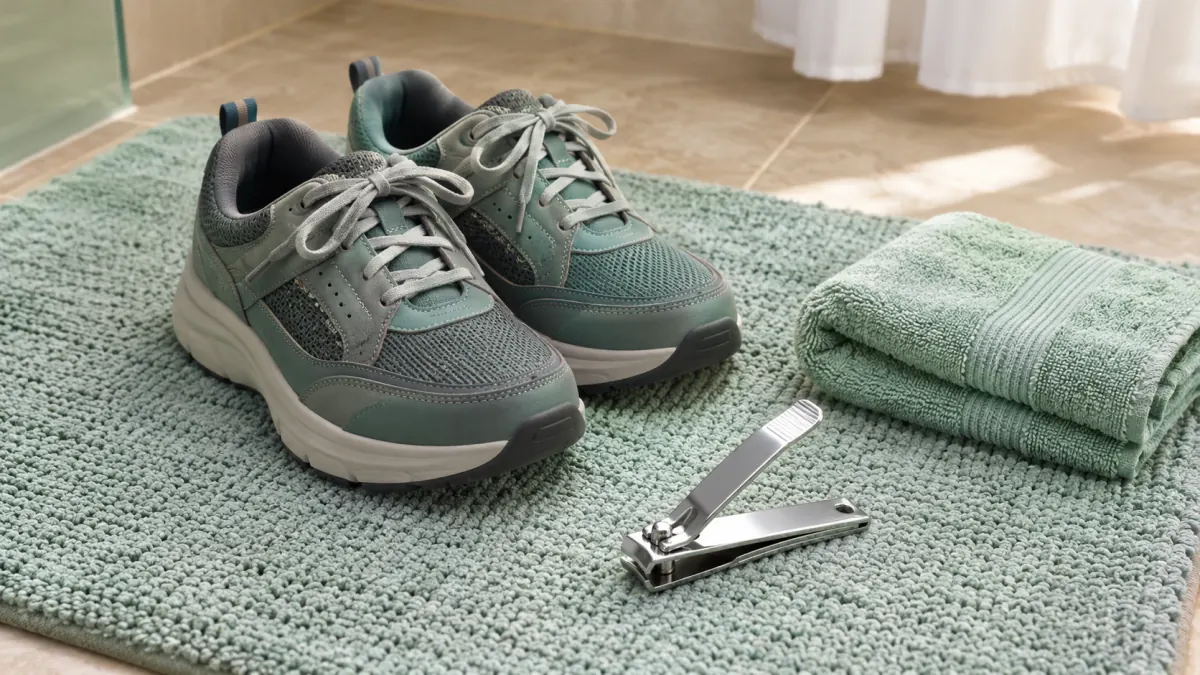
Most people with an ingrown toenail did something reasonable that happened to be wrong. They trimmed the nail neatly into a rounded curve so it matched the shape of the toe. They squeezed into snug winter boots for weeks at a time. They noticed a sore corner and, wanting to help it along, dug the offending edge out with nail scissors and cut it shorter still. Each of those moves feels sensible in the moment, and each one makes it more likely that the edge of the nail will press into the soft skin beside it instead of growing out over the top.
The good news is that early ingrown toenails usually respond well to simple care at home, and the ones that keep coming back can often be fixed for good with a short procedure. This guide walks through why toenails grow in, how to look after a sore toe safely, the mistakes worth avoiding, and when it is time to have a clinician in Stouffville take a look.
What an ingrown toenail actually is
An ingrown toenail happens when the side edge of the nail plate pushes into the skin fold along the edge of the toe. The big toe is by far the most common site, usually on one side, though both sides can be involved. Once the nail edge breaks the skin, the body treats it like a splinter: the area becomes red, swollen and tender, and it can go on to become infected.
Clinicians often think about ingrown toenails in rough stages, because the stage helps guide treatment.
| Stage | What you notice | What usually helps |
|---|---|---|
| Early (inflamed) | Mild redness and swelling along one side, pain with pressure or tight shoes | Soaks, gentle lifting of the nail edge, roomier footwear |
| Infected | More swelling, warmth, pus or drainage, sharper pain, sometimes a bad smell | Clinical assessment; the nail spike often needs to be removed |
| Chronic or recurrent | Shiny, raw, overgrown tissue at the nail fold, repeated flare-ups over months | A minor procedure to remove the edge of the nail, sometimes treating the nail root |
The raw, overgrown tissue of later stages bleeds easily and looks alarming, but it usually settles once the nail edge stops digging in.
Why it happens to some people more than others
A few factors tip the odds:
- How the nail is trimmed. Cutting the nail too short, or rounding off the corners, lets the skin fold bulge up over the nail edge. When the nail grows forward, it runs straight into that skin.
- Tight or pointed footwear. Shoes that squeeze the toes together push the skin against the nail. Stouffville winters mean months in snug boots, and steel-toed work boots, dress shoes and tight hockey skates or soccer cleats are common culprits too.
- Sweaty feet. Skin that stays damp is softer and easier for a nail edge to pierce. Teenagers and athletes who live in sports socks are especially prone.
- Nail shape. Some people inherit nails that curve sharply downward at the sides, sometimes called pincer or curved nails. These can dig in no matter how carefully they are trimmed.
- Injury. Stubbing a toe, having it stepped on in a pickup game, or dropping something heavy on it can damage the nail and change how it grows.
Ingrown toenails are particularly common in adolescents and young adults, but they can happen at any age.
Caring for a mildly ingrown toenail at home
If the toe is only red and sore, with no pus and no spreading redness, and you do not have diabetes or poor circulation, home care is a reasonable first step. Give it about a week of consistent effort.
- Soak the foot. Use warm (not hot) water for about 10 to 15 minutes, three or four times a day. Soaking softens the skin and the nail and eases discomfort.
- Dry thoroughly. Pat the toe dry with a clean towel, including between the toes. Damp skin is part of the problem.
- Gently lift the nail edge, if you can do it without much pain. After a soak, some people slide a small wisp of clean dental floss under the corner of the nail to lift it away from the skin. Change it daily. If this hurts a lot or you cannot see the edge clearly, skip this step and get help instead.
- Give the toe room. Wear open-toed sandals at home and the roomiest shoes you own when you go out. Avoid tight socks.
- Manage the pain. Acetaminophen or ibuprofen, taken as directed on the package, can help if they are safe for you.
- Keep it clean. Wash the area gently with soap and water once or twice a day. A simple bandage can protect it in shoes.
If the toe is clearly improving after several days, keep going until the nail has grown out past the skin fold. If it is staying the same or getting worse, it is time to have it assessed.
What not to do
- Don’t perform bathroom surgery. Digging out the nail edge with clippers, scissors or a knife is the single most common way a mild problem becomes an infected one. It usually leaves a short, sharp spike deeper in the fold that grows back into the skin.
- Don’t cut a V into the middle of the nail. This is a long-standing piece of folk advice. The idea is that the notch will make the sides pull inward, but nails do not grow that way, and it does not help.
- Don’t keep cutting the nail shorter. It feels like it should relieve pressure, but it sets up the next ingrown edge.
How to trim toenails so this does not come back
Prevention is mostly about technique and footwear:
- Cut toenails straight across, leaving the corners visible just past the skin at the end of the toe.
- Leave the nail about level with the tip of the toe, not cut down to the quick.
- Use proper toenail clippers, which have a straight edge, rather than curved fingernail clippers.
- Trim after a bath or shower when the nails are softer.
- Smooth any sharp corner with a nail file instead of cutting into the side.
- Choose shoes with a roomy toe box, and replace children’s shoes as their feet grow. Kids often outgrow boots partway through a Stouffville winter without saying anything.
- Change socks when they get damp, especially after sports or long days on your feet.
If you have very thick nails, poor eyesight, or difficulty reaching your feet, consider asking a foot care professional for help with trimming. It is much easier to prevent an ingrown nail than to treat one.
When a clinician should take a look
Book a visit if you notice any of the following:
- Pus, drainage or a bad smell from the nail fold
- Redness and swelling that is spreading beyond the edge of the nail
- Pain that is getting worse despite a week of home care
- Raw, overgrown tissue at the side of the nail
- Ingrown toenails that keep coming back on the same toe
- Any foot problem at all if you have diabetes, numbness in your feet, or poor circulation
That last point deserves emphasis. People living with diabetes or peripheral artery disease can have reduced feeling and slower healing in the feet, so a small wound can become serious without much warning. If that describes you, skip the home experiments and get the toe checked early. Regular foot checks are already part of good diabetes management, and an ingrown nail is a good reason to raise them.
What treatment in the clinic can look like
After examining the toe, a clinician will suggest options based on how far along the problem is.
Conservative care with a little help
For early cases, a clinician may lift the nail edge and place a small piece of material under it, or show you how to tape the skin fold away from the nail. Some clinicians use a thin plastic splint along the nail edge to guide it outward as it grows.
Partial nail avulsion
When the nail edge is deeply embedded, infected, or keeps returning, the usual treatment is a partial nail avulsion. The toe is numbed with a local anaesthetic injection at its base, and a narrow strip along the affected side of the nail is removed, right back to the root. The rest of the nail stays in place, so the toe looks fairly normal once it heals.
To lower the chance of the edge growing back, the nail root on that side is sometimes treated as well, often with a chemical such as phenol. This is sometimes called a matrixectomy. Whether it is recommended depends on your history and the clinician’s assessment.
Many patients are surprised by how quick this is. The injection is the uncomfortable part; once the toe is numb, the procedure itself usually takes a short time. Our minor procedures service in Stouffville handles a range of in-office treatments, so ask us whether a partial nail avulsion can be done in-clinic for your situation, or whether a referral elsewhere makes more sense.
Do I need antibiotics?
Not always. Removing the nail spike that is causing the problem is usually the most important part of treatment, and many infections settle once that pressure is gone. Antibiotics may be prescribed if there is spreading infection in the surrounding skin, if you have diabetes or circulation problems, or if the clinician has other concerns. If a pocket of pus has formed, it may need to be drained, similar to other skin infections covered in our post on abscesses and boils.
Healing after a nail procedure
Aftercare is straightforward, but it matters:
- Keep the first dressing on for the time you are told, usually a day or two, and keep the foot elevated when you can on the first day.
- Start soaks and dressing changes as instructed, typically warm water soaks once or twice a day followed by a clean, light dressing.
- Wear open or roomy shoes for the first week or two.
- Expect some drainage for a couple of weeks, especially if the root was treated. Clear or slightly yellow fluid is common.
- Ease back into activity. Walking is usually fine within a day or so. Running, hockey and other high-impact sports may need to wait a week or two, depending on comfort.
Most toes heal within two to four weeks. If you need help with dressings along the way, our minor wound care team can check the site and change the dressing for you. Signs that the toe needs to be seen sooner include increasing pain after the first few days, spreading redness, a fever, or a foul smell.
Red flags: when to go to the emergency department
An ingrown toenail on its own is rarely an emergency, but infections in the foot can spread. Go to the nearest emergency department, such as Markham Stouffville Hospital or Uxbridge Hospital for most Stouffville households, or call 911 if needed, if you notice:
- Red streaks running up the foot or leg
- Rapidly spreading redness, swelling or heat
- Fever, chills or feeling generally very unwell
- Skin around the toe that turns dark, grey or black
- A foot wound with signs of infection if you have diabetes and cannot be seen promptly
If you are unsure, Health811 (call 811) can help you decide where to go.
Quick questions about ingrown toenails
Will my nail grow back normally after a partial nail avulsion?
Is the procedure covered by OHIP?
Getting a sore toe looked at in Stouffville
There is no need to limp around for weeks hoping a stubborn toenail sorts itself out. If home care is not working or the toe looks infected, you can book an appointment at HealthSmart Medical Clinic at 208-5892 Main Street, or call us at 905-642-6300. Hours can change from week to week, so check our location page for current details before you come in. Bring along a list of your medications and let us know if you have diabetes or circulation concerns so we can plan your visit properly.
This article offers general information about foot and nail care and is not a replacement for an assessment of your own toe.