Iron Deficiency and Fatigue in Stouffville: When Tiredness Has a Cause
Always tired, winded on stairs or craving ice? Who is prone to low iron, what ferritin results mean, and how Stouffville patients can rebuild iron safely.
She assumed it was the commute. Up before six for the GO train, a full workday in Toronto, a toddler at home, and a spring half-marathon she was training for. Of course she was tired. But the runs that used to feel easy now left her gasping on the hill near the reservoir, she was cold when everyone else was comfortable, and she’d started chewing the ice from her water glass without really noticing. A routine blood test finally gave the answer: her iron stores were nearly empty.
That story is a composite, but the pattern is very familiar. Fatigue has dozens of possible causes, from poor sleep and stress to thyroid problems, depression and simply doing too much. Iron deficiency is one of the most common and most fixable of them, in Stouffville as everywhere, and it’s easy to miss because it creeps up slowly. This article covers who is most at risk, the symptoms beyond tiredness, what the blood tests actually show, and how to rebuild iron safely, with a few notes for Stouffville families along the way.
What iron does
Iron is a key ingredient in haemoglobin, the protein in red blood cells that carries oxygen from your lungs to the rest of your body. It’s also used in muscle and in many enzymes involved in energy production. Your body stores extra iron, mainly as a protein called ferritin.
When you lose more iron than you take in, your stores drain first. This is iron deficiency. If it continues, your body can’t make enough healthy red blood cells, and you develop iron deficiency anaemia. Many people feel unwell in the first stage, before anaemia appears on a blood count.
Who is more likely to run low
Iron deficiency can happen to anyone, but some groups are especially prone:
- People with heavy or long menstrual periods. This is one of the most common causes in Canada. Signs a period may be heavy include soaking a pad or tampon every hour or two, passing large clots, bleeding longer than seven days, or needing double protection overnight.
- Pregnant people, whose iron needs rise sharply. Prenatal vitamins usually contain iron for this reason.
- Infants and toddlers, particularly toddlers who drink a lot of cow’s milk. Milk is low in iron and can fill little stomachs, crowding out iron-rich foods. A common guideline is to limit cow’s milk to about 500 to 750 mL (two to three cups) a day for children over one year.
- Teenagers, who are growing quickly, and teen girls who have started their periods.
- Vegetarians and vegans, because iron from plant foods is less easily absorbed.
- Endurance athletes, especially runners (and Stouffville has no shortage of them), who lose small amounts of iron in sweat and through the gut and from the impact of running.
- Frequent blood donors.
- People with gut conditions that affect absorption, such as celiac disease or inflammatory bowel disease, or those who have had weight-loss surgery.
- People taking certain medications long term, such as acid-reducing drugs.
A special note for men and post-menopausal women
When iron deficiency shows up in men or in women who no longer have periods, doctors look carefully for slow, hidden blood loss from the digestive tract, such as from ulcers, polyps or, less often, colon cancer. This is why simply taking iron pills without finding the cause isn’t enough in these groups. For Stouffville adults over 50, this may overlap with routine colon cancer screening. Your doctor may suggest stool testing, a colonoscopy or other investigations.
Symptoms beyond feeling tired
Iron deficiency can cause a surprising range of symptoms. Ask yourself whether any of these sound familiar:
- Fatigue or low stamina that doesn’t improve with rest
- Shortness of breath or a pounding heart with activity you used to handle easily
- Pale skin or pale inner eyelids
- Feeling cold, especially hands and feet
- Headaches or dizziness
- Difficulty concentrating, irritability or low mood
- Hair shedding more than usual
- Brittle, ridged or spoon-shaped nails
- Restless legs, an uncomfortable urge to move the legs in the evening
- Cracks at the corners of the mouth or a sore tongue
- Cravings for ice, starch, or non-food items like dirt (called pica)
In children, iron deficiency can show up as irritability, poor appetite, slow weight gain, or delays in development, which is one reason it’s checked at certain well-child visits.
How it’s diagnosed
A simple blood test is usually enough. Your doctor may order:
| Test | What it tells you |
|---|---|
| Complete blood count (CBC) | Haemoglobin level and size of red blood cells; small, pale cells suggest low iron |
| Ferritin | Your iron stores; low ferritin is the most reliable sign of iron deficiency |
| Iron, transferrin saturation | Additional detail, sometimes useful when ferritin is borderline |
| Other tests as needed | Celiac screening, kidney function, B12, thyroid, depending on your symptoms |
One quirk worth knowing: ferritin also rises during inflammation and infection, so a “normal” result can sometimes hide true iron deficiency in someone who is unwell or has an inflammatory condition. Your doctor interprets the numbers in the context of your whole picture.
The lab reports a reference range, but many clinicians consider symptoms and other factors rather than relying on the cut-off alone. If you’re curious how requisitions and results work in Ontario, our article on blood work explains the process from start to finish, and you can read about blood work requisitions at HealthSmart.
Rebuilding iron
Treatment has two parts: replacing what’s missing and addressing the cause.
Food first, but food alone is often not enough
Iron in food comes in two forms:
- Heme iron, from meat, poultry and fish, is absorbed well.
- Non-heme iron, from beans, lentils, tofu, leafy greens, fortified cereals, nuts and seeds, is absorbed less efficiently.
You can boost absorption of plant-based iron with a few simple pairings:
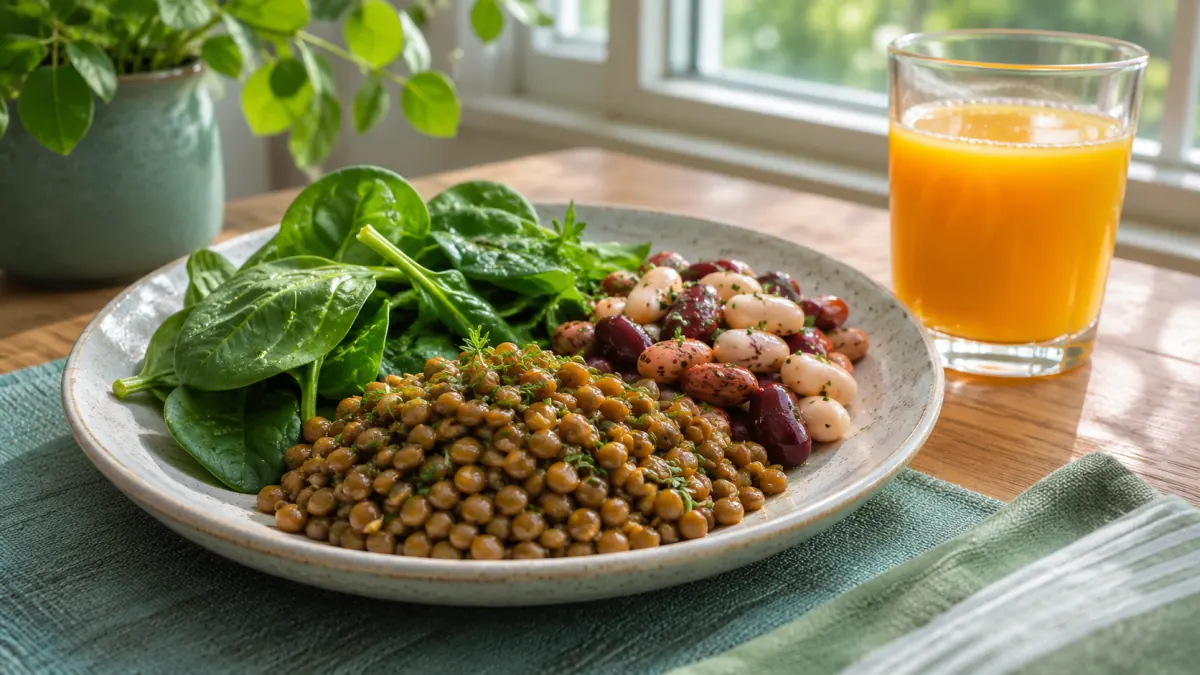
- Add vitamin C. Orange juice with fortified cereal, peppers or tomatoes in a lentil dish, or strawberries with oatmeal.
- Combine plant and animal sources if you eat meat, as a little meat or fish helps your body absorb iron from plants in the same meal.
- Time your tea and coffee. Have them between meals rather than with iron-rich foods, since compounds in them reduce absorption.
- Separate calcium. Large amounts of dairy or calcium supplements at the same meal can also reduce absorption.
- Cook in cast iron, which can add small amounts of iron to food.
Diet is important for preventing iron deficiency and keeping levels up afterward, but once stores are truly depleted, most people need a supplement to catch up within a reasonable time.
Iron supplements
Oral iron is inexpensive, widely available and effective for most people. A few practical points:
- Take it as your doctor recommends. Research suggests that taking iron every other day may be absorbed as well as or better than daily dosing for some people, with fewer side effects. Your doctor will advise on the best schedule for you.
- Take it on an empty stomach if you can tolerate it, ideally with water or a little juice. If it upsets your stomach, taking it with a small amount of food is better than stopping.
- Expect dark or black stools. That’s normal with iron.
- Constipation, nausea and cramps are common. Different forms of iron or a lower dose may help.
- Separate it from certain medications, such as thyroid medicine, some antibiotics and antacids. Your pharmacist can help with timing.
Energy often starts improving within a few weeks, haemoglobin rises over a month or two, and refilling stores can take several months. Your doctor will typically repeat blood work to confirm things are moving in the right direction.
Keep iron supplements locked away from children. Iron overdose is a serious poisoning risk for young kids, and even a handful of adult tablets can be dangerous. If a child swallows iron pills, call the Ontario Poison Centre or 911 right away.
When oral iron isn’t working
Some people can’t absorb or tolerate oral iron, have ongoing losses that outpace it, or need iron replaced quickly. In those cases, intravenous (IV) iron may be considered. That decision is made with your doctor, sometimes with a specialist.
Why you shouldn’t self-treat without testing
It’s tempting to grab a bottle of iron off the pharmacy shelf. But fatigue has many causes, and taking iron when you don’t need it won’t help and can cause harm. Some people have a genetic condition called haemochromatosis, which causes iron to build up in the organs. And treating symptoms without finding the cause may delay the diagnosis of something important, like a bleeding source or celiac disease. A blood test first is the safer route.
Red flags to act on
See a doctor promptly, or go to the emergency department at Markham Stouffville Hospital or Uxbridge Hospital if severe, if you notice:
- Black, tarry stools when you’re not taking iron, or blood in your stool or vomit
- Fainting, chest pain, or severe shortness of breath
- Very heavy vaginal bleeding, such as soaking a pad every hour for several hours
- Unexplained weight loss, ongoing abdominal pain, or a change in bowel habits
How long until I feel better on iron?
Do I need to stop running while my iron is low?
Getting your energy checked
If tiredness has been hanging around and you can’t explain it, it’s reasonable to ask for a check. Our Stouffville team can review your symptoms and history, order the right tests, and help you find and treat the cause, whether that turns out to be iron or something else. Book an appointment to get started (hours may change, so check our location page), and if heavy periods are part of the picture, our women’s health services can help with that too. Looking for ongoing care? Our family doctor page explains how registration is reviewed by the clinic team.
This article offers general information about iron and fatigue and is no replacement for advice tailored to you by a health care professional.