Knee Pain in Stouffville: Common Causes, Home Care and When to Get It Checked
Where your knee hurts, how it started and your age all point to the likely cause. Practical home care, red flags, and how knee pain is assessed in Stouffville.
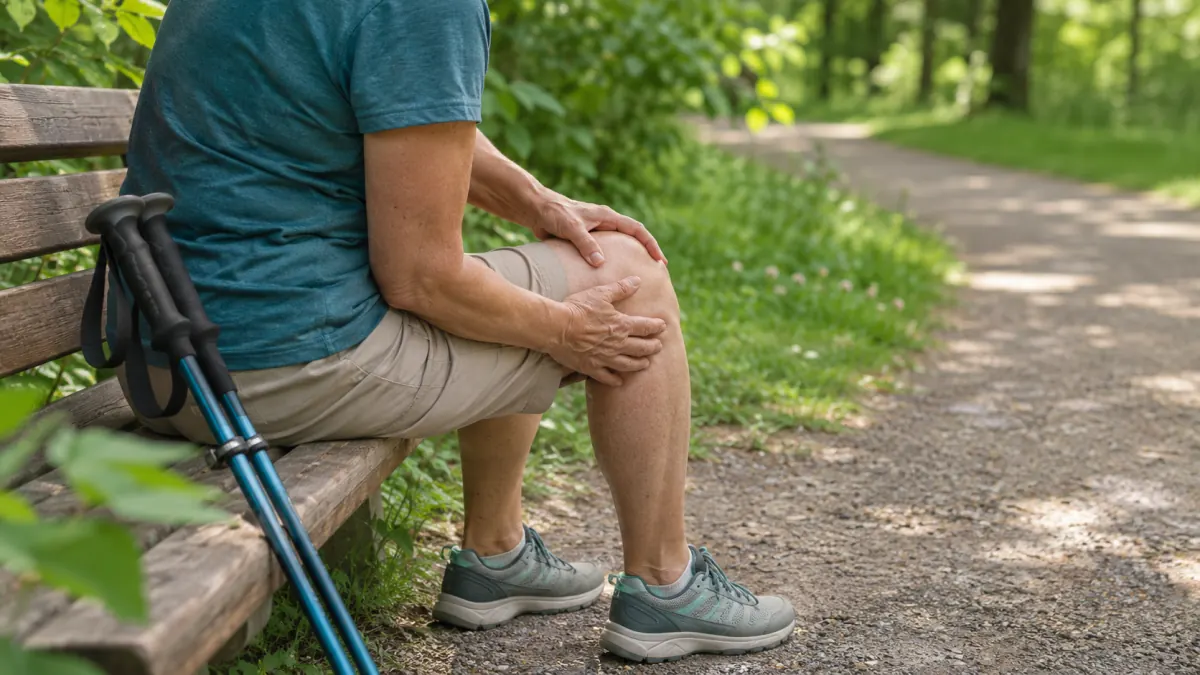
Point with one finger to the spot on your knee that hurts most. That simple gesture is often the first thing a doctor asks for, because the knee is a crowded joint, and the location of pain narrows the list of suspects remarkably quickly. Pain at the front, around or behind the kneecap, behaves differently from pain along the inner joint line, which behaves differently again from pain at the back of the knee or just below the kneecap. Add in how the pain started, sudden twist or slow creep, and your age, and you often have a fairly good idea of what’s going on before any scan is ordered.
Knee pain is one of the most common reasons adults visit a family doctor, and summer brings its share: pickleball and soccer injuries, aches from the first long hikes of the season, stiffness after a weekend of gardening on your knees. Most knee pain improves with the right kind of rest, activity changes and exercises. Some needs imaging or a specialist. This guide walks through the main causes, sensible home care and the signs that mean you should be seen, with a few notes for Stouffville walkers, runners and weekend athletes.
Reading the map: where it hurts
| Location of pain | Common causes | Typical clues |
|---|---|---|
| Front of the knee, around the kneecap | Patellofemoral pain (“runner’s knee”), kneecap arthritis | Ache with stairs, squatting, kneeling, or sitting a long time with bent knees |
| Just below the kneecap | Patellar tendinopathy (“jumper’s knee”); in teens, Osgood-Schlatter disease | Pain with jumping or running, tender bump below the kneecap |
| Inner side | Medial meniscus tear, MCL sprain, osteoarthritis, pes anserine bursitis | Twisting injury, catching, or gradual ache in older adults |
| Outer side | IT band syndrome, lateral meniscus, LCL sprain | Runners and cyclists; pain on the outside that builds during a run |
| Back of the knee | Baker’s cyst, hamstring strain, rarely a blood clot | Fullness or tightness behind the knee, especially with bending |
| Whole knee, deep | Osteoarthritis, ligament injury, inflammatory arthritis, infection | Swelling, stiffness, warmth |
This table is a starting point, not a diagnosis, and more than one problem can coexist. But it helps you describe your pain clearly, which makes any appointment more productive.
Sudden injuries
A knee that hurt from one specific moment, a pivot, a landing, a fall, a collision, needs a slightly different approach from a knee that ached its way into trouble.
Ligament sprains and tears
The four main knee ligaments hold the thigh bone and shin bone together. The ACL (anterior cruciate ligament) is often injured with a sudden stop and twist, such as in soccer, basketball or skiing. People often feel or hear a pop, followed by rapid swelling within a few hours and a sense that the knee is unstable or “gives way.” The MCL on the inner side is commonly sprained by a blow to the outside of the knee. Our article on sprains and strains covers the general approach to soft-tissue injuries.
Meniscus tears
The menisci are two C-shaped cartilage cushions inside the knee. In younger people, they tear with a twisting injury. In middle age and beyond, they can tear with something as ordinary as getting up from a squat. Symptoms include pain along the joint line, swelling that develops more slowly, catching or clicking, and sometimes locking, where the knee gets stuck and won’t fully straighten.
Fractures and kneecap dislocations
A fall onto the knee can fracture the kneecap or the top of the shin bone. The kneecap can also slip out of place, usually to the outside, which is very painful and often happens in teenagers and young adults.
Does it need an X-ray?
Not every injured knee needs imaging. Clinicians use a set of criteria, known as the Ottawa knee rules, to decide when an X-ray after an injury is worthwhile. An X-ray is generally recommended if any of these apply:
- Age 55 or older
- Tenderness at the head of the fibula (the bony bump on the outer side, just below the knee)
- Tenderness isolated to the kneecap
- Inability to bend the knee to 90 degrees
- Inability to take four steps both right after the injury and at the time of assessment
Soft-tissue injuries like ligament and meniscus tears don’t show on an X-ray. When those are suspected and symptoms aren’t settling, your doctor may arrange an ultrasound or MRI through a diagnostic imaging referral.
Gradual-onset knee pain
Osteoarthritis
Wear-and-tear arthritis is the most common cause of knee pain in adults over 50. It often causes stiffness first thing in the morning or after sitting that eases within 30 minutes, an ache that worsens with activity, grinding, and occasional swelling. It tends to come and go, with flare-ups and calmer periods. We cover the broader picture in our arthritis and joint pain post.
The good news is that movement is medicine for arthritic knees, whether that means a walking group in Stouffville, aquafit, or a stationary bike in the basement. Strengthening the thigh and hip muscles, maintaining a healthy weight, and staying active have been shown to reduce pain and improve function, often as much as medication.
Patellofemoral pain
Common in runners, teenagers, and people who have suddenly increased activity, this ache around the kneecap is related to how the kneecap tracks and how much load it takes. It typically flares on stairs, hills and after sitting through a long movie. It responds well to a structured strengthening program for the hips and quadriceps.
Tendon and bursa problems
Overuse can irritate the patellar tendon or the small fluid-filled sacs (bursae) around the knee. A swollen, squishy bump on the front of the kneecap, prepatellar bursitis, is classic for people who kneel a lot: flooring installers, gardeners, plumbers. If that bump becomes red, hot and very painful, especially with fever, it can be infected and needs prompt care.
Inflammatory causes
Gout, pseudogout and inflammatory arthritis can all cause a hot, swollen knee. Clues include sudden swelling without injury, redness, and morning stiffness that lasts more than an hour.
Caring for a sore knee at home
For a new, mild-to-moderate knee injury or flare-up, these steps are a sensible start:
- Relative rest. Avoid what clearly aggravates it, but keep gently moving the knee through a comfortable range. Total immobility leads to stiffness and muscle loss.
- Ice for 15 to 20 minutes at a time in the first couple of days to ease pain and swelling. Wrap it in a cloth to protect your skin.
- Compression and elevation can help if the knee is swollen.
- Pain relief. Acetaminophen or an anti-inflammatory such as ibuprofen can help in the short term if they’re safe for you. Topical anti-inflammatory gels are a good option for many people, particularly older adults. Check with a pharmacist or doctor if you have kidney, heart or stomach problems, or take blood thinners.
- Gradual return. As pain settles, slowly rebuild activity. A useful rule of thumb is that mild discomfort during exercise is acceptable if it settles by the next morning.
- Strengthen. Simple exercises like straight-leg raises, wall sits, step-ups and bridges help support the knee. A physiotherapist can tailor a program.
Trail and court tips
The rolling trails at Rouge National Urban Park and along the Oak Ridges Moraine are a joy to walk, but descents put extra load on the front of the knee. Walking poles take some of that strain, shorter strides on downhill sections help, and building distance gradually at the start of summer reduces overuse problems. If your summer in Stouffville includes pickleball, tennis or other court sports, a proper warm-up and supportive court shoes are worth the effort.
Red flags: get seen promptly
See a doctor the same day, or go to an emergency department, if you have:
- A knee that is hot, red and swollen, particularly with fever or feeling unwell, which can signal a joint infection
- Inability to bear any weight on the leg
- An obvious deformity, or a kneecap that has dislocated and not gone back
- A locked knee that won’t straighten
- Calf pain, swelling or warmth along with knee or back-of-knee pain, which may indicate a blood clot
- Numbness, coldness or colour change in the foot after an injury
- A wound over the knee joint after a fall
For serious injuries in the Stouffville area, Markham Stouffville Hospital and Uxbridge Hospital are the nearest emergency departments. Call 911 if someone can’t be safely moved.
Book a regular appointment if your pain hasn’t improved after two to three weeks of home care, if the knee keeps giving way, if swelling keeps returning, or if knee pain is limiting your sleep, work or daily walks.
Should I wear a knee brace?
Is running bad for my knees?
Having your knee looked at
At HealthSmart Medical Clinic, a knee assessment usually includes a careful history, an examination of the joint and its ligaments, and a plan, which may involve imaging, a specialist referral to sports medicine or orthopaedics, or a referral to physiotherapy. For a recent injury, a same-day appointment may be available. You can book online, and patients from across Stouffville, Gormley and Lincolnville are welcome.
The information here is general and can’t account for your individual history; please see a clinician for advice about your own knee.