Malaria Prevention for Travellers in Stouffville: Pills, Nets and Planning
Heading somewhere malaria is common? How Stouffville travellers can choose the right antimalarial, avoid dusk-to-dawn bites, and act fast on a fever back home.
There is no routine malaria vaccine for travellers leaving Canada. People are often surprised by that, because they have just rolled up a sleeve for hepatitis A, typhoid or yellow fever and assume malaria is handled the same way. It is not. Protection from malaria comes from two things working together: avoiding mosquito bites, and, for many destinations, taking preventive medication before, during and after the trip. Get either half wrong and the protection drops sharply.
Malaria is a parasite infection spread by the bite of certain mosquitoes. It is common across much of sub-Saharan Africa and is also found in parts of South and Southeast Asia, Central and South America, Oceania and elsewhere. Every year, travellers returning to Canada are diagnosed with it, and some become seriously ill. The good news is that malaria is largely preventable with sensible planning, and that planning can start right here in Stouffville several weeks before your flight leaves Pearson.
Who is most at risk
Some travellers carry more risk than others, and it is not always who you would expect.
- People visiting friends and relatives. Families from Stouffville and Markham who travel back to visit loved ones in malaria-endemic countries are among the most affected groups in Canada. Longer stays, staying in homes rather than hotels, travelling to rural areas, and the belief that childhood immunity still protects you all add up. Any immunity you had growing up fades after living away for a while.
- Long-stay travellers, volunteers and students who spend weeks or months in an area.
- Pregnant travellers, because malaria in pregnancy can be severe for both parent and baby. Many experts advise postponing travel to high-risk malaria areas during pregnancy when that is possible.
- Young children, who can become sick quickly.
- People without a spleen or with weakened immune systems.
- Last-minute travellers who skip a pre-travel visit altogether.
Business travellers in city hotels and safari guests in high-end lodges are still at risk too. Malaria risk depends on the region, the season, the altitude, and the kind of accommodation, not on how comfortable the trip is.
Step one: know whether your itinerary needs medication
Not every tropical destination carries malaria risk, and within a single country the risk can vary enormously. A capital city may have little or no transmission while a rural region a few hours away has high transmission. Some popular tourist areas have no malaria at all, while a short side trip to a national park can change the picture.
That is why a destination-specific travel advice visit looks at your actual route, not just the country names. Bring your itinerary, including:
- Every city, region and rural area you plan to visit
- Dates and length of stay in each place
- Type of accommodation (air-conditioned hotel, guesthouse, family home, camping)
- Planned activities, especially evening or overnight time outdoors
- Your medical history, current medications and any allergies
- Whether you are or might become pregnant
The Government of Canada’s travel advice pages at travel.gc.ca are a helpful starting point for general country information, but they cannot weigh your personal health factors.
Step two: choosing an antimalarial
If your trip warrants preventive medication, there are several options. None is perfect for everyone, and the right choice depends on your destination, the local drug resistance pattern, your health, other medications, the length of the trip, and practical things like whether you would rather take a pill daily or weekly.
Here is a general overview of commonly used options. Your clinician will help you decide which, if any, suits you.
| Medication | How often | Starts | Continues after leaving the area | Points to discuss |
|---|---|---|---|---|
| Atovaquone-proguanil | Daily | 1–2 days before entering | 7 days | Short post-trip course; well tolerated by many; cost can add up on long trips |
| Doxycycline | Daily | 1–2 days before entering | 4 weeks | Sun sensitivity; take with a full glass of water and stay upright; not for pregnancy or young children |
| Mefloquine | Weekly | Usually 2–3 weeks before | 4 weeks | Weekly dosing can suit long trips; not suitable for people with certain mental health or seizure histories |
| Chloroquine | Weekly | 1–2 weeks before | 4 weeks | Only useful in the few regions where the parasite is still sensitive |
| Primaquine or tafenoquine | Varies | Varies | Varies | Used in specific situations; require a blood test for G6PD deficiency first |
The part people forget: the “after” weeks
Some malaria parasites spend a stage of their life in the liver before they appear in the blood. Several antimalarials only work on the blood stage, so they must be continued for up to four weeks after you leave the malaria area to catch anything you picked up in the last days of your trip. Stopping on the flight home because you feel fine is one of the most common mistakes travellers make.
A practical tip: set a phone reminder that runs through the whole post-trip period, and pack enough medication to cover it. Many travellers like to put the last pill date on their calendar before they leave.
Side effects and fitting the pill to the person
Most travellers tolerate antimalarials well. Mild stomach upset, vivid dreams, or sun sensitivity can happen depending on the medication. Taking pills with food often helps. If you have had trouble with one medication in the past, mention it; there is usually an alternative. Do not switch medications partway through a trip without advice, since each one has its own schedule.
Buying antimalarials abroad is risky. Counterfeit and substandard medicines are a real problem in some regions. It is safer to fill your prescription in Ontario before you go.
Step three: avoiding bites, every evening
The mosquitoes that spread malaria mostly bite between dusk and dawn. That is the opposite of the daytime-biting mosquitoes that spread dengue and Zika, so serious travellers need to think about bite protection around the clock, with extra attention after sunset.
Repellent
- DEET (in concentrations up to 30% for most people) and icaridin (often 20%) are both effective choices available in Canada.
- Apply sunscreen first, let it absorb, then apply repellent on top.
- Reapply according to the label, especially after swimming or heavy sweating.
- For children, follow the product’s age guidance and apply it for them, avoiding hands, eyes and mouth.
Clothing
- Long sleeves and long pants in the evening, in light colours.
- Clothing treated with permethrin adds another layer of protection. Permethrin goes on fabric, not skin.
Sleeping
- Choose rooms with screened windows and doors, or air conditioning, when you can.
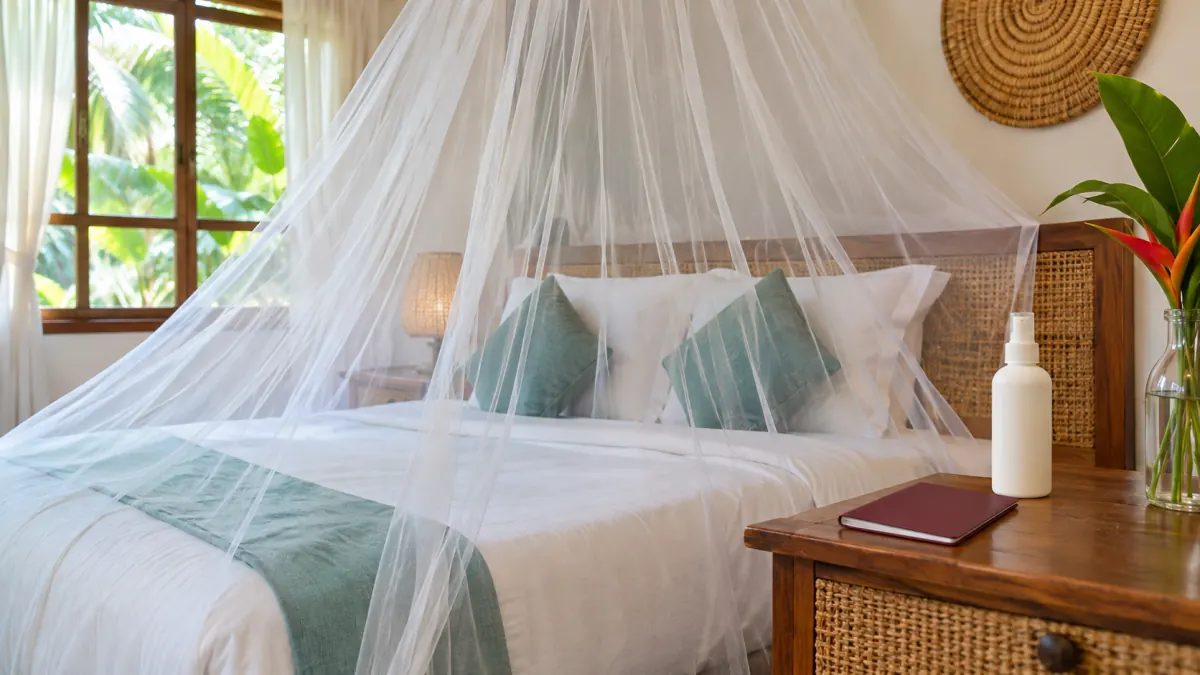
- Where rooms are not well screened, sleep under a bed net, ideally one treated with insecticide. Check it for holes and tuck it under the mattress.
- If you are staying with family, consider packing your own treated net. Nets are light and inexpensive compared with the cost of getting sick.
Bite prevention matters even if you are taking an antimalarial, because no medication is 100% effective and because mosquitoes carry other infections too.
Building it into your travel health plan
Malaria prevention fits inside a broader pre-travel visit. Ideally, book that visit six to eight weeks before departure. That leaves time to start weekly medications early if needed, complete vaccine series, and sort out anything else your trip requires. Our post on travel vaccinations in Stouffville covers the vaccine side of the planning in more detail.
Leaving sooner than that? Still come in. Many antimalarials can be started just a day or two before you go, and a short visit is far better than none.
Pre-travel consultations and most travel prescriptions and vaccines may not be covered by OHIP. Ask our team about this when you book so there are no surprises. Many private drug plans cover some antimalarials, so it is worth checking your benefits too.
A packing list for malaria areas
- Your antimalarial, enough to finish the full post-trip course, in its original labelled packaging
- Insect repellent with DEET or icaridin
- A treated bed net if your accommodation may not be screened
- Light, long-sleeved clothing for evenings
- A thermometer
- A written note of the medication name, dose and schedule
- Travel health insurance details
The most important rule: fever means get tested
If you develop a fever while travelling in a malaria area, or any time in the year after you return, seek medical care promptly and tell the clinician exactly where you have been. Most malaria shows up within the first few weeks to three months after exposure, but some types can appear months later.
Malaria can look like the flu at first: fever, chills, sweats, headache, muscle aches, tiredness, nausea. It can become life-threatening within a day or two, especially the type most common in Africa. The only way to confirm or rule it out is a blood test, which is done urgently. A negative test sometimes needs to be repeated.
Go to an emergency department or call 911 if a returned traveller has a fever along with any of the following:
- Confusion, extreme drowsiness or a seizure
- Difficulty breathing
- Yellow skin or eyes
- Dark urine or very little urine
- Repeated vomiting and unable to keep fluids or medications down
- Severe weakness or inability to stand
The nearest emergency departments to Stouffville are at Markham Stouffville Hospital in Markham and at Uxbridge Hospital. For a fever without those warning signs, still be assessed the same day; do not wait to see whether it passes. Say “I have been in a malaria area” right at the start.
I grew up in a country with malaria. Do I still need pills?
Can I take antimalarials during pregnancy or give them to my kids?
Is there a malaria vaccine I can get before travelling?
Planning your visit with us
If your next trip takes you anywhere malaria is a concern, a malaria prevention consultation at HealthSmart can fold medication, bite advice and vaccine planning into one visit. You can book online, or use our contact page if you have questions about what to bring. Our wider travel clinic page lists the other pre-trip services available on Main Street in Stouffville.
The information here is general in nature and is not a replacement for individual advice from a health professional who knows your plans and history.