Nosebleeds in Stouffville: Simple First Aid, Dry-Air Causes, and Red Flags
Lean forward, pinch the soft part of the nose and wait. How Stouffville families can stop a nosebleed, prevent winter ones and know when it is an emergency.
Lean forward, not back. If you remember only one thing from this article, make it that. For generations, people were taught to tip their head back during a nosebleed, sometimes while lying down with a cold cloth on the forehead. It feels logical, because the blood stops dripping out of the nose. But it hasn’t stopped; it is simply running down the back of the throat, where it can be swallowed, upset the stomach, trigger coughing or vomiting, and make it impossible to tell how much bleeding is actually happening.
Nosebleeds are frightening to watch, particularly in children, because a small amount of blood spreads across a tissue or pillowcase and looks like far more than it is. The good news is that the vast majority are minor, stop with simple pressure, and can be prevented with a few changes at home. In Stouffville they also tend to follow the thermostat: once furnaces switch on in late fall and run through March, dry noses become a household complaint. Below are the first-aid steps, the reasons winter makes things worse, prevention tips, and the situations that call for urgent care.
What is actually bleeding
Just inside each nostril, on the wall that divides the two sides (the septum), there is a small area where several tiny blood vessels meet close to the surface. It sits behind a very thin lining with little to protect it. Doctors call this spot Kiesselbach’s area, and it is the source of roughly nine out of ten nosebleeds. These are called anterior nosebleeds, meaning they come from the front of the nose. They usually bleed from one nostril, and they almost always respond to firm pressure.
A much smaller number of nosebleeds come from further back in the nose, where larger vessels run. These posterior nosebleeds are more common in older adults, people with high blood pressure, and people on blood-thinning medication. They tend to be heavier, may come from both nostrils at once, and blood often pours down the throat even when the person is leaning forward. Posterior bleeds are harder to control at home and are more likely to need hospital treatment.
Step-by-step first aid
Most nosebleeds stop within the first round of proper pressure. The key word is proper: many people pinch the wrong spot, or let go every minute to check.
- Sit up and lean slightly forward. Keep the head level with or just ahead of the chest. This lets blood drain out the front instead of down the throat.
- Gently blow the nose once if you can, to clear loose clots. This is optional, and not something to force on a young child.
- Pinch the soft part of the nose. Use your thumb and index finger to squeeze both nostrils closed, just below the hard, bony bridge. The goal is to press the fleshy part against the septum, where the bleeding is coming from. Pinching the bone at the top does nothing.
- Hold firmly for 10 to 15 minutes without letting go. Use a clock. It is very tempting to release after two minutes to peek, but each release lets the forming clot break away and restarts the process.
- Breathe through the mouth and spit any blood that reaches the throat into a bowl or tissue rather than swallowing it.
- A cold pack on the bridge of the nose or the back of the neck is optional. It may feel soothing, but pressure is what does the work.
- If it is still bleeding after 15 minutes, repeat once more for another 10 to 15 minutes of steady pressure.
Once the bleeding stops, give the clot time to settle. For the rest of the day, try to avoid blowing or picking the nose, bending over for long periods, heavy lifting, strenuous exercise, very hot drinks or a hot shower. These raise blood flow to the face and can dislodge the clot.
Helping a child through it
Children get nosebleeds often, usually from a combination of dry air, colds and fingers that find their way into nostrils. Sit them on your lap facing outward, lean them forward a little, and pinch for them. A favourite show, a story or a timer they can watch makes the 10 minutes go faster. Stay calm; children take their cue from the adult in the room. If a child has frequent nosebleeds, a visit for pediatric care can check for an obvious cause and talk through prevention.
Why winter in Stouffville brings more nosebleeds
The lining inside your nose works best when it is moist. Cold outdoor air holds very little water, and when that air is heated indoors its relative humidity drops sharply. By January, plenty of Stouffville houses are running dry enough that people notice static shocks, cracked lips and itchy skin. The nose notices too. The thin lining over those small vessels dries out, cracks and forms crusts. Then someone rubs, picks or blows forcefully, the crust pulls away, and the bleeding starts.
Other things that commonly pile on during the colder months:
- Colds, flu and sinus infections, which bring frequent blowing and irritated, inflamed lining.
- Allergies, including indoor triggers such as dust and pet dander once windows stay shut.
- Nasal steroid sprays used for allergies or congestion. These are generally safe, but aiming the spray at the septum instead of slightly outward can irritate it.
- Decongestant sprays used for more than a few days, which can dry and inflame the lining.
- Wood stoves and fireplaces, found in some older homes and rural properties around Ballantrae and Musselman’s Lake, which further dry indoor air.
If you are also battling chapped hands and itchy shins, our article on winter wellness has more on getting through the dry season comfortably.
Other common causes
Dry air is the headline, but it is not the whole story. Nosebleeds can also follow:
- Nose picking or rubbing, by far the most common trigger in kids (and more adults than would admit it).
- Minor bumps from a stray puck at a Stouffville rink, a basketball or a sibling’s elbow.
- Medications that affect clotting, including acetylsalicylic acid (ASA), anticoagulants such as warfarin, apixaban or rivaroxaban, antiplatelet drugs like clopidogrel, and sometimes anti-inflammatory painkillers such as ibuprofen or naproxen.
- Some supplements, such as high-dose fish oil, vitamin E or ginkgo, which may add to bleeding tendency in some people.
- Alcohol, which widens blood vessels.
- A deviated septum, which creates turbulent airflow and drying on one side.
- Less commonly, bleeding disorders, liver disease, inherited conditions that affect blood vessels, or growths in the nose.
High blood pressure is a frequent question. It does not usually cause nosebleeds on its own, but it can make a bleed heavier and harder to stop once it starts. If you notice frequent or stubborn nosebleeds and you have not had your blood pressure checked recently, it is a reasonable thing to bring up. Ongoing high blood pressure management is one of the routine things a family doctor helps with.
Preventing repeat nosebleeds
A few habits make a real difference, especially between December and March.
| What to do | Why it helps |
|---|---|
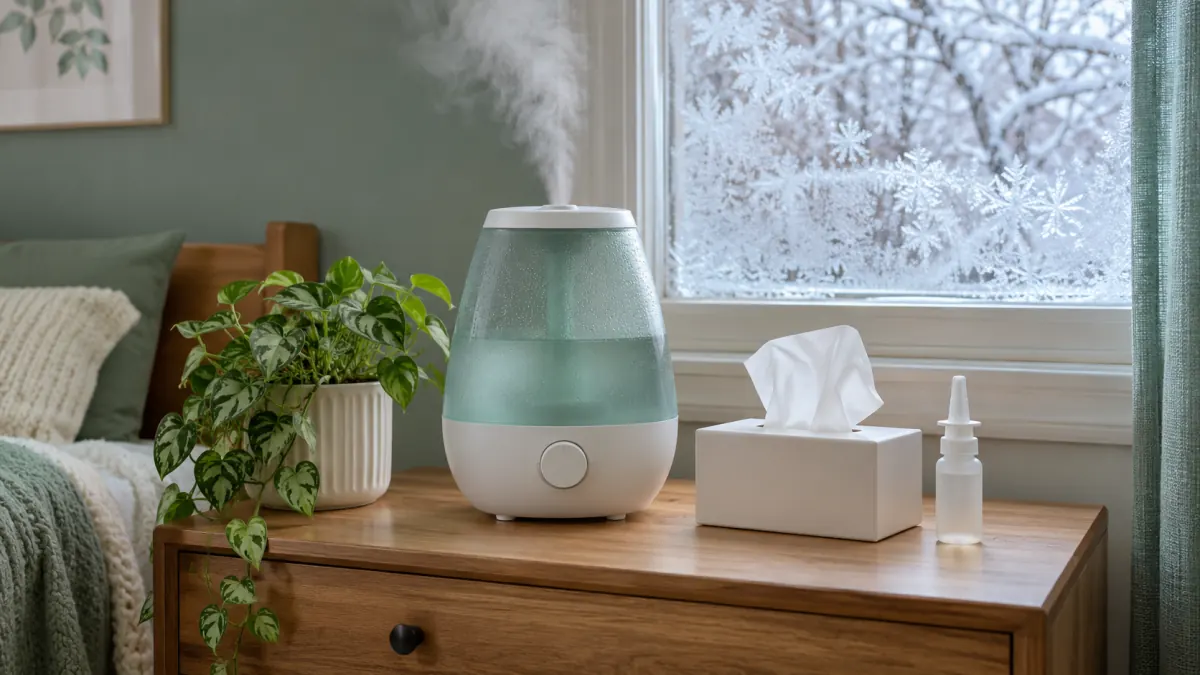
| Run a cool-mist humidifier in the bedroom overnight | Adds moisture to the air you breathe for the longest stretch of the day |
| Use saline (salt-water) spray or gel two or three times daily | Keeps the lining moist without medication |
| Apply a thin layer of petroleum jelly just inside the nostrils at bedtime | Seals in moisture over the fragile area on the septum |
| Keep children’s fingernails short | Fewer scratches inside the nose |
| Blow gently, one nostril at a time | Less pressure on small vessels |
| Aim nasal steroid sprays toward the outer wall of the nostril | Avoids drying and irritating the septum |
| Sneeze with your mouth open | Reduces pressure in the nose |
Clean humidifiers as the manufacturer directs and refill with fresh water each time, since a neglected tank can grow mould. Condensation pooling on the windows means the room is too damp. With petroleum jelly, a clean fingertip just inside the nostril is enough; never push anything deep into the nose.
When a nosebleed is an emergency
Most nosebleeds are a nuisance, not a danger. Some, however, need care right away. Go to the nearest emergency department, or call 911 if the person is unwell, if:
- The bleeding has not stopped after about 20 minutes of firm, continuous pressure done correctly.
- The nosebleed follows a head injury, a fall, or a hard blow to the face, especially if the nose looks out of shape or there is clear, watery fluid draining from the nose.
- The person takes blood thinners and the bleeding is heavy or won’t settle.
- Bleeding is very heavy, such as soaking through towels, or blood is running down the throat in large amounts even while leaning forward.
- There is trouble breathing, or the person is vomiting large amounts of blood.
- The person becomes pale, dizzy, light-headed, confused or faint, or has a rapid heartbeat.
- Chest pain accompanies the bleed.
For Stouffville residents, the closest hospital emergency departments are Markham Stouffville Hospital (part of Oak Valley Health, in Markham) and Uxbridge Hospital. If someone is faint or struggling to breathe, call 911 rather than driving. If you are unsure which route to take for a less dramatic problem, our article on choosing between a walk-in clinic or the emergency room walks through the difference, and Health811 (call 811) can give advice by phone around the clock.
When to see a doctor (non-urgently)
A clinic visit makes sense when nosebleeds are a pattern rather than a one-off. Book an appointment if:
- You are getting nosebleeds more than once a week, or they keep coming back despite humidity and saline.
- Bleeding always comes from the same side.
- You also notice easy bruising, bleeding gums, very heavy periods, or tiny red or purple spots on the skin.
- You recently started a new medication or supplement and the nosebleeds began around the same time.
- You are on a blood thinner and having frequent minor bleeds; do not stop the medication on your own, but let your prescriber know.
- An adult has one-sided blockage, ongoing crusting, a bad smell, or pain along with nosebleeds.
- A child has frequent nosebleeds along with unusual tiredness, pallor or bruises.
What happens at the appointment
Your doctor will ask how often the bleeds happen, which side, how long they last, what medications and supplements you take, and whether anyone in your family has a bleeding problem. They will usually look inside the nose with a light to see whether there is an obvious dry or irritated spot on the septum, and they may check your blood pressure. Depending on what they find, they may suggest:
- A structured plan of saline, ointment and humidity.
- A short course of a medicated nasal ointment if the lining looks irritated or infected.
- Blood work, for example to check blood counts or clotting, if your history suggests a bleeding tendency.
- A review of medications that might be contributing.
- A specialist referral to an ear, nose and throat (ENT) doctor if bleeds are frequent, heavy or unexplained. ENT specialists can cauterize (seal) a problem vessel or investigate further.
Should I put tissue or cotton up my nose to stop the bleeding?
My child gets nosebleeds at night. Should I be worried?
Getting help at HealthSmart
If nosebleeds are becoming a regular part of your winter, or you want someone to take a look and review your medications, you can book an appointment at HealthSmart Medical Clinic at 208-5892 Main Street. Many questions about prevention and medications can also be handled through virtual care, with an in-person exam arranged if the doctor needs to look inside the nose. Hours may change, so check the location page or call 905-642-6300 before you come in. For bleeding that will not stop or follows a head injury, skip the clinic and go straight to emergency.
This article offers general information only and is not a replacement for advice from your own health care provider.