Osteoporosis and Bone Health in Stouffville: Testing, Prevention and Treatment
Osteoporosis is silent until a bone breaks. Which Stouffville adults need a bone density test, how to protect bones at any age and which treatments help.
Think of your skeleton as a savings account. Through childhood and the teen years you make large deposits, building bone faster than you lose it. Somewhere around your late twenties or early thirties the balance peaks. After that, small withdrawals begin, and for women they speed up for several years around menopause. Osteoporosis is what happens when the balance drops low enough that bones become thin and fragile, and the first statement most people ever receive is a fracture from a fall that should have caused nothing worse than a bruise.
The good news is that the account can be managed. You can slow the withdrawals, top up the deposits through food and movement, and, if needed, use medications that genuinely reduce fracture risk. This guide explains what osteoporosis is, who should be checked, what a bone density test involves, and practical steps Stouffville adults can take, including on our icy winter sidewalks.
What osteoporosis actually is
Bone is living tissue. Specialized cells constantly break down old bone and lay down new bone. In osteoporosis, breakdown outpaces rebuilding, so bones lose density and their internal structure becomes weaker, a bit like a honeycomb with thinner walls and bigger gaps.
There are no symptoms while this happens. You cannot feel bone getting thinner. That is why osteoporosis is often called a silent disease, and why the conversation needs to start before the first break.
Fragility fractures
A fragility fracture is a broken bone from a fall from standing height or less, or from a force that would not normally break a healthy bone. The most common sites are:
- The wrist, often from putting a hand out during a fall
- The spine, where vertebrae can compress or collapse, sometimes with surprisingly little pain
- The hip, the most serious, often requiring surgery and a long recovery
- The shoulder and pelvis
Osteoporosis Canada estimates that at least one in three women and one in five men will have an osteoporotic fracture in their lifetime. A first fragility fracture is a strong signal that more may follow, so it should always lead to an assessment, even if the cast is off and life feels back to normal.
Who is at higher risk?
Some risk factors are out of your control; others are not. Your clinician considers them together.
| Risk factors you cannot change | Risk factors you can influence |
|---|---|
| Age 65 and older | Smoking |
| Female sex, especially after menopause | Drinking three or more alcoholic drinks a day |
| Early menopause, before 45 | Low body weight or significant weight loss |
| A parent who broke a hip | Low calcium or vitamin D intake |
| A previous fragility fracture | Physical inactivity |
| Certain conditions such as rheumatoid arthritis, celiac disease or an overactive thyroid | Falls risk at home and outdoors |
Some medications also affect bone, most notably long-term oral steroids such as prednisone taken for three months or more. Certain treatments for breast and prostate cancer, some anti-seizure medications and excess thyroid hormone replacement can play a role too. Never stop a prescribed medication on your own, but it is worth asking whether any of yours affect bone health.
Men get osteoporosis too. It tends to appear later than in women, and it is more likely to be missed, so men with risk factors deserve the same attention.
Bone density testing
A bone mineral density (BMD) test uses a type of low-dose X-ray called DXA to measure bone density, usually at the hip and lower spine. You lie on a padded table for several minutes while the scanner passes over you. It is painless, you stay clothed (avoiding metal zippers and buttons), and the radiation dose is very small.
Who should be tested
Canadian guidance generally recommends a bone density test for:
- Everyone aged 65 and older
- Adults 50 to 64 with risk factors, such as a fragility fracture after 40, a parental hip fracture, smoking, high alcohol intake, low body weight or long-term steroid use
- Younger adults with conditions or medications strongly linked to bone loss
The test requires a requisition, and medically indicated BMD testing is covered by OHIP. Your clinician will explain how often repeat testing makes sense for you, which depends on your results and risk level. Our diagnostic imaging referrals service can arrange it.
Understanding the result
Results are reported as a T-score, which compares your bone density to that of a healthy young adult.
- T-score of −1.0 or higher: normal bone density
- Between −1.0 and −2.5: low bone mass, sometimes called osteopenia
- −2.5 or lower: in the osteoporosis range
The T-score is only part of the picture. Canadian clinicians use tools such as FRAX or CAROC that combine bone density with age, sex, fracture history and other factors to estimate your ten-year risk of a major fracture. Treatment decisions are based on that overall risk, not the T-score alone. Someone with osteopenia and a previous hip fracture may need treatment more than someone with a lower T-score and no other risk factors.
Your clinician may also measure your height at visits. Losing more than a couple of centimetres of measured height, or a noticeable stoop, can be a sign of silent spinal fractures and may lead to a spine X-ray.
Food for strong bones
Calcium
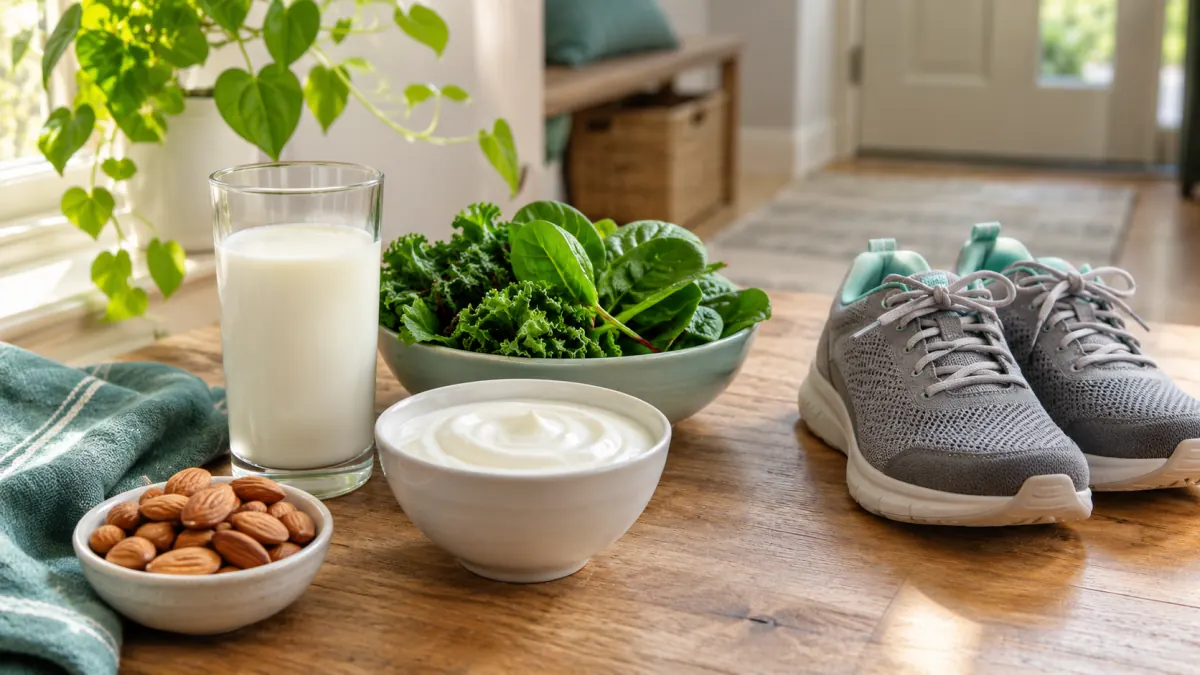
Most adults need about 1,000 to 1,200 mg of calcium a day, and food is the preferred source. Good options include:
- Milk, yogurt and cheese
- Fortified soy, almond or oat beverages (shake the carton, as calcium settles)
- Canned salmon or sardines with the soft bones
- Tofu made with calcium sulphate
- Almonds, white beans and some leafy greens such as kale and bok choy
A rough guide: a cup of milk or fortified beverage, or a serving of yogurt, provides about 300 mg. Count up what you eat on a typical day before reaching for a supplement. If you fall short, a modest supplement can fill the gap. More is not better; very high supplement doses do not add bone benefit and may increase the risk of kidney stones.
Vitamin D
Vitamin D helps your body absorb calcium. In Ontario, the sun is too weak to make meaningful vitamin D in the skin for much of the year, roughly October to April. Osteoporosis Canada suggests 400 to 1,000 IU a day for adults under 50 and 800 to 2,000 IU a day for adults over 50 at higher risk. Routine vitamin D blood tests are usually not needed and may not be covered by OHIP without a specific medical reason.
Protein and the rest of the plate
Adequate protein supports bone and muscle, which matters because strong muscles prevent falls. Fruits and vegetables, moderate caffeine and keeping alcohol low all help. If you have a history of an eating disorder or very low intake, mention it, because it can affect bone significantly.
Movement that builds and protects bone
Bone responds to load. The right exercise improves bone strength a little and improves muscle strength and balance a lot, which together cut fracture risk.
- Strength training two or more times a week, working the major muscle groups with bands, weights or body weight
- Balance exercises most days, such as standing on one leg near a counter, heel-to-toe walking or tai chi
- Weight-bearing aerobic activity, such as brisk walking, stair climbing or dancing, most days of the week
- Posture work to support the upper back
The trails around the Stouffville Reservoir and Memorial Park are good places for walking once the paths are clear. In the depths of winter, indoor tracks and fitness programs, including those at the Whitchurch-Stouffville Leisure Centre, can keep you moving without the ice.
If you already have osteoporosis or a spinal fracture, avoid rapid, loaded forward bending and twisting, such as toe-touches, full sit-ups or a hard golf swing, until you have advice on safe technique. A physiotherapist with experience in bone health can tailor a program.
Preventing falls, especially in winter
Most hip fractures happen because of a fall. Reducing falls is one of the most effective things you can do.
- Wear boots with good tread, and consider ice grippers for icy sidewalks and parking lots
- Take shorter, flatter steps on ice, and keep hands free rather than in pockets
- At home, remove loose rugs, add night lights and install grab bars in the bathroom
- Have your vision checked and ask about medications that cause dizziness or drowsiness
Our post on preventing falls for seniors goes into much more detail on making a home safer.
Medication options
When fracture risk is high, medication can reduce it substantially. Options your clinician may discuss include:
- Bisphosphonates, such as alendronate or risedronate taken by mouth weekly, or zoledronic acid given as a yearly intravenous infusion. These slow bone breakdown and are often the first choice.
- Denosumab, an injection every six months. It works well, but it should not be stopped or delayed without a plan, because bone loss can rebound quickly and raise the risk of spinal fractures.
- Bone-building medications such as teriparatide or romosozumab, usually reserved for people at very high risk.
- Menopausal hormone therapy, which protects bone and may be considered when someone also needs it for menopause symptoms. Our menopause management service can discuss whether it fits.
People sometimes avoid these medications after reading about rare side effects, such as jaw bone problems or unusual thigh bone fractures. These are real but uncommon, and for people at high fracture risk the benefit typically far outweighs the risk. Ask about them openly. Your clinician may also suggest a dental check before starting and reviewing treatment after several years.
When to seek urgent care
Go to an emergency department or call 911 if, after a fall or injury, you:
- Cannot stand or put weight on a leg, or have severe hip or groin pain
- Notice a leg that looks shorter or turned outward
- Have severe back pain with numbness, weakness, or loss of bladder or bowel control
- Hit your head while taking blood thinners, or have confusion afterward
The closest emergency departments for Stouffville residents are Markham Stouffville Hospital and Uxbridge Hospital. Sudden, sharp back pain after a minor strain, lifting or even a cough is also worth a prompt visit, as it can be a spinal fracture.
I have osteopenia. Do I need medication?
Can I take a break from my osteoporosis medication?
Taking the next step at HealthSmart
If you are over 65, have had a fracture from a minor fall, or have risk factors from the table above, it is worth raising bone health at your next visit. You can book an appointment online, or call 905-642-6300. Bone health also fits naturally into an annual physical exam, and ongoing treatment and repeat testing can be part of your chronic disease management plan. Hours may change, so please check our location page before you come in to our Main Street clinic in Stouffville.
The information here is general and educational; please talk with a healthcare provider about your own bone health.