Picky Eating in Stouffville: Calmer Mealtimes for Choosy Kids
Your child lives on pasta and refuses anything green? What's normal picky eating, what helps at the table and signs a Stouffville doctor should take a look.
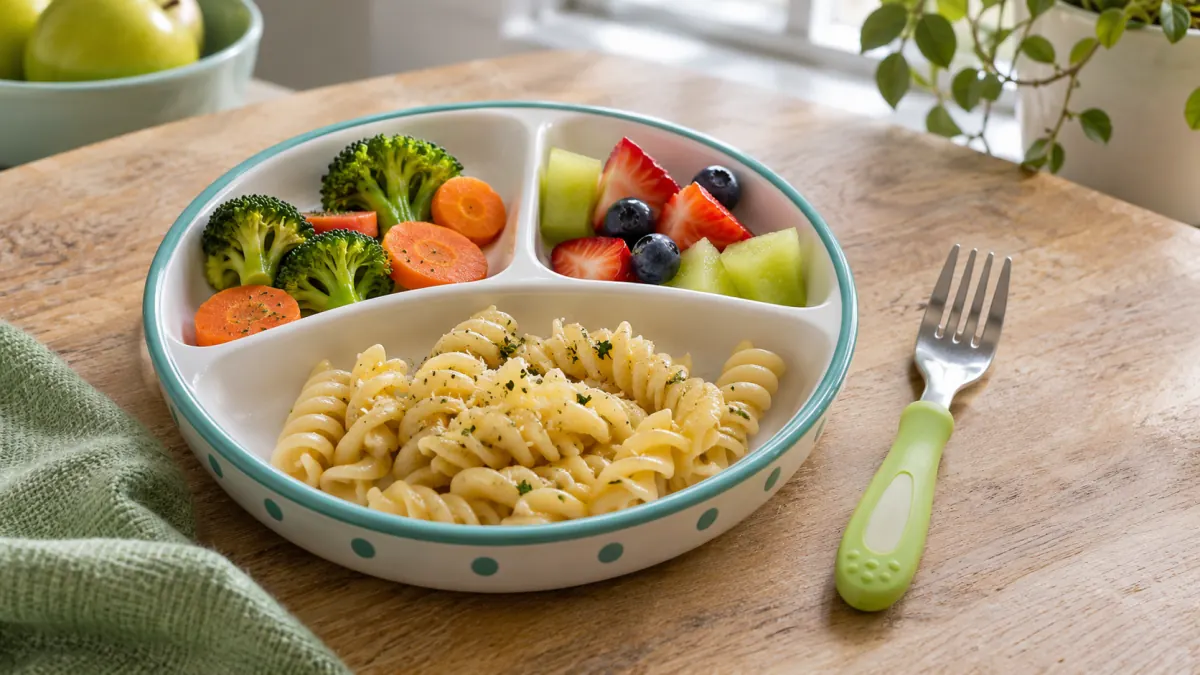
Most adults would hesitate if a waiter set down a plate of something they had never seen, smelled or heard of, and then stood beside the table insisting they finish it. Yet that’s roughly the situation a two-year-old faces at many family dinners. Their wariness of unfamiliar food isn’t stubbornness so much as an ancient, built-in caution, and it peaks right when parents are most eager to see a varied, healthy diet.
Picky eating is one of the most common worries parents raise during toddler and preschool check-ups. The reassuring part is that in most children it’s a normal developmental phase that improves with time and a low-pressure approach. The useful part is knowing which habits help, which backfire, and the handful of signs that mean something more is going on. This guide walks through all three for families in Stouffville and nearby communities.
Why so many young children become choosy
Several things happen at once in the toddler years:
- Growth slows down. Babies roughly triple their birth weight in the first year. After that, growth becomes much steadier, and appetite drops accordingly. A toddler who ate everything at ten months may seem to eat “nothing” at two, when in fact their needs have simply changed.
- Food neophobia appears. The fear of new foods tends to increase from around 18 months to about age five or six. From an evolutionary point of view, it may have protected newly mobile children from eating something dangerous.
- Independence matters. Saying no is one of the few things a toddler has real control over, and food is an easy place to exercise it.
- Senses are intense. Textures, smells and colours can feel stronger to young children. Mixed textures, like a stew or a casserole, are often harder to accept than separate, plain foods.
- Appetite varies day to day. Young children may eat a huge breakfast and almost nothing at dinner, or eat heartily for three days and barely touch food for two. Over a week, intake usually balances out.
Understanding these factors won’t make the broccoli disappear any faster, but it can take some of the pressure off parents, and that alone often improves meals.
What’s typical, and what isn’t
| Usually normal picky eating | Worth discussing with a doctor |
|---|---|
| Eats a limited but reasonable range of foods (often 20 or more) | Accepts very few foods, perhaps fewer than 15 to 20, and the list is shrinking |
| Refuses new foods but eventually tries some after repeated exposure | Gags, chokes, vomits or becomes very distressed at the sight or smell of new foods |
| Appetite goes up and down | Persistent low appetite with weight loss or falling off their growth curve |
| Growing and gaining along a steady curve | Not gaining weight, or dropping across growth percentile lines |
| Energetic and developing well | Unusually tired, pale or irritable, or delayed development |
| Bowel habits are regular | Ongoing constipation, diarrhea, belly pain or blood in stool |
| Picky but drinks a normal amount of milk | Drinks large amounts of milk or juice and eats little else |
The right column doesn’t automatically mean something is wrong, but those features deserve a closer look.
Approaches that actually help
The most widely recommended framework for feeding children is often called the “division of responsibility.” In plain terms:
- The parent decides what food is offered, when and where.
- The child decides whether to eat and how much.
It sounds almost too simple, but it removes the tug-of-war that makes so many dinners miserable. You stay in charge of the menu and the routine; your child stays in charge of their own appetite. Here’s how that looks in practice.
1. Set a predictable rhythm
Offer three meals and two or three planned snacks at roughly the same times each day. Avoid “grazing” between them; a child who sips juice and nibbles crackers all afternoon won’t be hungry for dinner. Water between meals and snacks is ideal.
2. Always include a “safe” food
Put at least one food your child usually accepts on the plate alongside newer or less-liked foods. Bread, rice, pasta, a favourite fruit or plain yogurt all work. This way, your child can always eat something, and the new food sits beside it without fuss.
3. Serve tiny portions
A single green bean or a teaspoon of lentils is much less intimidating than a pile. Children can always ask for more. Divided plates help some kids who dislike foods touching.
4. Expect many exposures
It can take ten to fifteen exposures, sometimes more, before a child accepts a new food. An “exposure” can simply mean seeing it, touching it, smelling it or licking it. Many parents give up after three or four refusals, assuming their child “doesn’t like” something, when the child just isn’t familiar with it yet.
5. Take the pressure off
Pressure, even gentle pressure, tends to backfire. That includes:
- Insisting on “one more bite”
- Bribing with dessert (“eat your carrots and you get ice cream”)
- Praising heavily when they eat something, or showing disappointment when they don’t
- Hiding vegetables in food and then announcing it
Neutral is the goal. Offer the food, eat it yourself, chat about something else, and let your child decide.
6. Eat together when you can
Children learn by watching. Seeing parents and siblings enjoy a range of foods is one of the strongest influences on what a child eventually eats. Family meals don’t need to be elaborate, and they don’t need to happen every night.
7. Involve them in food
Let children wash vegetables, stir batter, choose between two fruits at the grocery store or pick a tomato at a local farm stand in late summer. In a town like Stouffville, surrounded by farmland, a summer stop at a roadside stand is a natural way to make produce more interesting. Children are more likely to taste a food they helped prepare or choose.
8. Limit distractions
Screens at the table make it harder for children to notice hunger and fullness. Turn off the tablet, keep toys away and keep meals reasonably short, around 20 to 30 minutes.
9. Don’t become a short-order cook
Making separate meals on demand teaches children that refusing works. Instead, cook one family meal and make sure it includes something everyone can eat.
Nutrition worries: milk, juice and iron
Parents often fear a picky child is missing vital nutrients. A few specific points are worth knowing:
- Too much milk is a common hidden problem. Milk is filling. Toddlers who drink large amounts often eat less solid food, and milk is low in iron. Around 500 mL (2 cups) of cow’s milk a day is generally enough for young children; much more than about 750 mL can crowd out iron-rich foods and contribute to iron deficiency.
- Juice isn’t necessary. Whole fruit is better. If you offer juice, keep it small and occasional.
- Iron matters. Meat, poultry, fish, eggs, beans, lentils, tofu and iron-fortified cereals are good sources. Children who eat almost none of these may need a closer look.
- Vitamin D. Health Canada advice on vitamin D supplementation varies with age and diet; ask your doctor or pharmacist whether your child needs one.
- Multivitamins aren’t routinely needed for healthy children with a reasonable diet, but they can be discussed if the diet is very limited.
Many Stouffville parents are surprised to find, once they add it up, how much of their child’s daily intake is coming from a cup rather than a plate. If you’re concerned, keep a simple food diary for three to five days, including drinks, and bring it to your appointment.
When picky eating might be something else
A small number of children have feeding difficulties that go beyond typical pickiness. These can include:
- Avoidant/restrictive food intake disorder (ARFID), where a child’s eating is so limited, often because of sensory sensitivity, fear of choking or vomiting, or low interest in food, that it affects growth, nutrition or daily life
- Sensory processing differences, sometimes but not always related to autism
- Oral-motor or swallowing problems, which may show up as coughing, gagging or drooling during meals, or difficulty chewing
- Medical conditions such as reflux, constipation, food allergies, eosinophilic esophagitis or celiac disease, which can make eating uncomfortable
- A past frightening experience, such as choking, that has led to fear of certain textures
These are not diagnoses to make at home, but they’re reasons to talk to a doctor rather than simply waiting it out. Treatment may involve a dietitian, an occupational therapist or speech-language pathologist with feeding expertise, or a paediatric specialist, through specialist referrals when needed.
Red flags that need prompt attention
See a doctor soon if your child:
- Is losing weight or has stopped growing
- Seems weak, very tired or unusually pale
- Chokes, coughs or struggles to breathe while eating
- Has vomiting that is frequent, forceful or green
- Has blood in their stool or ongoing belly pain
- Refuses fluids or shows signs of dehydration, such as very few wet diapers or no urine for many hours
If a child is choking and cannot breathe, cough or speak, call 911 immediately and begin first aid.
How a check-up can help
At a visit, the doctor will usually plot your child’s height and weight on a growth chart and compare them with previous measurements, ask about what and how much your child eats and drinks, look at development, sleep and bowel habits, and examine your child. Sometimes blood work is recommended to look for iron deficiency or other problems. For many Stouffville families, the most valuable outcome is reassurance that your child is growing well, along with a few practical changes to try at home. Our article on children’s growth and development explains how growth curves are read.
Support for Stouffville families
If mealtimes have become a daily battle, or you’ve noticed any of the warning signs above, a conversation with a physician is a good next step. You can book a visit for your child, or read more about our children’s health services. Bring your food diary, a list of the foods your child reliably eats and any questions. Most of the time, Stouffville parents leave with a calmer plan and the knowledge that their child is on track.
This information is general in nature and does not replace individual advice from your child’s health care provider.