Quitting Smoking and Vaping in Stouffville: A Plan That Doesn't Depend on Willpower
Nicotine is hard to give up, but medication, counselling and a solid plan raise your odds. Practical steps for Stouffville smokers and vapers ready to quit.
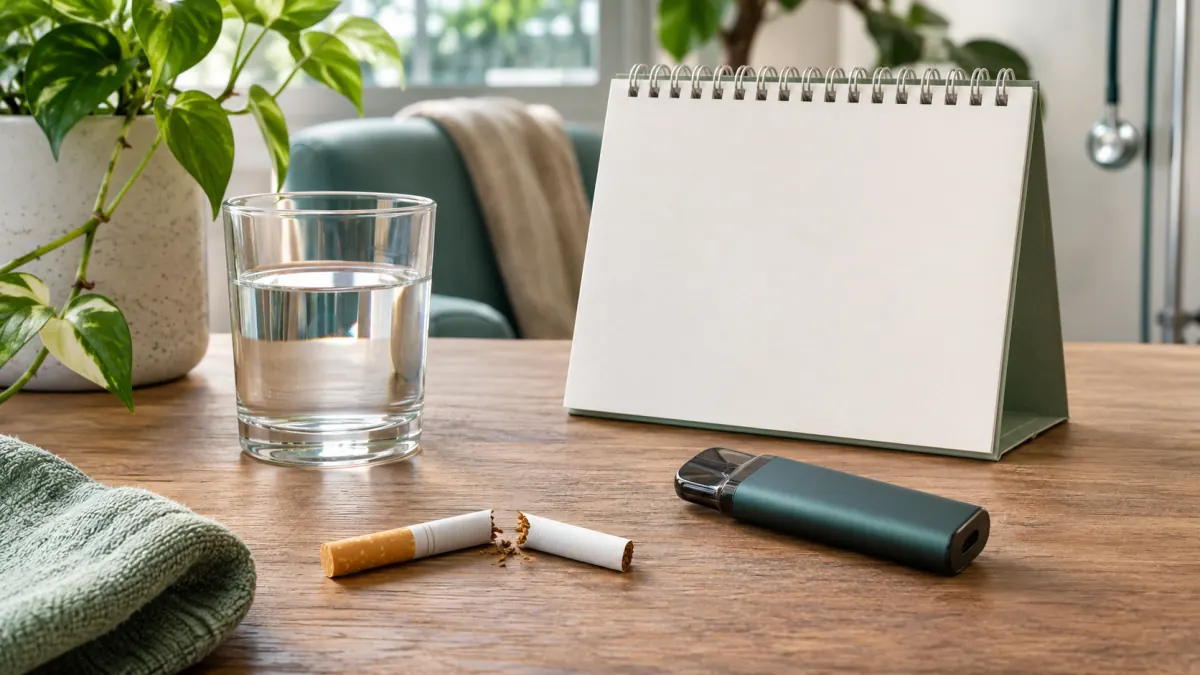
What most people get wrong about quitting is the idea that the ones who succeed simply wanted it more. In reality, people who quit smoking or vaping for good usually did a few unglamorous things differently: they used medication, they got some form of support, they planned for their worst moments in advance, and they treated a slip as information rather than proof that they were hopeless. Many also tried several times before it stuck. Willpower helps, but it is a poor strategy on its own against a substance as habit-forming as nicotine.
If you have decided this is the year, or you are just starting to think about it, this guide lays out how nicotine dependence works, what treatments are available in Ontario, how vaping fits into the picture, and how to build a quit plan around your real life in Stouffville, from the morning coffee to the evening commute.
Why nicotine is so hard to give up
Nicotine reaches the brain within seconds of a puff and triggers the release of dopamine, a chemical linked with reward. Over time, the brain adapts, and you need nicotine just to feel normal. When levels drop, withdrawal sets in.
That is only half of the story. The other half is habit. After years of smoking or vaping, nicotine becomes tied to specific moments: the first coffee, the drive to work, the break at the job site, the walk to the Stouffville GO station, a drink with friends, stress after a hard conversation. Those cues trigger cravings even when your body is not particularly short of nicotine.
A good quit plan tackles both parts: medication for the physical dependence, and strategies for the habits.
What withdrawal feels like
Withdrawal symptoms usually start within hours of the last cigarette or vape, peak over the first few days, and fade over two to four weeks. They can include:
- Strong cravings
- Irritability, frustration or a short temper
- Anxiety or low mood
- Trouble concentrating
- Restlessness and trouble sleeping
- Increased appetite
Cravings tend to come in waves that last a few minutes. They get less frequent and less intense over time, although an occasional craving can still appear months later in a familiar situation.
Vaping: less harmful than smoking is not the same as harmless
Vaping has changed the picture over the past decade. For adults who smoke, switching completely from cigarettes to vaping exposes them to far fewer toxic chemicals. Some people use vaping as a step away from smoking, and health authorities in Canada recognize that it can be a less harmful option for adult smokers who switch completely.
But there are important caveats:
- Vaping is not risk-free. The long-term effects on the lungs and heart are still being studied.
- Many vapes contain a lot of nicotine. Nicotine salt products can deliver nicotine quickly and in high amounts, which can make dependence just as strong as, or stronger than, with cigarettes.
- Dual use offers little benefit. Smoking fewer cigarettes while also vaping does not deliver the health gains of quitting smoking completely.
- Young people who have never smoked should not start vaping. Nicotine affects the developing brain, and many teens who vape find it very hard to stop.
The tools that help people quit cigarettes, including nicotine replacement therapy and prescription medication, can also help people quit vaping. The end goal for most people is to be free of nicotine altogether.
The treatments that actually work
Using medication roughly doubles or more your chances of quitting compared with going cold turkey, and combining medication with counselling improves the odds further.
Nicotine replacement therapy
Nicotine replacement therapy (NRT) gives your body a steady, safer dose of nicotine without the smoke or vapour, then lets you taper down. It comes in two styles:
- Long-acting: the patch, worn daily, provides a background level of nicotine.
- Short-acting: gum, lozenges, inhaler, and mouth spray handle sudden cravings.
Using a patch together with a short-acting product works better than either alone. Many people under-dose NRT, then conclude it “didn’t work.” A pharmacist or clinician can help you choose a starting dose based on how much you smoke or vape. NRT is available without a prescription at Ontario pharmacies.
Prescription medications
- Varenicline reduces cravings and makes smoking less rewarding. It is usually started one to two weeks before your quit date and taken for about 12 weeks, sometimes longer. Nausea and vivid dreams are the most common side effects.
- Bupropion is an antidepressant that also reduces cravings and withdrawal. It is started one to two weeks before quitting. It is not suitable for people with a history of seizures or certain eating disorders.
Large studies have found that these medications are generally safe, including for many people with mental health conditions, though your prescriber will review your personal history. In Ontario, both physicians and pharmacists can prescribe smoking-cessation medications, and some public drug programs and workplace plans help cover the cost. Ask your Stouffville pharmacist or our clinic team what applies to you.
Counselling and support
Talking with a professional, even briefly, helps. Options include:
- A visit with a clinician to build a plan and choose medication
- Pharmacist counselling, which many Ontario pharmacies offer
- Telephone, text and online quit services. Canada has free smokers’ helplines and quit programs; your pharmacist or our clinic can point you to current ones
- Apps and peer support groups
Different people like different formats. The point is not to go it alone.
Building your quit plan, step by step
- Choose a quit date within the next two weeks. Pick a day that is not likely to be unusually stressful. Some people prefer a weekend; others prefer a workday with a predictable routine.
- Tell a few people. Let family, friends or coworkers know, and ask for specific help, such as not smoking around you or checking in on day three.
- Arrange your medication before the quit date, especially if you are starting varenicline or bupropion.
- List your triggers. Write down the moments when you usually smoke or vape. For each one, write a replacement: a walk, a glass of water, chewing gum, a quick call, a few slow breaths.
- Change the environment. Get rid of cigarettes, lighters, vape devices, pods and ashtrays. Clean your car. Wash jackets that smell of smoke.
- Plan for the hardest moments. If the drive home to Stouffville from Markham or the evening on the deck is your toughest time, decide in advance what you will do instead.
- Track your progress. Count the days and the money saved. Many people are surprised by how quickly it adds up.
- Follow up. Book a check-in a couple of weeks after your quit date to adjust medication and talk through any rough patches.
Small swaps that help with cravings
- Delay: tell yourself to wait ten minutes. Most cravings pass.
- Drink a glass of cold water slowly.
- Go for a brisk walk, even around the block or the parking lot. A loop of the Stouffville Reservoir trail is even better on a clear day.
- Keep your hands busy: a pen, a stress ball, a toothpick.
- Change your coffee routine for a few weeks: a different mug, a different spot, or tea instead.
- Brush your teeth after meals, which signals the meal is over.
What happens to your body after you quit
The benefits start quickly and keep building:
| Time after quitting | What changes |
|---|---|
| Within hours | Heart rate and blood pressure begin to fall; carbon monoxide levels in the blood drop toward normal |
| Within a few days | Taste and smell start to improve |
| Within weeks to months | Circulation and lung function improve; coughing and shortness of breath ease for many people |
| About one year | Risk of heart disease is substantially lower than if you had kept smoking |
| Over years | Risks of stroke, many cancers and COPD continue to fall |
It is never too late to benefit. People who quit in their 60s and beyond still gain years of healthier life. If you already live with a lung condition, quitting is one of the most important steps you can take; our post on COPD and cold-weather breathing explains how smoke affects the airways over time.
Common worries, honestly answered
“I’ll gain weight.” Some people do gain a modest amount. Planning healthy snacks, staying active and using NRT or medication can help limit it. The health benefits of quitting far outweigh the effects of a few extra kilograms.
“I’ll be more stressed.” In the first weeks, withdrawal can feel like stress. Over time, many former smokers report lower anxiety than when they smoked, because they are no longer cycling through nicotine highs and withdrawal lows. If stress or mood is a big concern, mention it. Our post on stress and anxiety has more on getting support.
“I slipped, so I’ve failed.” A slip is one cigarette or a few puffs. It does not erase your progress. Look at what triggered it, adjust your plan, and keep going. If you return to regular use, that is a relapse, and it is also common. Each attempt teaches you something useful for the next.
Symptoms that should not wait
Whether or not you have quit yet, see a clinician promptly if you notice a cough that has changed or will not go away, coughing up blood, unexplained weight loss, hoarseness lasting more than a few weeks, or increasing shortness of breath. Call 911 for chest pain or pressure, sudden severe shortness of breath, or signs of a stroke such as face drooping, arm weakness or slurred speech.
People in Ontario aged 55 to 74 with a significant history of smoking may also be eligible for the province’s lung cancer screening program. Ask about it at your next visit.
Questions we hear often
Is it safe to use NRT while I'm still smoking or vaping a little?
What if I'm pregnant or breastfeeding?
Can teens get help quitting vaping?
Starting your quit with HealthSmart
You do not need to have everything figured out before you ask for help. A general medical consultation is a good place to choose medication, set a quit date and plan follow-up, and virtual care can work well for check-ins once you are underway. Book an appointment with HealthSmart Medical Clinic on Main Street in Stouffville whenever you are ready to start.
This post is general information about quitting nicotine and should not replace personalized advice from your own clinician or pharmacist.