Stitches and Suture Removal in Stouffville: Aftercare From Day One
Got stitches at the ER or urgent care? Stouffville patients can learn how to keep sutures clean, when they should come out, infection signs and scar care tips.
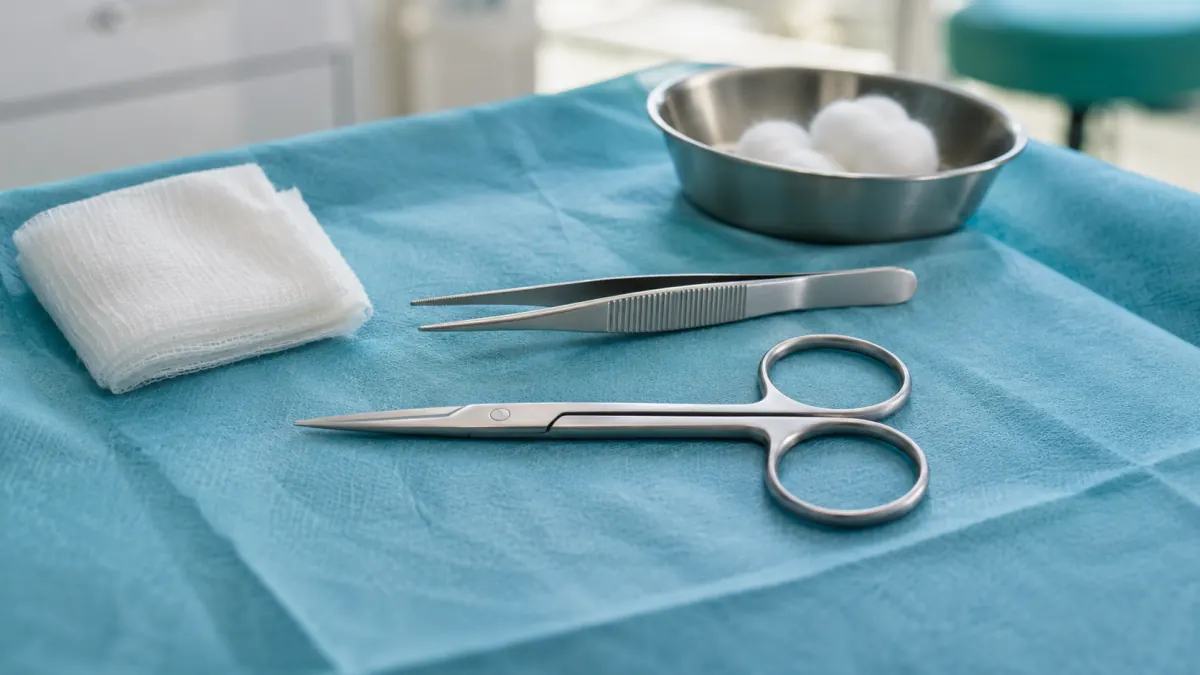
Think of stitches as scaffolding. They hold the edges of a wound together while the body does the real construction work underneath, laying down new tissue that knits the skin back into one piece. Take the scaffolding down too soon and the wall can sag or split. Leave it up too long and it starts to leave its own marks. Most of what matters about stitches, from the first shower to the final snip, follows from that simple idea.
If you have just come home from Markham Stouffville Hospital or Uxbridge Hospital with a row of neat black threads across your hand, knee, or forehead, you probably left with a quick set of instructions and a vague sense that someone will need to take them out in “about a week.” This guide fills in the gaps: how to care for different kinds of wound closure, how long stitches usually stay in by body part, what removal involves, and how to give the scar its best chance.
If you are still deciding whether a fresh cut needs stitches at all, our article on summer cuts, burns, and wound care covers that first decision.
Not all closures are the same
Your wound may have been closed in one of several ways, and each needs slightly different care.
Non-absorbable sutures. The classic stitch: nylon or a similar thread, usually black or blue, tied in individual knots or as one continuous line. These need to be removed.
Absorbable sutures. These break down on their own, often over one to several weeks. They are commonly used inside deeper wounds, in the mouth, on some children’s wounds, and sometimes on the skin surface. Any visible bits that remain after a few weeks can usually be trimmed at a visit.
Staples. Often used on the scalp and for some surgical incisions. They are quick to place and removed with a special tool.
Skin glue (tissue adhesive). A liquid that dries into a flexible film over small, clean, straight cuts. It peels off on its own in about 5 to 10 days. Do not pick at it or apply ointments, which can loosen it early.
Adhesive strips. Thin paper strips that hold small wound edges together, sometimes used along with glue or after stitches come out. Let them fall off on their own, usually within one to two weeks.
If you are unsure what you have, look at your discharge papers or call the place that treated you.
Caring for stitches: the first few days
The first 24 to 48 hours
- Keep the dressing on and dry for the period you were told, usually 24 to 48 hours.
- Watch for bleeding. A small amount of oozing is normal. If blood soaks through, press firmly on the dressing for 10 minutes. If it keeps bleeding, get care.
- Elevate a stitched hand, arm, or leg when you can, to reduce swelling and throbbing.
- Manage pain with acetaminophen or ibuprofen if these are safe for you.
After that
- Gently wash the area once or twice a day with mild soap and clean water, then pat dry. Showering is usually fine after the first day or two; let water run over the wound rather than soaking it.
- Avoid soaking in baths, hot tubs, pools, or lakes until the stitches are out and the wound has closed. That includes Musselman’s Lake and the backyard pool, however tempting they look in warm weather.
- Apply a thin layer of petroleum jelly if advised, to keep the surface from crusting heavily.
- Cover it with a clean non-stick dressing if it is likely to be rubbed, knocked, or dirtied. Change the dressing when wet or dirty.
- Limit stretching. Stitches across a knuckle, knee, or elbow are under strain every time the joint bends. Ask whether you should limit movement or use a splint.
- Skip hydrogen peroxide and alcohol on the wound itself. They can damage healing tissue.
If dressing changes are tricky, for example on your back or dominant hand, a local Stouffville clinic can help with dressing changes and checks.
How long do stitches stay in?
Timing depends mainly on where the wound is, because skin heals at different speeds in different places. Areas with a rich blood supply, like the face, heal fastest. Areas under tension or with thicker skin take longer.
These are typical ranges. The clinician who placed your stitches may have given you a specific date, and that should take priority.
| Location | Typical removal time |
|---|---|
| Face | 3 to 5 days |
| Scalp | 7 to 10 days |
| Neck | 5 to 7 days |
| Chest, abdomen, back | 7 to 14 days |
| Arms | 7 to 10 days |
| Legs | 10 to 14 days |
| Hands and feet | 10 to 14 days |
| Over joints (knuckles, knees, elbows) | 10 to 14 days |
Healing may also be slower for people with diabetes, those who smoke, people taking steroids or other medicines that affect healing, and older adults. Your clinician may leave stitches in longer in these situations.
Why timing matters
- Too early: the wound may reopen, especially on areas that move or stretch.
- Too late: stitches can become embedded, are harder to remove, and are more likely to leave small cross-hatch marks, sometimes called “railroad track” scars. The risk of infection along the stitch tracks also rises.
Stouffville patients sometimes get stitched up just before a cottage weekend or a work trip and only later realize removal day falls while they are away. If you cannot get your stitches out on the suggested day, try to arrange removal within a day or two either side, and call for advice if a longer delay is unavoidable.
What happens at a suture removal visit
Suture removal is usually quick and causes little more than a tugging sensation. It is one of the more straightforward minor procedures a clinic performs.
- The wound is checked first. The clinician looks for signs that it has healed enough, and for any infection or opening.
- The area is cleaned.
- Each stitch is lifted gently by the knot with fine forceps.
- The thread is snipped close to the skin, on one side of the knot.
- The stitch is pulled out smoothly, so that the part that was outside the skin does not drag through the tissue.
- The wound is checked again, and adhesive strips may be placed for extra support, especially if the wound is under tension.
Sometimes only every second stitch is removed at first, with the rest taken out a few days later, if a wound looks like it needs more time. Staples are removed with a small device that bends each one so it lifts out.
Can I take my own stitches out?
It is generally best not to. Without good lighting, sterile instruments, and a trained eye, it is easy to leave a fragment behind, pull thread through the skin, or remove stitches before the wound is ready. A clinic visit also lets someone check how well the wound has healed, which is often the more important part of the appointment.
Signs something is not right
Some redness and mild swelling right along the wound edges is normal, as is a bit of itching as it heals. Contact a clinic promptly if you notice:
- Redness spreading out from the wound, or red streaks
- Increasing pain, swelling, or warmth after the first two or three days
- Pus or cloudy, foul-smelling drainage
- Fever or chills
- Wound edges pulling apart
- A stitch that has come loose early, with the wound gaping
Go to the emergency department if:
- The wound reopens widely or bleeds heavily
- Redness is spreading quickly, or you feel very unwell with fever
- You develop numbness, weakness, or a change in colour beyond the wound, especially in a hand or foot
- A stitched wound on the hand becomes very swollen and painful to move
Tetanus
If your tetanus shot is not up to date, the wound should have been addressed when you were treated. If you are not sure whether it was, or if your last booster was more than ten years ago, mention it. For dirty wounds, a booster may be advised after five years.
Looking after the scar
Every wound that goes through the full thickness of skin leaves a scar. The goal is a flat, pale, narrow one, and you have some influence over that.
- Protect it from the sun. New scars darken easily with UV exposure, and a Stouffville summer of gardening, golf, and trail walks adds up. Cover the area or use a broad-spectrum sunscreen once the wound has fully closed, for at least a year.
- Keep it moisturized. A simple unscented moisturizer or petroleum jelly helps.
- Massage it gently once the skin has fully closed, for a few minutes a day, to help soften it.
- Consider silicone. Silicone gel or sheets, available at pharmacies, may help some scars flatten and fade. Start only once the wound has closed.
- Be patient. Scars typically look their worst at around two to three months, when they can be pink and slightly raised, and continue to improve for a year or more.
See a clinician if a scar becomes thick, raised, painful, or keeps growing beyond the original wound edges, which can point to a hypertrophic scar or keloid.
My stitches were put in at the hospital. Can I have them removed somewhere else?
Does suture removal hurt?
Getting stitches out in Stouffville
When it is time, HealthSmart offers suture removal along with minor wound care for wounds that need a closer look. You can book an appointment for the day your stitches are due, or come through our walk-in service; our location page has current hours, which can change, and directions to our Main Street clinic in Stouffville.
The information in this article is general and does not replace the wound care instructions you received from the person who treated you.