Summer Cuts, Burns, and Wound Care in Stouffville
From barbecue burns to trail scrapes and tick bites, a Stouffville clinic guide to summer wound care, tetanus boosters, and knowing when a wound needs a doctor.
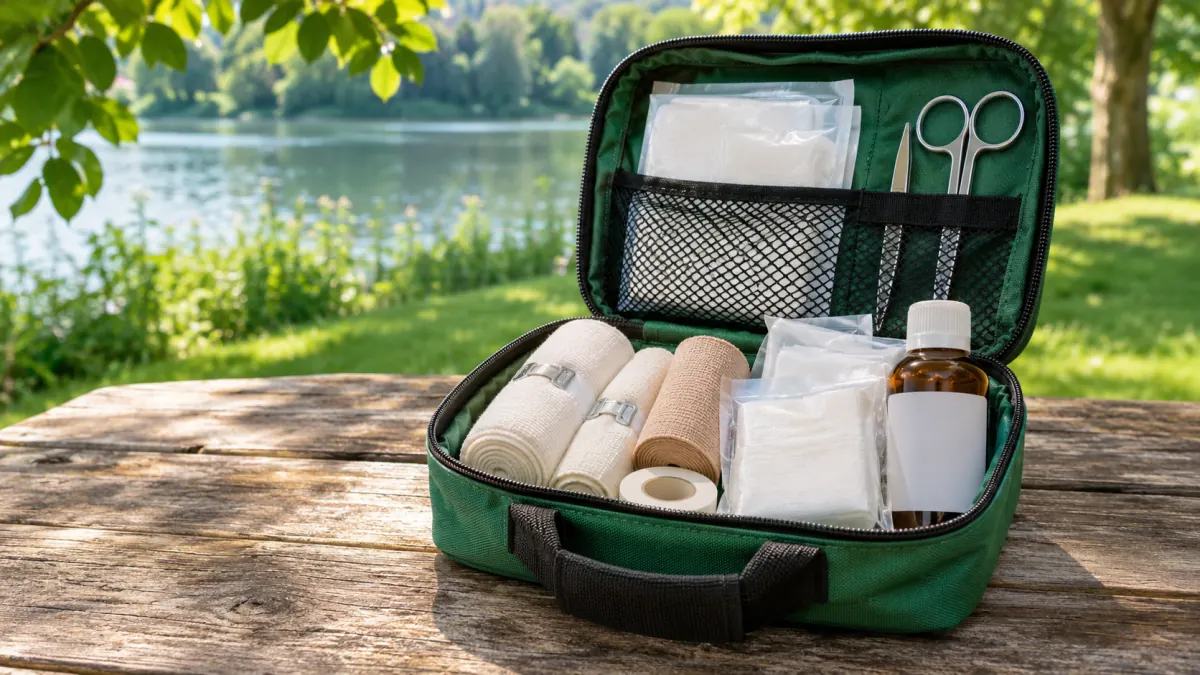
Summer injuries are rarely dramatic. A paring knife slips while someone is slicing corn for a backyard barbecue. A child skins both knees on the path by the Stouffville Reservoir. A splash of hot oil catches a forearm, a dock splinter goes deeper than expected at Musselman’s Lake, and a week after a hike someone notices a small dark speck behind their knee. Most of these can be handled well at home with good first aid. A smaller number need stitches, a closer look, or a booster shot, and knowing which is which saves a lot of worry.
What follows is a practical guide to the cuts, scrapes, burns, and bites that come with an Ontario summer, including what to keep in your first aid kit and the warning signs that mean a wound needs professional care.
Stock the kit before you need it
A well-stocked first aid kit in the house, another in the car, and a small one in the hiking pack make every step below easier. Useful contents include:
- Disposable gloves
- Sterile gauze pads and a roll of gauze
- Adhesive bandages in several sizes
- Non-stick dressings
- Medical tape
- Elastic bandage for sprains
- Clean tweezers with fine tips (essential for splinters and ticks)
- Small scissors
- Petroleum jelly
- Saline or clean water in a sealed bottle
- A small sealable container or bag for saving a removed tick
- Acetaminophen and ibuprofen, plus age-appropriate versions for children
- An oral antihistamine
- Any prescribed epinephrine auto-injector for family members with severe allergies
- A card with emergency numbers and each family member’s allergies and medications
Check the kit at the start of each season and replace anything used or expired. Long weekends are a good reminder, since that is when many Stouffville families head to the cottage, the beach, or the trails.
Cuts and scrapes
Step one: stop the bleeding
Apply firm, steady pressure directly on the wound with clean gauze or a cloth for 10 minutes without lifting to peek. If blood soaks through, add more gauze on top rather than removing the first layer. Raising the injured limb above the heart can help.
Step two: clean it
Rinse the wound under cool, clean running water for several minutes. Gently wash the skin around it with mild soap, but try to keep soap out of the wound itself. Remove small bits of dirt or gravel with tweezers cleaned with rubbing alcohol. Hydrogen peroxide and iodine are not necessary for most minor wounds and can irritate healthy tissue.
Scrapes from pavement, playgrounds, and gravel trails often trap grit. Thorough rinsing now prevents infection and reduces the chance of dark “tattoo” marks from embedded debris later.
Step three: protect it
A thin layer of petroleum jelly keeps the wound moist, which helps it heal faster and with less scarring. Cover it with a non-stick dressing or bandage, and change the dressing daily or whenever it gets wet or dirty. Most minor scrapes heal within one to two weeks.
Does it need stitches?
Get the wound assessed promptly if it:
- Is gaping, or the edges do not come together easily
- Is deeper than a few millimetres, or you can see fat, muscle, or bone
- Is longer than about a centimetre and a half on the face, or on a joint where movement pulls it open
- Keeps bleeding after 10 minutes of firm pressure
- Was caused by an animal or human bite
- Involves a puncture from a rusty or dirty object, or a deep splinter you cannot remove
- Has numbness, weakness, or difficulty moving a finger or toe beyond it
Timing matters. Many wounds are best closed within several hours of the injury, so do not wait until the next day to decide. Our minor wound care service can assess cuts and decide on the best way to close them, whether that is stitches, skin glue, or adhesive strips. If you already have stitches, follow-up dressing changes and suture removal can be arranged as the wound heals.
Burns
Barbecues, campfires, fireworks, hot car seatbelt buckles, and kettles all contribute to summer burns. Sunburn deserves its own section below.
Immediate first aid
- Stop the burning. Move away from the heat source and remove tight items like rings or watches before swelling starts. Do not pull off clothing that is stuck to the skin.
- Cool the burn under cool (not ice-cold) running water for about 20 minutes. This step is the most important one and is still helpful if started a little late.
- Do not use ice, butter, oil, toothpaste, or home remedies. They can trap heat, damage tissue, and raise infection risk.
- Cover loosely with a clean, non-stick dressing or plastic food wrap laid over the burn, not wrapped tightly around a limb.
- Manage pain with acetaminophen or ibuprofen as directed.
- Leave blisters intact. They protect the healing skin underneath. If one breaks on its own, clean it gently and cover it.
Burns that need medical care
| Feature | Why it matters |
|---|---|
| Larger than the palm of the injured person’s hand | Higher risk of fluid loss and infection |
| On the face, hands, feet, genitals, or across a major joint | Can affect function or appearance |
| White, leathery, charred, or painless | Suggests a deep burn |
| Caused by chemicals or electricity | Damage may be deeper than it looks |
| In an infant, young child, or older adult | Thinner skin, higher risk |
| Signs of infection in the days after | Needs assessment and possibly treatment |
Burns that go all the way around a limb, burns from an explosion or fire in an enclosed space (smoke inhalation risk), or any burn with breathing trouble need emergency care.
Sunburn
Sunburn is a radiation burn, and a blistering sunburn in childhood raises lifetime skin cancer risk. Cool showers, fluids, moisturizer, and pain relief help. Seek care for blistering over a large area, fever, chills, confusion, or signs of dehydration. Prevention is better: broad-spectrum SPF 30 or higher, reapplied every two hours and after swimming, plus hats, shade, and extra caution between about 11 a.m. and 3 p.m.
Ticks and Lyme disease
Ticks deserve real attention around here. Blacklegged ticks, the species that can carry the bacteria causing Lyme disease, have become established in many parts of Ontario, and York Region is recognized as an area where Lyme disease risk exists. Wooded and grassy areas, leaf litter, and trail edges are prime habitat, which includes much of the Oak Ridges Moraine, Rouge National Urban Park, and the natural areas around Stouffville. Ticks are most active from spring through fall but can be out on any day above freezing.
Preventing bites
- Use an insect repellent approved for ticks, such as one containing DEET or icaridin, following label directions for children.
- Wear light-coloured long pants and long sleeves; tuck pants into socks on overgrown trails.
- Stay near the centre of paths.
- Do a full-body tick check after time outdoors, paying attention to the scalp, behind the ears, armpits, waistband, groin, and behind the knees. Check children and pets too.
- Shower soon after coming indoors.
- Put outdoor clothing in the dryer on high heat for at least 10 minutes to kill any ticks.
Removing a tick
- Use fine-tipped tweezers to grasp the tick as close to the skin as possible.
- Pull upward slowly and steadily without twisting or squeezing the body.
- Clean the bite area with soap and water.
- Save the tick in a sealed container or bag, or take a clear photo. Online services such as eTick can help identify the species from a photo.
- Note the date and where you think you picked it up.
Do not burn the tick, smother it with petroleum jelly, or use nail polish. These do not help and may increase the risk of infection.
What to watch for afterward
The most recognizable early sign of Lyme disease is an expanding red rash, sometimes with a “bull’s-eye” appearance, appearing anywhere from about 3 to 30 days after the bite. It is often not itchy or painful. Fever, chills, fatigue, headache, and muscle or joint aches can accompany it. Not everyone gets the rash.
If a blacklegged tick was attached for 24 hours or longer, or you are unsure how long, a single dose of a preventive antibiotic may be recommended if it can be started within 72 hours of removal. In Ontario, pharmacists can assess tick bites and may prescribe this in appropriate cases, and your doctor can too. Anyone who develops a rash or flu-like symptoms after a tick bite should be seen.
Other bites and stings
Mosquito bites usually cause itchy bumps that settle with a cold compress, an oral antihistamine, or an anti-itch cream. Avoid scratching, which can lead to infection. Mosquitoes can occasionally carry West Nile virus, so repellent at dawn and dusk is sensible, especially near the ponds and wetlands that dot the countryside around Stouffville.
Bee and wasp stings are painful but usually harmless. Scrape away a visible stinger, wash the area, apply a cold pack, and take an antihistamine if itchy. Large local swelling can happen and is not dangerous by itself. Any symptoms beyond the sting site, such as hives elsewhere, throat tightness, or dizziness, are an emergency.
Signs of skin infection after any bite or wound include increasing redness spreading outward, warmth, swelling, pus, red streaks, worsening pain after the first couple of days, or fever. These need assessment, as antibiotics may be required.
Tetanus: are you up to date?
Tetanus bacteria live in soil and dust and can enter through any break in the skin, including punctures, splinters, garden injuries, and animal bites. The infection is rare in Canada because of vaccination, but it is serious when it occurs.
Adults should receive a tetanus booster every 10 years. For a dirty or deep wound, a booster is usually recommended if it has been more than five years since your last dose. Many adults cannot remember their last tetanus shot. If that sounds like you, check your records or ask at your next visit. Our adult vaccinations page explains how boosters fit into routine immunization.
When to call 911 or go to the ER
Go to the nearest emergency department, such as Markham Stouffville Hospital or Uxbridge Hospital, or call 911, for:
- Bleeding that will not stop with firm pressure, or spurting blood
- Deep wounds to the chest, abdomen, neck, or head
- Large, deep, chemical, or electrical burns, or any burn with breathing difficulty
- Signs of anaphylaxis: swelling of the face, lips, or tongue; trouble breathing; widespread hives with dizziness or fainting (use an epinephrine auto-injector if available and call 911)
- A wound with a red streak spreading quickly, high fever, and feeling very unwell
- Loss of sensation or movement below an injury
- Injuries from a serious fall, collision, or machinery
For non-urgent questions after hours, Health811 (dial 811) connects you with a registered nurse.
Should I leave a wound uncovered so it can air out?
I found a tick but it was not attached. Do I need to do anything?
Getting a wound checked at HealthSmart
If a cut looks like it may need closing, a burn is bigger than you expected, or a bite is not behaving the way it should, our team can take a look. Our walk-in clinic page explains how to be seen for urgent minor problems, or you can book an appointment for follow-up care such as dressing checks or a tetanus booster. Hours may change through the summer, so check the location page for details about our Main Street clinic in Stouffville.
This guide offers general first aid information and is not a substitute for assessment by a qualified health professional.