Swollen Lymph Nodes in Stouffville: Normal Glands or a Reason to Check?
Most swollen glands are the body fighting a cold or sore throat. Here is how Stouffville patients can tell a reactive node from one that deserves a closer look.
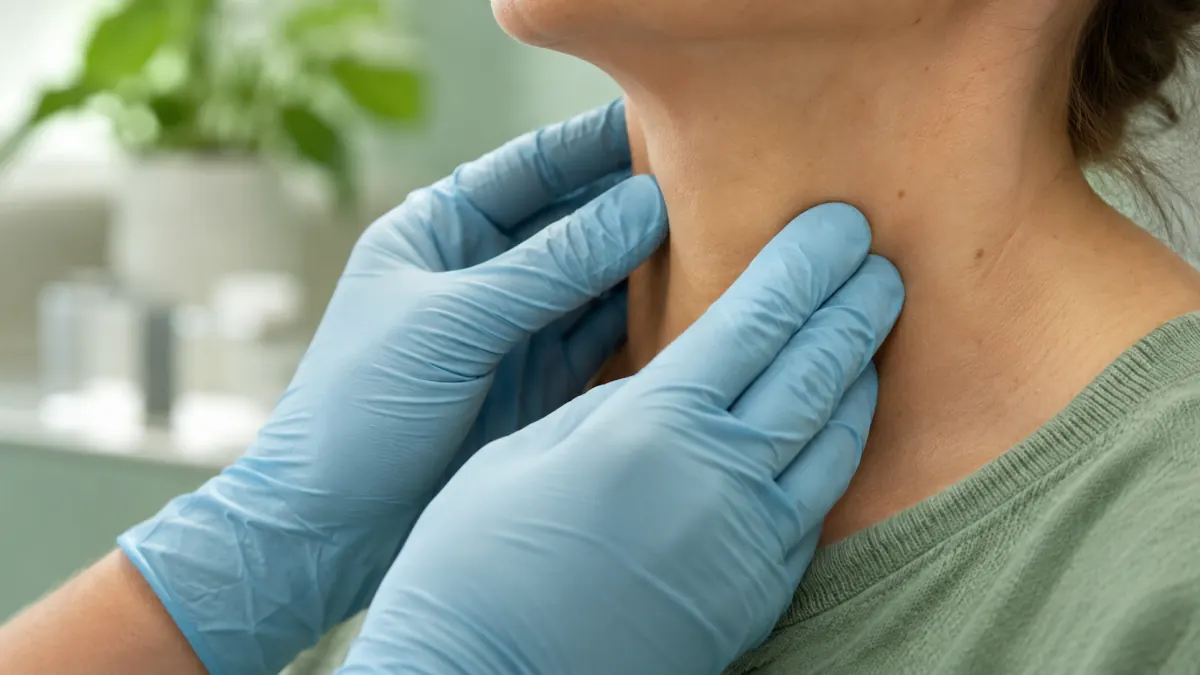
The average adult body contains somewhere in the range of 500 to 700 lymph nodes, and almost none of them are ever noticed. They sit quietly along the neck, under the jaw, behind the ears, in the armpits and in the groin, filtering lymph fluid and acting as meeting points where immune cells learn about whatever germ has turned up. You usually only become aware of one when it swells, and the first time you find a tender, pea-sized lump under your jaw it is natural to wonder whether something serious is going on.
In the large majority of cases, it isn’t. A swollen gland is most often a sign that your immune system is doing exactly what it should. That said, a small share of enlarged nodes do need investigation, and knowing the difference saves both unnecessary worry and unnecessary delay. This guide walks through what lymph nodes do, the common reasons they enlarge, the features doctors look for, and how patients in Stouffville can get a swollen node assessed.
What a lymph node is actually doing
Lymph is a clear fluid that drains from body tissues back toward the bloodstream. On its way, it passes through lymph nodes, which are small bean-shaped structures packed with white blood cells. When bacteria or viruses arrive in the fluid, the cells inside the node multiply to respond. That surge of activity makes the node larger and sometimes sore.
Because each group of nodes drains a particular region, the location of a swollen node is a useful clue:
- Under the jaw and along the front of the neck: throat, tonsils, teeth, gums and mouth
- Behind the ears and at the back of the neck: scalp and outer ear; often swollen with viral infections and scalp conditions
- Above the collarbone: chest and abdomen; nodes here are taken more seriously
- Armpit: arm, hand, chest wall and breast
- Groin: legs, feet and the genital area
So a sore node under the left jaw a few days into a sore throat makes perfect sense. A firm node above the collarbone with no infection anywhere nearby is a different situation.
The usual suspects: reactive nodes
Most enlarged nodes are called “reactive,” meaning they are responding to something nearby. Common causes include:
- Colds, flu and other viral upper respiratory infections
- Strep throat and tonsillitis
- Dental infections or a recent dental procedure
- Ear infections
- Skin infections, insect bites, scratches or an infected hangnail
- Mononucleosis (mono), which often causes larger nodes on both sides of the neck plus fatigue and a sore throat
- Recent vaccinations, which can briefly enlarge armpit nodes on the same side as the shot
- Scalp conditions such as dandruff, eczema or head lice, which can enlarge nodes behind the ears
Children have particularly busy lymph nodes. It is very common for a healthy child to have several small, soft, movable nodes in the neck that come and go with every cold of the school year. Parents in Stouffville often discover them while applying sunscreen or during bath time and are understandably alarmed, but small nodes in a well child are usually normal.
If your swelling came with a sore throat, you may find our article on sore throats and strep helpful, since treating the underlying infection is what settles the node.
How long reactive nodes take to settle
This surprises many people: even after the infection is gone, a node can stay enlarged for two to six weeks. It typically becomes less tender first and then shrinks gradually. A node that is slowly getting smaller is reassuring, even if it hasn’t fully disappeared.
Features doctors pay attention to
When a doctor examines a lymph node, they are mentally running through a short list of characteristics. None of these on its own proves anything, but together they help separate an everyday reactive node from one that should be investigated.
| Feature | More reassuring | Worth a closer look |
|---|---|---|
| Size | Under about 1 cm (smaller than a fingertip) | Larger than 1.5 to 2 cm, or growing |
| Feel | Soft or rubbery | Hard, rock-like |
| Movement | Moves easily under the skin | Fixed or stuck to deeper tissue |
| Tenderness | Tender, especially with infection | Painless (though painless does not always mean serious) |
| Duration | Shrinking within a few weeks | Present longer than four to six weeks without improving |
| Location | Under the jaw or behind the ears with an obvious cause | Above the collarbone, or several areas at once without explanation |
| Other symptoms | Recent cold or sore throat | Fever, night sweats, unexplained weight loss, ongoing fatigue |
Tenderness is often misunderstood. A painful node is usually inflamed because of infection, which is a good sign in the sense that it points to a straightforward cause. A painless, hard, growing node is the type that tends to prompt further testing.
Other, less common causes
Beyond everyday infections, swollen nodes can be associated with:
- Infections such as toxoplasmosis, cat scratch disease (after a scratch or bite from a cat, particularly a kitten), tuberculosis, HIV or syphilis
- Inflammatory and autoimmune conditions such as rheumatoid arthritis or lupus
- Certain medications, occasionally
- Cancers, including lymphoma and leukemia, or cancer that has spread to nodes from elsewhere
The last category is what people worry about, and it is the reason persistent or unusual nodes are assessed. It’s worth keeping perspective: in primary care, the chance that an enlarged node is due to cancer is low, particularly in children and younger adults. Risk rises with age, smoking history and the presence of other symptoms.
When to book an appointment
You don’t need to rush in for every swollen gland during a cold. But it is sensible to see a doctor if:
- A node has been enlarged for more than two to four weeks and isn’t getting smaller.
- A node is hard, fixed in place or growing.
- A node is larger than roughly 2 cm (about the size of a grape).
- You have a node above your collarbone.
- Nodes are enlarged in more than one area of the body without a clear reason.
- You have fevers, drenching night sweats, unexplained weight loss or fatigue that won’t lift.
- The skin over the node is red, hot and spreading, or the node feels like it is filling with fluid (which can mean an abscess).
- You are worried, even if none of the above apply.
That last point matters. Peace of mind is a legitimate reason for a general medical consultation, and an examination is often enough to reassure.
Signs that need urgent care
Go to an emergency department or call 911 if you or your child have:
- A swollen neck along with difficulty breathing, noisy breathing or trouble swallowing saliva
- Drooling, a muffled “hot potato” voice or inability to open the mouth fully, which can signal a deep throat infection
- A rapidly enlarging, very painful swelling with high fever, especially if the person looks unwell
- Stiff neck with fever, headache and sensitivity to light
- Swelling of the face or tongue
For Stouffville residents, the nearest hospital emergency departments are Markham Stouffville Hospital (part of Oak Valley Health) and Uxbridge Hospital. If you aren’t sure whether symptoms are urgent, Health811 (call 811) can help you decide, day or night.
What happens at the appointment
A typical assessment for a swollen lymph node starts with questions: when you first noticed it, whether it has changed, whether you’ve been sick recently, any dental problems, pet scratches, travel, new medications, and general symptoms such as fever or weight loss. Your doctor will then examine the node itself and check other node areas, the throat, ears, mouth, skin and sometimes the abdomen.
From there, the plan usually falls into one of three paths.
Watchful waiting
If the node looks reactive and you are otherwise well, the most common recommendation is to wait and recheck in a few weeks. This is not a dismissal; it is the evidence-based approach, because most nodes resolve on their own. Some people find it helpful to note the size against a reference, such as “about the size of a pea,” and check it once a week rather than every day. Constant prodding can keep a node irritated.
Testing
If the cause isn’t clear or the node is persisting, your doctor may arrange:
- Blood work, such as a complete blood count, inflammation markers or tests for mono and other infections
- A throat swab if strep is suspected
- An ultrasound of the node through a diagnostic imaging referral, which shows its size, shape and internal structure
- A chest X-ray in some situations
Referral
When a node has worrying features, or testing raises questions, the next step may be a specialist referral, for example to an ear, nose and throat surgeon or a general surgeon, for a biopsy. A biopsy samples tissue from the node so it can be examined under a microscope. Waiting for a referral can be stressful, and it is reasonable to ask your doctor what to watch for in the meantime and when to call back.
Caring for a tender node at home
If your doctor feels the node is reactive, or you are waiting a few days to see if it settles, these steps can help:
- Treat the underlying cause: rest and fluids for a viral illness, antibiotics only if a bacterial infection has been diagnosed
- Use a warm compress for 10 to 15 minutes a few times a day if the node is sore
- Take acetaminophen or ibuprofen for discomfort if they are safe for you
- Keep up good dental care, and book a dentist visit if a tooth is sore
- Avoid squeezing or massaging the node aggressively
Keep an eye on the overall direction. A node that is gradually less tender and smaller over a couple of weeks is following the expected course. A node that is growing, hardening or joined by new symptoms is a reason to come back sooner. Many Stouffville patients find it easier to stop checking daily and simply set a reminder for two weeks out.
Can a swollen lymph node be from a vaccine?
My child always seems to have lumps in the neck. Is that normal?
Is it a lymph node or something else?
Having a lump checked at HealthSmart
If you’ve found a lump that hasn’t settled, or you simply want a professional opinion, HealthSmart Medical Clinic on Main Street in Stouffville can examine it, explain what we find and arrange tests or referrals when needed. You can book an appointment online, and directions and current hours are on our location page, since hours may change. Patients from Ballantrae, Gormley and the surrounding area are welcome too.
This post offers general health information and cannot replace an assessment by a clinician who knows your history.