TB Testing in Stouffville for School, Work and Immigration Requirements
Need a two-step TB skin test for a placement or new job? How the test works, how to time the visits and what a positive result means for Stouffville patients.
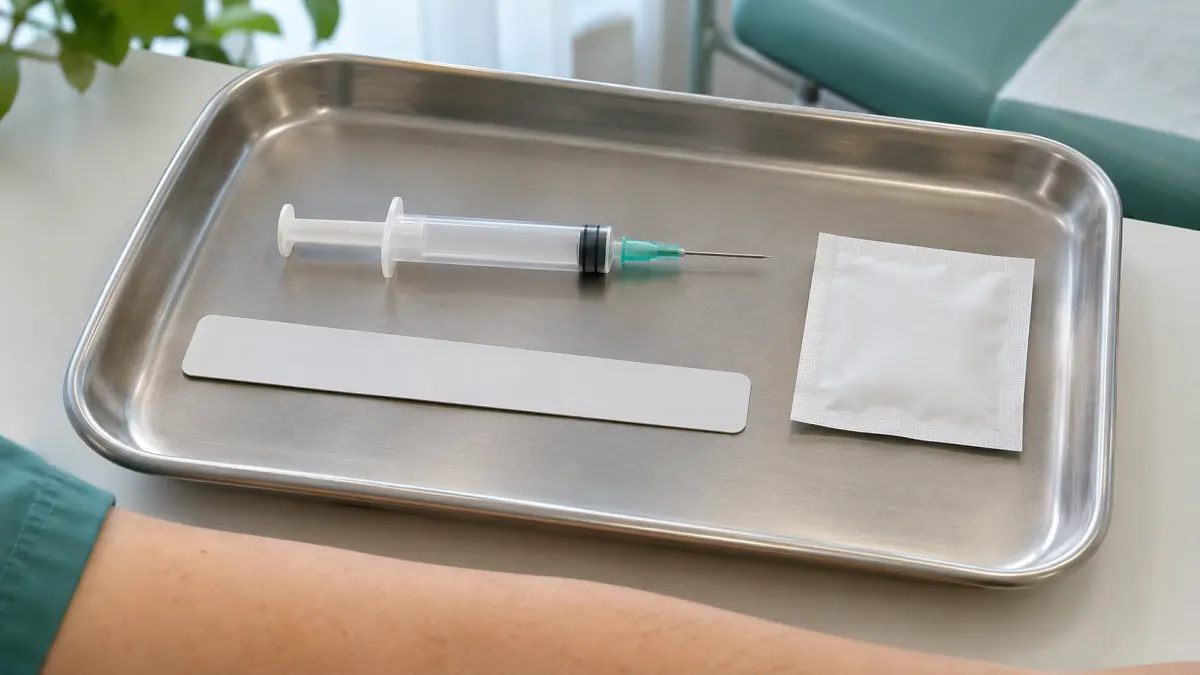
A second-year nursing student from Ballantrae gets an email from her college: clinical placement starts in three weeks, and her file is missing proof of a two-step tuberculosis skin test. She assumes it is a single quick needle. Then she reads the fine print and realizes it involves four separate visits, each one tied to a specific day, and that her schedule of classes, shifts and a part-time job will need to bend around it. This is a common story among Stouffville students, and it is entirely avoidable with a little planning.
Tuberculosis testing is routinely required for healthcare students and workers, many long-term care and childcare jobs, some post-secondary programs, volunteers in certain settings, and people being assessed after a known exposure. Below is a plain-language guide to how the tests work, how to schedule them without missing a deadline, and what happens if a result comes back positive.
A quick refresher on tuberculosis
Tuberculosis (TB) is caused by the bacterium Mycobacterium tuberculosis. It spreads through the air when someone with active TB disease of the lungs or throat coughs, speaks or sings, and another person breathes in the bacteria over a period of close, usually prolonged, contact. It does not spread through handshakes, shared dishes or surfaces.
After exposure, there are two very different possibilities:
| Latent TB infection | Active TB disease | |
|---|---|---|
| Bacteria in the body | Yes, but dormant | Yes, and multiplying |
| Symptoms | None | Cough lasting three weeks or more, fever, night sweats, weight loss, fatigue, sometimes coughing up blood |
| Contagious? | No | Yes, when it affects the lungs or throat |
| Chest X-ray | Usually normal | Often abnormal |
| Treatment | Optional preventive treatment to lower future risk | Required, with a multi-drug regimen supervised with public health |
Screening tests are mostly looking for latent infection, which is far more common than active disease in Canada. Finding and treating latent TB prevents it from becoming active later.
The two kinds of TB tests
The tuberculin skin test (TST)
Also called the Mantoux test, this is the one most employers and schools ask for. A clinician injects a tiny amount of purified protein derivative just under the skin of the inner forearm, raising a small bleb that fades within minutes. There is no live bacteria involved, and you cannot catch TB from the test.
The arm must then be checked by a trained health professional 48 to 72 hours later. The reader is not looking for redness; they are measuring the firm, raised area (called induration) across the forearm in millimetres. You cannot read your own test, and a photo is not accepted for official purposes. If you miss the reading window, the test has to be repeated from the start.
The interferon-gamma release assay (IGRA)
This is a blood test that measures the immune response to TB proteins in a lab. It needs only one visit, and it is not affected by a previous BCG vaccine, which can cause false positives on the skin test. Not every program accepts it, it is not always available in the community, and coverage varies, so check what your school or employer requires and ask us before assuming it will be an option.
What “two-step” actually means
Some people who were exposed to TB, or who had the BCG vaccine, many years ago have an immune memory that has faded. A single skin test can come back falsely negative. The first test, however, can “wake up” that memory. A second test given shortly afterward will then show the true result. This is called the booster effect, and it is why healthcare and other institutional programs require a two-step baseline.
The sequence looks like this:
- Visit 1: First skin test placed.
- Visit 2 (48 to 72 hours later): First test read. If it is positive, you stop here and move to follow-up (see below).
- Visit 3 (one to three weeks after the first test): If the first was negative, the second test is placed, usually on the other arm or a separate spot.
- Visit 4 (48 to 72 hours after the second): Second test read.
Once you have a documented two-step result, future screening for most programs only needs a single-step test. Keep your record somewhere safe. Students who move between programs or employers often find themselves redoing the full two-step simply because they lost the paperwork.
Timing tips that save headaches
Most problems with TB testing are scheduling problems. A few things that help:
- Start early. Give yourself at least three to four weeks before your deadline. If the result is positive, you will need extra time for a chest X-ray and assessment.
- Mind the reading day. If a test is placed on a day that puts the reading window over a weekend or a day the clinic is closed, it cannot be read. Plan the placement so the 48-to-72-hour mark falls when you and the clinic are both available. Clinic hours can change, so confirm on our location page when you book.
- Check your live vaccines. Live vaccines such as MMR, chickenpox (varicella) and yellow fever can temporarily blunt the skin test response. The usual approach is to place the TB test on the same day as the live vaccine or wait at least four weeks after it. If you are also catching up on routine immunizations for a program, tell us so the order can be planned.
- Bring your forms. Many programs have their own documentation forms. Bring them to the first visit so the right fields are filled out.
- Bring past records. If you have had a positive TB test before, say so. A previously positive person should not have another skin test; they need a different kind of assessment.
Is TB testing covered by OHIP?
When TB testing is done because of a medical reason, such as a known exposure or symptoms, it is generally part of insured care. When it is required for employment, school, volunteering or similar administrative purposes, it may not be covered by OHIP. The same goes for completing the accompanying forms. Ask our front desk about current fees before your first visit so there are no surprises. Our page on medical forms completion explains how form requests generally work.
Understanding your result
The cut-off for a “positive” skin test is not one number for everyone. It depends on your risk factors. For example, a smaller reaction may count as positive in someone who had close contact with active TB or has a weakened immune system, while a larger cut-off is used for people with no known risk. The person reading your test will interpret it in context.
If the result is negative
You will receive documentation for your program. Nothing else is needed unless you later have an exposure or develop symptoms.
If the result is positive
A positive skin test usually means latent TB infection, not active disease, and it does not mean you are contagious. The next steps typically include:
- A chest X-ray to look for signs of active disease. Our team can arrange diagnostic imaging referrals for this.
- A symptom review for cough, fever, night sweats and weight loss.
- Possibly an IGRA, particularly for someone who had the BCG vaccine, to help confirm the result.
- A discussion about preventive treatment. Several regimens exist, ranging from a few months of a single medication to a short course of weekly doses. Treatment is not mandatory, but it substantially lowers the chance of latent TB becoming active over your lifetime. The decision depends on your age, health and risk factors.
TB is a reportable disease in Ontario. If active disease is suspected or diagnosed, York Region Public Health becomes involved to support treatment and follow up with close contacts. That is routine and is designed to protect both you and the community.
Who asks for TB tests locally
The requests we see at a Stouffville clinic tend to fall into a few familiar groups. Nursing, personal support worker and paramedic students need a two-step baseline before clinical placements, and many of them are juggling classes in Toronto, Oshawa or beyond with part-time jobs back home in Stouffville. Staff starting at long-term care and retirement homes across York Region usually need one too. Early childhood educators, some teachers and school volunteers are sometimes asked for a recent result. And people who have just been told they were in contact with someone diagnosed with TB, often by York Region Public Health, need testing on a specific timeline that public health will explain.
Each of these groups has slightly different paperwork, so the single most useful thing you can do is read your program’s requirements closely before booking. Some want a two-step result no older than a set number of months; others accept an older two-step plus a recent single test. Bringing that wording to your first visit in Stouffville saves a return trip.
Who else should think about TB testing?
Beyond workplace requirements, testing may be recommended for:
- People who have had close contact with someone diagnosed with active TB
- Newcomers to Canada from countries where TB is more common, particularly in the first few years after arrival
- People starting medications that suppress the immune system, such as some biologic drugs
- People living with HIV, kidney failure on dialysis, or other conditions that raise risk
- Travellers who spent extended time in high-burden settings, especially working in hospitals or shelters
If any of these apply to you, or to an older relative who has recently joined your household in Stouffville, mention it at your next visit rather than waiting for a form to prompt the question.
Red flags not to ignore
Testing is a screening tool, not a way to diagnose a sick person. If you have a cough lasting more than three weeks, are coughing up blood, have drenching night sweats or are losing weight without trying, see a clinician promptly rather than booking a routine skin test. If you are struggling to breathe, have chest pain, or are coughing up significant amounts of blood, call 911 or go to the nearest emergency department.
I had the BCG vaccine as a child. Will my skin test be positive?
Can I get the test if I'm pregnant?
My arm is itchy and red after the test. Is that a problem?
Booking your TB test with us
The easiest way to keep a two-step test on track is to schedule all the visits at the start, so our Stouffville team can line up each placement and reading day around your calendar. When you book online, let us know it is for a TB test and whether it is a one-step or two-step, and bring any forms from your program. If you have questions about requirements or coverage before you come in, you can reach the team through our contact page.
The information here is general in nature and is not a substitute for individual medical advice.