Tetanus Shots in Stouffville: Boosters, Garden Wounds and Timing
Rust is not the real danger; soil is. When Stouffville adults need a tetanus booster after a cut or puncture, how often to update it, and how to treat a wound.
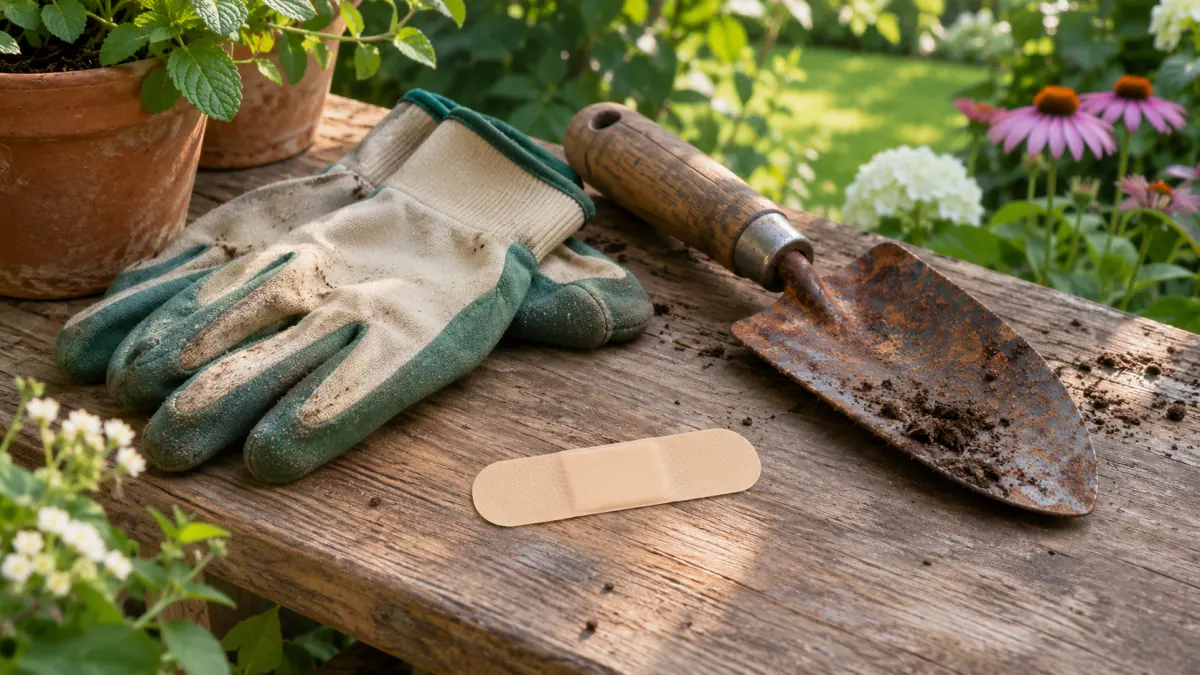
Rust has never given anyone tetanus. The orange flakes on an old nail or a garden fork are just iron oxide, and they are harmless on their own. The real culprit is a bacterium called Clostridium tetani, whose tough, long-lasting spores live in soil, dust and animal manure. A rusty tool left outside is simply a likely place to find those spores, and a sharp, rusty object is good at pushing them deep into the skin. That is why the old warning about rusty nails is half right: the advice to think about tetanus after an injury is sound, but a clean-looking thorn from a rose bush in a Stouffville garden can carry just as much risk.
Tetanus is now rare in Canada, with only a handful of cases reported in a typical year, thanks to vaccination. But the disease has not gone anywhere, the spores are still in our soil, and the illness remains serious when it does occur. The protection from your childhood shots also fades, which is why adults need boosters. This guide explains how tetanus works, how often you need a shot, what to do after a wound, and how this fits with first aid for cuts and scrapes.
What tetanus does to the body
When tetanus spores get into a wound where there is little oxygen, such as a deep puncture or an area of crushed or dead tissue, they can become active and release a powerful toxin. That toxin travels along nerves and interferes with the signals that tell muscles to relax. The result is painful muscle stiffness and spasms.
Symptoms usually appear between about 3 and 21 days after the injury, though the range can be shorter or longer. They often begin with:
- Stiffness or cramping in the jaw muscles (the reason tetanus is also called lockjaw).
- Stiffness in the neck, shoulders or back.
- Difficulty swallowing.
- Painful muscle spasms, which can be triggered by noise, touch or light.
As the illness progresses, spasms can affect breathing muscles. Tetanus requires hospital and often intensive care treatment and can be fatal even with modern care. Importantly, having tetanus once does not make you immune, so people who recover still need vaccination.
If you or someone you know develops jaw stiffness, difficulty swallowing or muscle spasms in the days or weeks after a wound, call 911 or go to emergency right away.
Where tetanus spores are found
Spores are widespread in the environment. Higher-risk situations include:
- Gardening, landscaping and farm work, including handling soil, compost and manure.
- Puncture wounds from nails, splinters, thorns, wire or tools.
- Wounds contaminated with dirt, such as a fall on a gravel trail.
- Animal bites and scratches.
- Burns, frostbite and crush injuries.
- Wounds with dead tissue or a foreign body left in place.
- Injection drug use with non-sterile equipment.
In a community surrounded by farmland, horse properties, garden centres and trails like those through the Oak Ridges Moraine and Rouge National Urban Park, Stouffville residents have plenty of everyday contact with soil. That is not cause for alarm, but it is a good reason to keep vaccinations current.
How often you need a tetanus shot
Most Canadians receive a series of tetanus-containing vaccines in childhood, combined with protection against diphtheria and pertussis (whooping cough), and a booster in their teen years. After that:
- Adults need a tetanus and diphtheria (Td) booster every 10 years.
- Adults should receive one dose of Tdap, which also protects against pertussis, at some point in adulthood, if they have not already had one as an adult.
- Pregnant people are advised to receive Tdap in every pregnancy, ideally between about 27 and 32 weeks, to help protect the newborn from whooping cough.
Routine tetanus boosters for adults are part of Ontario’s publicly funded immunization schedule. If you are not sure whether you are due, the clinic can check your records where available and advise you. Many people find their last booster was longer ago than they thought, especially if it was given after an injury years ago.
Never vaccinated, or not sure?
Adults who never completed a childhood series, including some newcomers to Canada whose records are incomplete, need a primary series of three doses spaced over several months, followed by the usual boosters. If you are new to Canada and building up your vaccine record, our post on catch-up immunizations for newcomers explains how that process works. The clinic’s adult vaccinations service can help you get on track.
After a wound: do you need a shot?
This is the practical question for most Stouffville gardeners and weekend renovators. The answer depends on two things: what kind of wound it is, and when you last had a tetanus-containing vaccine.
| Type of wound | Last tetanus dose | Usual recommendation |
|---|---|---|
| Clean, minor cut or scrape | Within the last 10 years, with a complete series | Usually no booster needed |
| Clean, minor cut or scrape | More than 10 years ago, or unknown | A booster is recommended |
| Dirty, deep, puncture, crush, burn or bite wound | Within the last 5 years, with a complete series | Usually no booster needed |
| Dirty, deep, puncture, crush, burn or bite wound | More than 5 years ago | A booster is recommended |
| Any significant wound | Never vaccinated, incomplete series, or unknown history | Booster plus, for higher-risk wounds, tetanus immune globulin; start or complete the series |
Tetanus immune globulin is a separate treatment that provides immediate, short-term protection. It is usually given in a hospital setting for higher-risk wounds in people who are not fully vaccinated.
A booster after an injury should be given as soon as reasonably possible. If you realize a few days later that you may have needed one, do not assume it is too late; call or visit to ask.
First aid for a wound that could carry tetanus
Good wound care reduces the risk of both tetanus and ordinary infection.
- Wash your hands, then rinse the wound under clean running water for several minutes. Use mild soap around (not deep inside) the wound.
- Remove visible dirt or debris that comes out easily. Do not dig for deeply embedded objects.
- Control bleeding with firm, steady pressure using a clean cloth or gauze.
- Cover the wound with a clean dressing. Change it daily or when it becomes wet or dirty.
- Check your vaccination status. If you are unsure or overdue, arrange a booster.
- Watch for infection, such as increasing redness, warmth, swelling, pus, red streaks or fever.
For a fuller look at managing everyday summer cuts, scrapes and burns, our article on summer wound care covers first aid in more detail. The clinic also offers minor wound care for wounds that need cleaning, dressing or a professional look.
When to go to emergency instead
Go to the nearest emergency department, such as Markham Stouffville Hospital or Uxbridge Hospital, or call 911 if:
- Bleeding does not stop after 10 to 15 minutes of firm pressure.
- The wound is very deep, gaping, or exposes fat, muscle or bone.
- There is an object embedded deeply in the wound.
- There is numbness, weakness or loss of movement beyond the wound.
- The injury came from a high-pressure tool, such as a nail gun or paint sprayer.
- The wound is from an animal bite that is deep or on the face, hands or genitals.
Animal bites and scratches carry extra considerations beyond tetanus, including the possibility of rabies. Bites should be reported to York Region Public Health, which helps determine whether rabies treatment is needed.
Tips for gardeners, farmers and outdoor workers
- Wear sturdy gloves when handling soil, compost, roses, brambles or old fencing.
- Wear closed shoes or boots in the garden and barn, not sandals.
- Keep a small first aid kit in the shed or truck with clean water, gauze and bandages.
- Clean even small wounds promptly rather than finishing the job first.
- Keep your booster current, especially if you live on one of the rural properties around Stouffville or your work or hobbies regularly involve soil or animals.
Employers with outdoor crews can also encourage staff to review their vaccination status.
Side effects of the tetanus vaccine
The tetanus vaccine is very safe and has been used for decades. The most common side effects are:
- Soreness, redness or swelling where the needle went in.
- Mild fever, fatigue or headache for a day or two.
Serious allergic reactions are very rare. If you had a severe reaction to a previous dose, tell the person giving the vaccine before you receive another. Some people who receive boosters too close together get a larger area of swelling at the injection site, which is one reason tracking your doses matters.
I can't remember my last tetanus shot. Is it safe to get another?
Does a tetanus shot protect me right away?
Getting your booster on Main Street
If you are due for a tetanus booster, or you have a wound and are not sure whether you need one, HealthSmart Medical Clinic at 208-5892 Main Street in Stouffville can help. You can book an appointment for a booster or wound check, or visit our vaccinations and immunizations page to learn more. Hours may change, so check the location page or call 905-642-6300 before you come in.
This article is general information and should not be used in place of medical advice about your own wound or vaccination history.