Tick Bites and Lyme Disease in Stouffville: Removal, Prevention, and When to Get Treated
Pulled a tick off after a walk? How Stouffville residents can remove it safely, judge the Lyme risk, decide on a preventive antibiotic, and spot early symptoms.
“I found a tick on my son’s hairline after we got back from the trail. Do we need to do something today?” It is one of the most common questions we hear between May and October, and the honest answer is: maybe, depending on a few details you can usually figure out at your kitchen table. Most tick bites never lead to illness. A small number do, and Ontario now has a simple, quick preventive option for the bites that carry the most risk. Knowing how to sort one from the other takes the panic out of finding that little dark speck.
Our earlier guide to summer cuts, burns and wound care touched on tick removal as part of a first aid kit. This article goes further, covering how Lyme disease is transmitted, what the risk looks like around Stouffville, when a single preventive antibiotic dose is worth considering, and the symptoms to watch for in the weeks after a bite.
Why ticks are a local issue now
Blacklegged ticks, sometimes called deer ticks, are the species that can carry the bacteria behind Lyme disease. Over the past couple of decades their range in Ontario has spread steadily, carried north and east on birds, deer, and small mammals. Public Health Ontario publishes a map of estimated Lyme disease risk areas, and those areas have grown considerably across southern Ontario. York Region Public Health also shares local tick information each season.
You do not need to be deep in the woods to meet one. Ticks wait on tall grass, leaf litter, and low shrubs, and climb onto people and pets as they brush past. In and around Whitchurch-Stouffville, that can mean the forested trails of the Oak Ridges Moraine, the edges of Rouge National Urban Park, the paths around the Stouffville Reservoir, overgrown corners of a large Gormley or Bloomington property, or even a long-grass border in a backyard. Ticks are most active from spring through fall, but adult blacklegged ticks can be out on any day when the temperature climbs above freezing, so a mild November afternoon is not entirely tick-free.
Small size is part of the problem. Nymphs, the stage most often linked to human infection, are about the size of a poppy seed and are easily missed. They tend to settle in warm, hidden spots: the scalp, behind the ears, the armpits, the groin, the waistband, and behind the knees.
How to remove a tick properly
If you find a tick attached, remove it as soon as you can. The longer it stays attached, the higher the chance of transmitting infection.
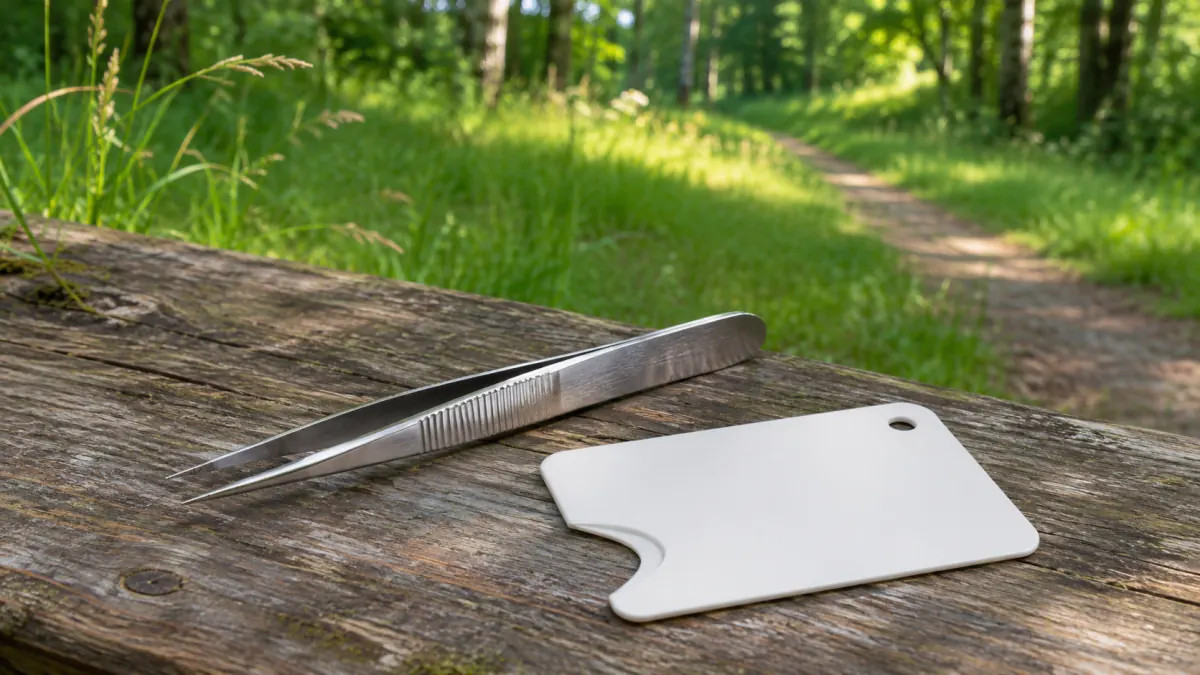
- Use fine-tipped tweezers or a tick-removal tool. Blunt household tweezers tend to squeeze the tick’s body.
- Grasp the tick as close to the skin as possible, by its head or mouthparts, not its swollen belly.
- Pull straight up with slow, steady pressure. Do not twist, jerk, or crush it.
- Clean the bite area and your hands with soap and water or rubbing alcohol.
- Keep the tick in a sealed container or bag, or at least take a clear, close-up photo of it next to a coin or ruler for scale.
- Write down the date and where you think the tick was picked up.
If a small piece of the mouthparts stays in the skin, do not dig at it. The skin usually pushes it out on its own, and leftover mouthparts do not transmit Lyme disease.
Skip the folk remedies. Burning the tick with a match, smothering it in petroleum jelly or nail polish, or dousing it in essential oils can irritate the tick and may make it more likely to release fluid into the bite. Plain, steady removal is best.
Identifying the tick
Not every tick in Ontario carries Lyme disease. American dog ticks, for example, are common here and do not transmit it. Identifying the species, and estimating how long it was attached, are the two most useful pieces of information for deciding what to do next. Many Ontario residents now use the eTick platform (etick.ca) to submit a photo for identification, and a clinician or pharmacist can also take a look at the tick or your photo.
Should you take a preventive antibiotic?
In Ontario, a single dose of the antibiotic doxycycline may be offered after certain tick bites to lower the chance of developing Lyme disease. This is called post-exposure prophylaxis. It is not needed for every bite, but it is considered when all of the following are true:
- The tick is, or is likely to be, a blacklegged tick
- It was picked up in an area where Lyme disease risk is known or suspected
- It was attached for an estimated 24 hours or more, or it looks engorged (swollen with blood)
- The dose can be started within 72 hours of removing the tick
- The person has no reason they cannot safely take doxycycline
Doxycycline can be used in children when indicated, with the dose based on weight, and short courses are generally considered safe. Pregnancy and certain medical conditions change the picture, so those situations need a conversation with a prescriber.
You have two convenient routes in Ontario. Many community pharmacists can assess a tick bite and prescribe the preventive dose directly, which is handy on a weekend or holiday Monday. You can also see a clinician, which is especially sensible if the bite looks irritated, you are pregnant, the patient is a young child, or you have other health questions at the same time. A same-day appointment or a quick virtual care visit with a photo of the tick can often sort it out.
How long was it attached?
Estimating attachment time feels like guesswork, but some clues help:
| Clue | Suggests |
|---|---|
| Tick was crawling, not attached | Very low risk; remove and monitor |
| Flat, small tick found within hours of being outdoors | Likely short attachment; risk lower |
| Tick looks plump, round, or greyish | Probably attached a day or longer |
| Last outdoor exposure was two or more days ago | Possible longer attachment |
| You have no idea when it got on | Discuss with a pharmacist or clinician |
Transmission of the Lyme bacteria usually requires the tick to feed for at least a day, and often longer. That is why daily tick checks are so effective: catching ticks early removes most of the risk.
Symptoms to watch for afterward
Whether or not you take a preventive dose, keep an eye on the bite and on how you feel for about 30 days. Note the date on a calendar so you can share it if symptoms appear.
Early localized Lyme disease (3 to 30 days after the bite)
- An expanding red rash, called erythema migrans, at or near the bite site. It is usually at least 5 centimetres across and grows over days. Only some of these rashes look like the classic “bull’s-eye”; many are evenly red or slightly bluish, especially on darker skin, where they may be harder to see.
- Fatigue, fever, chills, headache, muscle aches, and joint pain, which can feel like a summer flu.
A small red bump or ring under 5 centimetres that appears within a day or two of the bite and fades is usually just a reaction to the bite itself, not Lyme disease.
Early disseminated Lyme disease (weeks after the bite)
- Several rashes in different places on the body
- Drooping on one side of the face (facial palsy)
- Heart palpitations, lightheadedness, or fainting
- Severe headache with neck stiffness
- Nerve pain, numbness, or tingling
Later Lyme disease (months later)
- Episodes of joint swelling and pain, often in a knee
- Ongoing neurological symptoms
Lyme disease caught early is usually treated successfully with a course of oral antibiotics. Diagnosing the early rash is typically done by examination and history; blood tests are often negative in the first weeks and are more useful later on. If you have a rash or symptoms after a bite, book a visit rather than waiting for a test.
Blacklegged ticks can also carry less common infections, such as anaplasmosis and babesiosis, which mainly cause fever, chills, and fatigue. Mention any tick exposure when you see a clinician for an unexplained fever in summer or fall; our fever assessment visits take that history into account.
When to seek urgent care
Go to an emergency department or call 911 for:
- Fainting, chest pain, or a very slow or irregular heartbeat after a recent tick bite
- Severe headache with a stiff neck, confusion, or sensitivity to light
- Sudden facial weakness along with other neurological symptoms
- Signs of a serious allergic reaction
The nearest emergency departments for most Stouffville households are at Markham Stouffville Hospital and Uxbridge Hospital.
Prevention that actually works
The best tick bite is the one that never happens. A layered approach works well for families who love the local trails:
- Dress for it. Light-coloured long pants and long sleeves make ticks easier to spot. Tuck pant legs into socks on brushy trails. It is not fashionable, but it works.
- Use a repellent. Products containing DEET or icaridin are approved in Canada for use against ticks. Follow the label for concentration limits and age restrictions, especially for young children.
- Stay on the path. Walk in the centre of trails and avoid brushing through long grass and leaf piles.
- Check daily. After any time outdoors, do a full-body check on yourself and your kids, using a mirror for hard-to-see spots. Run fingers through hair and check behind ears.
- Shower soon after coming in. A shower within a couple of hours helps wash off unattached ticks and is a natural time to do a check.
- Use the dryer. Putting dry outdoor clothes in a hot dryer for at least 10 minutes kills ticks hiding in the fabric.
- Check your pets. Dogs carry ticks into homes and onto furniture. Ask your veterinarian about tick prevention for pets.
- Tidy the yard. Keep grass short, clear leaf litter, and create a wood-chip or gravel border between lawns and wooded areas.
A few quick answers
Should I get tested for Lyme disease right after a tick bite?
I missed the 72-hour window. Is it too late?
Can you get Lyme disease more than once?
Getting a tick bite checked in Stouffville
If you are unsure whether a bite needs attention, you can book a visit with our team, bring the tick or a photo, and we will help you weigh the risk. Clinic hours can change through the season, so please check the location page before you come by. Pharmacists in Stouffville can also help with preventive doses when you need a fast answer.
This post is general health information and is not a replacement for advice tailored to you by a qualified clinician.