Walk-In Clinic or Emergency Room? Making the Right Call in Stouffville
Not sure whether a symptom needs the ER or a walk-in visit? A Stouffville clinic explains red flags, everyday problems, and how to choose the right care fast.
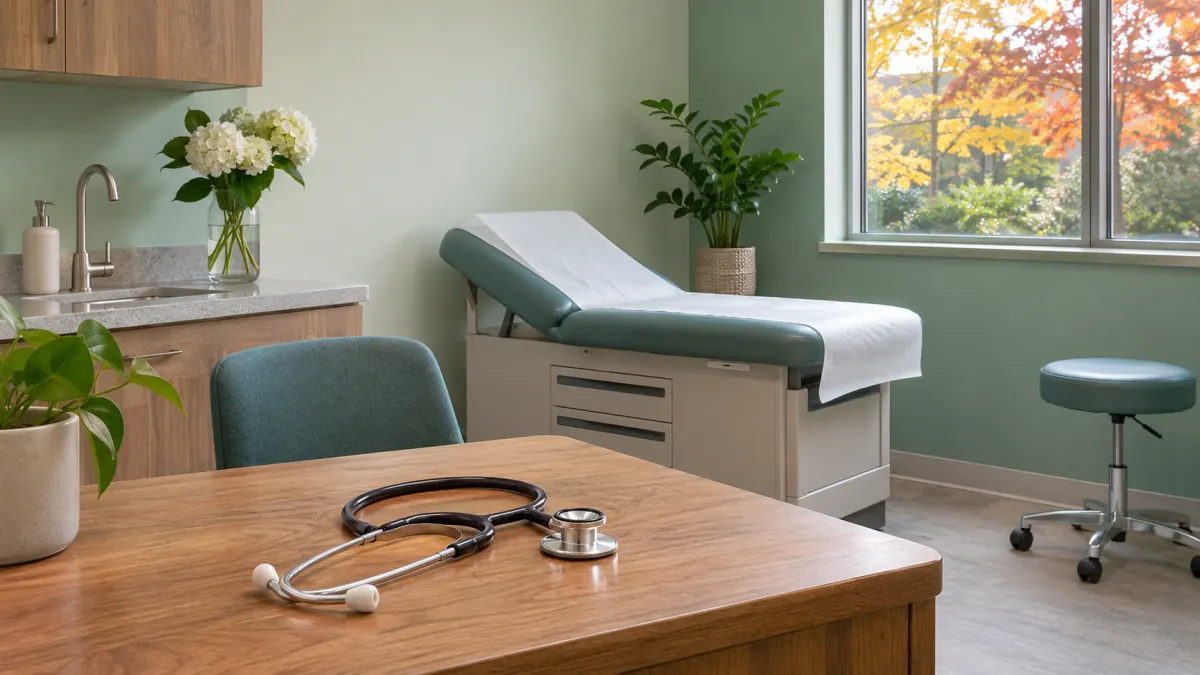
It is 7:40 on a Saturday morning. Your ten-year-old woke up with a fever and a sore ear, your partner twisted an ankle on the stairs last night, and you have a nagging pressure in your own chest that you have been telling yourself is just heartburn. Three people, three problems, and one very practical question: which of these belongs in an emergency department, and which can be handled at a walk-in clinic down the road on Main Street?
Most families in Stouffville face some version of this decision several times a year. Getting it right matters in both directions. Going to the emergency room for a minor problem usually means a long wait and adds pressure to a hospital system that is already busy. Going to a clinic, or staying home, with a true emergency can cost precious time. This guide walks through how to think about the choice, with concrete examples, so you can decide with more confidence the next time something comes up.
The short version: one question to ask yourself
Before anything else, ask: could this be life- or limb-threatening, or is it getting worse quickly? If the honest answer is “yes” or “I’m not sure, and it feels serious,” call 911 or go to the nearest emergency department. For most of Whitchurch-Stouffville, that means Markham Stouffville Hospital (part of Oak Valley Health) in Markham, or Uxbridge Hospital for those closer to the northeast side of town, near Goodwood or Musselman’s Lake.
If the answer is clearly “no” — the problem is uncomfortable, inconvenient, or worrying but stable — a walk-in clinic, a same-day appointment with a family doctor, or a virtual visit is usually the better fit.
Everything else in this article is really just a more detailed way of answering that one question.
Call 911 or go to the emergency department for these
Some symptoms should never wait for a clinic appointment. Call 911 rather than driving yourself if you have any of the following:
- Chest pain or pressure, especially if it spreads to the arm, jaw, neck or back, or comes with shortness of breath, sweating, nausea or light-headedness. Do not talk yourself out of it as heartburn.
- Signs of a stroke: face drooping, arm or leg weakness on one side, slurred or confused speech, sudden loss of vision, or a sudden severe headache. Remember the timing — treatment works best when started early.
- Severe difficulty breathing, lips turning blue or grey, or being unable to speak in full sentences.
- A severe allergic reaction: swelling of the lips, tongue or throat, wheezing, hives spreading quickly, or feeling faint after a sting, food or medication. Use an epinephrine auto-injector if one has been prescribed, then call 911.
- Heavy bleeding that does not slow with firm, steady pressure.
- Major injuries: a fall from a height, a car collision, a head injury with confusion, vomiting or loss of consciousness, or a limb that looks obviously deformed.
- Seizures in someone without a known seizure disorder, or a seizure lasting more than a few minutes.
- Sudden, severe abdominal pain, particularly with a rigid belly, vomiting blood, or black, tarry stools.
- Thoughts of suicide or harming others, or a mental health crisis where someone is not safe.
- A very young baby with a fever. An infant under three months with a temperature of 38°C or higher needs urgent assessment in an emergency department.
If you are ever unsure, it is reasonable to treat the situation as an emergency. Emergency teams would much rather see a chest pain that turns out to be indigestion than miss a heart attack.
What a walk-in clinic handles well
Walk-in clinics are designed for problems that need a doctor’s assessment soon but are not dangerous right now. At HealthSmart in Stouffville, our walk-in clinic regularly sees people for things like:
- Coughs, colds, sinus pressure and sore throats
- Ear pain in children and adults
- Mild fevers in older children and adults who are otherwise alert and drinking fluids
- Urinary symptoms such as burning or frequency
- Rashes, insect bites, and minor skin infections
- Small cuts that may need cleaning or simple closure, and minor wound care such as dressing checks
- Mild sprains where you can still bear some weight
- Pink eye, mild allergic reactions limited to the skin, and seasonal allergy flare-ups
- Prescription questions, and medical notes or forms (some of which may not be covered by OHIP — ask the clinic)
A clinic visit is also a good place to raise a symptom that has been lingering for a few days or weeks and is not getting better, even if it is not urgent. If something has been bothering you since the long weekend, you do not need to wait for it to become an emergency.
A side-by-side comparison
Sometimes it helps to see similar-sounding problems next to each other. The difference is often in the severity or the company the symptom keeps.
| Situation | Usually fine for a clinic | Go to the ER or call 911 |
|---|---|---|
| Headache | Familiar tension headache or sinus pressure | Sudden “worst ever” headache, or headache with weakness, confusion, stiff neck or fever |
| Cut | Small, clean cut with bleeding that stops with pressure | Deep wound, gaping edges you can’t close, bleeding that won’t stop, or a cut from a dirty or rusty object over a joint |
| Ankle injury | Swollen but you can take a few steps | Can’t bear weight at all, obvious deformity, numb or cold foot |
| Breathing | Cough with mild congestion | Struggling to breathe, wheezing that doesn’t settle with your usual inhaler |
| Fever | Older child or adult, drinking fluids, alert | Infant under 3 months, or fever with confusion, stiff neck, purple rash or severe drowsiness |
| Belly pain | Mild cramps with loose stools | Severe constant pain, pain moving to the lower right, rigid belly, vomiting blood |
| Allergic reaction | Itchy rash only | Swelling of face or throat, trouble breathing or swallowing |
The table is a guide, not a rulebook. A symptom in the “clinic” column can move into the “ER” column if it changes — for example, a cough that suddenly comes with chest pain and breathlessness.
The middle ground: options people forget
Not every non-emergency needs an in-person visit, and not every in-person visit needs to happen today. A few other options are worth keeping in mind.
Health811
Ontario’s Health811 service lets you speak with a registered nurse any time, day or night, by calling 811. It’s a good option at 2 a.m. when you’re trying to decide whether a symptom can wait until morning. The nurse can help you decide where to go and what to watch for in the meantime.
Your pharmacist
Community pharmacists in Ontario can help with many minor problems and, in some situations, can assess and prescribe for certain common conditions. They are also excellent at answering medication questions — what you can safely combine, what dose suits a child’s weight, and whether a symptom might be a side effect.
Virtual care
Some concerns can be handled well by phone or video, especially follow-ups, prescription renewals, and questions about test results. HealthSmart offers virtual care for suitable concerns. A physical exam can’t happen through a screen, though, so if the doctor feels you need to be seen in person, they will tell you.
Your family doctor
If you have a family doctor, they know your history, your medications and your baseline. For anything ongoing — blood pressure, diabetes, mood, a symptom that comes and goes — continuity matters. If you don’t yet have one, you can read about registering with a family doctor at our clinic; registration is reviewed by the clinic team.
Back to that Saturday morning
So, how would our imaginary household sort itself out?
- The child with a fever and sore ear. If they are drinking, peeing normally, and alert between doses of fever medicine, this is a classic walk-in problem. An ear exam takes a few minutes and tells the doctor whether antibiotics are likely to help or whether watchful waiting is reasonable.
- The twisted ankle. If your partner can take four steps, even limping, and the foot is warm and has normal feeling, it can usually be assessed at a clinic and may or may not need an X-ray. If they can’t put any weight on it, or the ankle looks bent out of shape, head to the emergency department.
- The chest pressure. This is the one that shouldn’t wait. New chest pressure in an adult should be assessed in an emergency department, and calling 911 is the safest way to get there. Paramedics can start testing and treatment on the way.
Notice that the most “dramatic” problem — the child’s fever — is actually the least dangerous of the three in this scenario, while the quiet problem that’s easy to dismiss is the most important. That pattern is common in Stouffville households and everywhere else, and it’s exactly why it pays to think through symptoms carefully rather than going by how loud they are.
Tips for a smoother clinic visit
When a walk-in or same-day visit is the right choice, a little preparation helps everyone.
- Check hours before you leave. Clinic hours may change around holidays and seasons, so take a quick look online or phone ahead at 905-642-6300.
- Bring your health card and a list of your medications, including vitamins and over-the-counter products.
- Write down the timeline. When did symptoms start? What makes them better or worse? What have you already tried? A clear story often matters more than anything else in the visit.
- Know your numbers if you have them. A home temperature reading, blood pressure log, or blood sugar readings can be very helpful.
- Bring one concern into focus. Walk-in visits are usually built around a specific problem. If you have several longer-term issues, a booked appointment with a family doctor will give you more time.
- Ask what to watch for. Before you leave, it’s always reasonable to ask, “What would make you want me to come back, or go to the hospital?”
When a clinic visit becomes a hospital visit
Sometimes a doctor at a clinic will examine you and recommend going to the emergency department. That isn’t a wasted trip. It means a professional has checked you and found something that needs tests or treatment only a hospital can provide quickly — imaging, intravenous medications, or specialist assessment. The clinic doctor may also be able to give you a note summarizing what they found, which can help the hospital team.
The reverse is also true: emergency departments regularly see people and send them home with advice to follow up with a family doctor or walk-in clinic in a few days. Both settings work together.
Should I drive myself to the ER if I think I'm having a heart attack?
Can a walk-in clinic stitch a cut?
What if I'm not sure and it's the middle of the night?
Getting seen at HealthSmart
If your problem sits on the clinic side of the line, HealthSmart Medical Clinic at 208-5892 Main Street in Stouffville is here to help with walk-in care, same-day medical appointments when available, and ongoing family medicine. You can book a visit online or call 905-642-6300, and check our location page for current hours and directions before you head over. When in doubt about anything that feels serious, though, choose the emergency department first — we’ll be glad to see you for follow-up afterwards.
This article offers general health information for Stouffville families and is not a substitute for advice from your own doctor.