Warts Treatment in Stouffville: Home Options, Freezing and Patience
Why warts appear, which pharmacy treatments are worth trying, what freezing at the clinic involves, and when a Stouffville patient should get a spot checked.
Why does a wart turn up on one child’s knuckle and never on their sibling’s? Why does one plantar wart vanish in a month while another hangs on for two years despite every remedy in the pharmacy aisle? Warts are one of the most ordinary skin complaints we see, and also one of the most frustrating, because they don’t always follow the rules.
The good news is that warts are harmless in the vast majority of cases, many disappear on their own, and there are reasonable ways to speed things along. The less exciting news is that every treatment, from salicylic acid to freezing, usually takes several rounds and a fair bit of patience. Here’s a practical overview for Stouffville families deciding whether to wait, treat at home, or book a clinic visit.
What warts are
Warts are small skin growths caused by human papillomavirus (HPV), which infects the top layer of skin and causes it to thicken. There are more than a hundred types of HPV. The types that cause common skin warts on the hands and feet are different from those that cause genital warts or that are linked to cervical and other cancers.
The virus enters through tiny breaks in the skin, like a hangnail, a scrape or softened skin on wet feet. It spreads by direct contact with a wart or by touching surfaces where the virus lingers, such as pool decks, shower floors and gym mats. Whether a wart develops depends partly on your immune response, which is why some people seem to collect them and others never do. Children and teens get them most often.
Common types
| Type | Where it appears | What it looks like |
|---|---|---|
| Common warts | Fingers, hands, knuckles, knees | Rough, raised, skin-coloured bumps, sometimes with tiny black dots (clotted blood vessels) |
| Plantar warts | Soles of the feet | Flat or inward-growing because of pressure from walking; can feel like a pebble in your shoe |
| Flat warts | Face, forehead, legs | Small, smooth, slightly raised, often in clusters; may spread with shaving |
| Filiform warts | Around the mouth, nose or eyes | Thin, finger-like projections |
| Genital warts | Genital or anal area | Soft, flesh-coloured growths; these need a doctor’s assessment rather than home treatment |
Plantar warts are sometimes confused with corns or calluses. One clue: skin lines usually run around a wart rather than through it, and squeezing a wart from side to side tends to hurt more than pressing straight down.
Option one: wait and watch
It sounds unsatisfying, but for many warts, especially in children, doing nothing is a perfectly reasonable choice. A large share of warts in children clear up on their own within a year or two as the immune system recognizes the virus. Adults’ warts tend to be more stubborn, but they can resolve without treatment too.
Watchful waiting makes sense when a wart isn’t painful, isn’t spreading, and isn’t bothering you. It also avoids the discomfort and cost of treatments that may need many repetitions.
Treatment makes more sense when a wart is painful (often the case with plantar warts), is spreading, is in an awkward spot, or is causing embarrassment.
Option two: treating at home
Salicylic acid
Salicylic acid products, available as liquids, gels and medicated pads at any pharmacy, are the most studied home treatment. They work by slowly dissolving the thickened skin of the wart, and may prompt an immune response along the way. The method matters as much as the product:
- Soak the wart in warm water for five to ten minutes to soften it.
- Gently file away the dead surface with a disposable emery board or pumice stone that you use only for the wart. Don’t share it, and stop if it bleeds or hurts.
- Dry the area thoroughly.
- Apply the product to the wart only, protecting the surrounding skin with petroleum jelly or a small bandage if needed.
- Cover with a bandage or tape if the instructions suggest.
- Repeat daily, usually for up to 12 weeks.
Consistency is the key. Most people who say salicylic acid “didn’t work” stopped after a week or two.
Pharmacy freezing kits
Over-the-counter freezing kits use a mixture of chemicals that gets cold, but not as cold as the liquid nitrogen used in clinics. They can work for small warts, though they’re often less effective for thick or plantar warts. Follow the instructions closely to avoid freezing healthy skin.
Duct tape
You may have heard of covering a wart with duct tape for days at a time. Studies have given mixed results. It’s low-risk and some families like it, especially paired with salicylic acid, but it isn’t reliably effective on its own.
Who should skip home treatment
Please check with a doctor before treating warts yourself if:
- You have diabetes, poor circulation or nerve damage in your feet, as acids and freezing can cause wounds that heal slowly. If you have diabetes, careful foot care is essential, and our post on type 2 diabetes care touches on why.
- The growth is on your face, genitals or around the nails.
- You have a weakened immune system.
- You’re not certain it’s a wart.
Option three: treatment at the clinic
If home care hasn’t worked or isn’t suitable, a doctor at our Stouffville clinic can offer wart treatment in the clinic.
Cryotherapy (freezing)
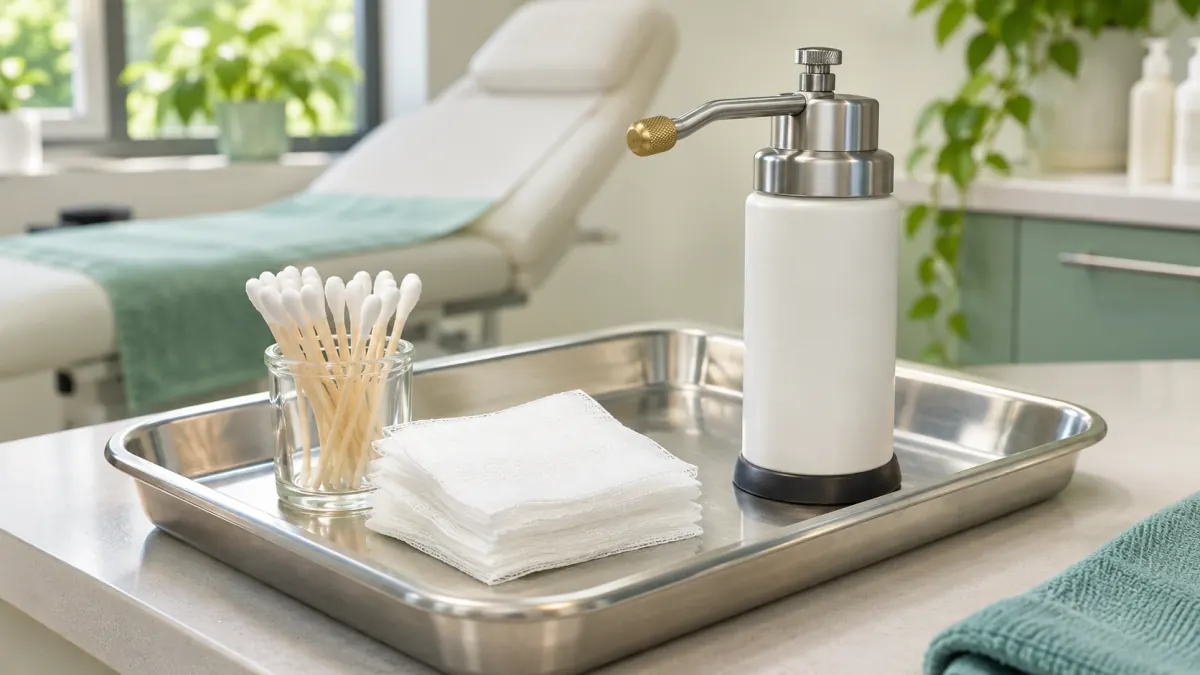
The most common in-office approach is cryotherapy with liquid nitrogen, which is far colder than pharmacy kits. The doctor applies it to the wart with a cotton-tipped applicator or a spray canister for several seconds, sometimes repeating once or twice in the same visit.
What to expect:
- During: A cold, stinging or burning sensation that fades within minutes. It can be uncomfortable, and young children sometimes find it upsetting.
- After: The area may turn red and swollen, and a blister (sometimes a blood blister) may form within a day. It usually dries and peels within one to two weeks.
- Repeat visits: Most warts need several treatments, typically spaced two to three weeks apart. Thick plantar warts may need more.
- Possible side effects: Pain, blistering, temporary lightening or darkening of the skin (more noticeable on darker skin tones), and occasionally a scar or a ring of new warts around the treated area.
Filing down the wart at home between visits can help the freezing reach deeper.
Other approaches
Depending on the wart and your situation, your doctor may suggest a stronger prescription topical, combine methods, or recommend a specialist referral to a dermatologist for stubborn or extensive warts. Removal with a blade or other minor procedures may be considered in selected cases, but cutting warts out can scar and they may come back, so it isn’t a first choice.
About OHIP coverage
Whether wart treatment is covered can depend on the situation. Treatment of a painful plantar wart or a problematic growth is generally considered medically necessary, while some removal done purely for cosmetic reasons may not be covered by OHIP. If you’re unsure, please ask the clinic when you book; our team can explain how it applies to your situation. The same question often comes up with related concerns like skin tag removal.
When a wart might not be a wart
Most bumps that Stouffville patients show us thinking they’re warts are exactly that. But see a doctor rather than treating at home if a spot:
- Bleeds easily, changes colour, or grows quickly
- Has an irregular shape or border
- Appears for the first time in an older adult
- Doesn’t respond to several months of treatment
- Is painful without pressure, or ulcerates
These features can occasionally point to other conditions, including skin cancers, which need a different approach. A quick look in the clinic can settle the question.
Warts in the genital area, or any growth there, should always be assessed by a doctor. These are a separate topic, and an assessment can also include a conversation about sexual health and screening.
Preventing warts and stopping the spread
You can’t eliminate the virus from the world, but these habits help, especially in busy Stouffville households with active kids:
- Wear flip-flops or shower shoes in public showers, pool decks and change rooms, such as at the Whitchurch-Stouffville Leisure Centre.
- Keep feet dry, change sweaty socks, and rotate shoes.
- Don’t pick, bite or scratch warts, which can spread them to new spots.
- Use separate files and nail clippers for affected areas.
- Cover warts with a bandage during sports or swimming.
- Moisturize dry, cracked hands, since breaks in the skin let the virus in.
- Avoid shaving over warts, which spreads flat warts in particular.
Are warts contagious?
Why did my wart come back after freezing?
Is the HPV vaccine related to skin warts?
Booking a visit for a stubborn wart
If a wart is painful, spreading, or simply refusing to budge, our Stouffville team can confirm what it is, talk through options, and freeze it in the clinic when that’s the right fit. Book an appointment, or contact us if you have questions about coverage before you come in. We’re on Main Street, and since hours may change, it’s worth checking our location page first.
This post shares general information about warts and their treatment; it isn’t a substitute for an examination by a health care provider.